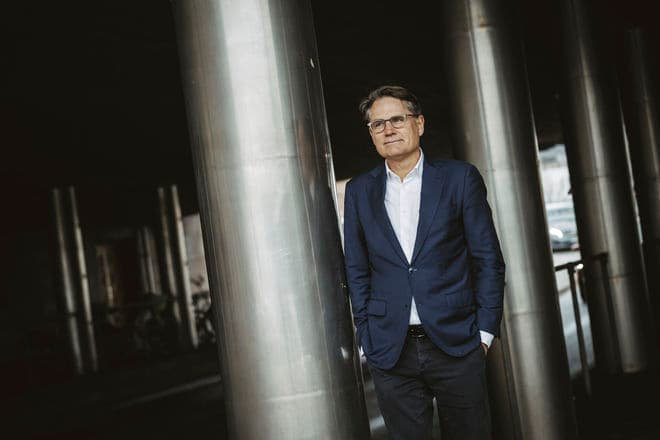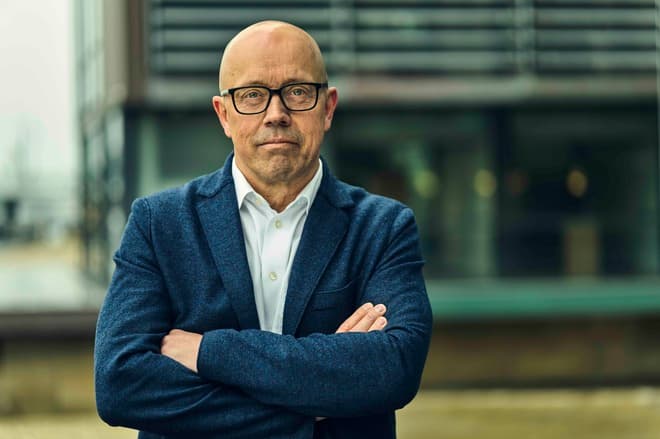

After 25 years of negotiations, one of the world's largest free trade agreements now opens the door between the EU and parts of South America. Although the agreement is currently temporary, cheaper South American beef, red wine and coffee can find their way to Danish supermarkets from Friday. This is according to Peter Thagesen, head of geopolitics at the Confederation of Danish Industry.
- However, there is no guarantee that the savings will end up with consumers. But there will be a larger selection and more competition.
The agreement also gives Danish companies better export opportunities.
- This is very positive in the times we are in now. We are living in the most uncertain and unpredictable time since the Second World War, says Peter Thagesen.
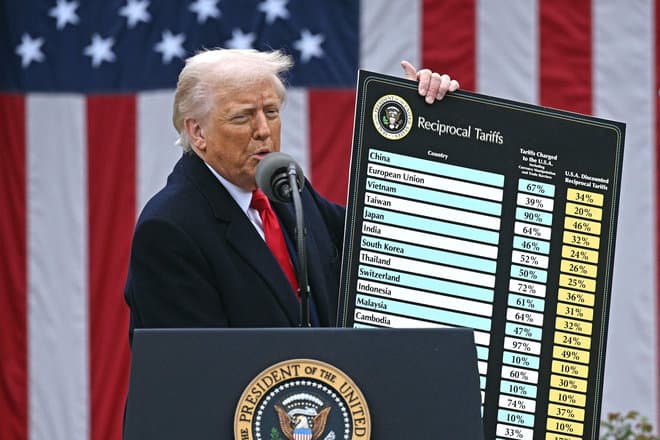
- Our most important export market, the USA, is withdrawing and building high customs walls. Now the Mercosur trade agreement gives Danish companies access to some interesting markets.
Philipp Schröder, an economics professor at Aarhus University, also sees advantages - especially the so-called spillover effect.
- When a company exports a type of goods to a destination, subcontractors can suddenly also reach that market, he says.
According to Philipp Schröder, there are two factors in particular that drive trade.
- One is how close you are to each other, and the other is purchasing power. Even though the Mercosur countries are far away, we must recognize that that part of the world actually has fairly large economies, he says.
Can increase Danish exports by billions
Mercosur is a Spanish abbreviation for "Mercado Común del Sur". It means the Southern Common Market and refers to the cooperation between several South American countries. The full Mercosur countries are Argentina, Brazil, Paraguay and Uruguay.
The free trade zone covers a total of over 700 million consumers in the EU and the Mercosur countries. According to the Confederation of Danish Industries, the agreement could increase Danish exports by 13.5 billion kroner per year, which will also support jobs in Denmark.
- Our entire welfare and our society are built on us producing goods in Denmark and selling them abroad. When the tariff is phased out over the next five to seven years, our goods will become more competitive and we can sell more, says Peter Thagesen.
The negotiations between the EU and the Mercosur countries began in 2000. Peter Thagesen believes that it is probably not entirely coincidental that the agreement has been reached now.
- There is a growing recognition in Europe that we are on a burning platform. We have to do something, and we also have to swallow some camels to move forward, he says.
Meeting with resistance
However, the resistance has been significant. Southern European farmers fear unfair competition, and environmental organizations have warned that increased exports from South America will lead to deforestation in the South American countries. Peter Thagesen admits that the agreement could be more ambitious on sustainability.
- But the alternative has been nothing. And sometimes you have to take what you can get and work with it, he says.
France, Poland, Austria, Ireland and Hungary voted against the agreement in January, but a majority in the EU chose to go ahead with it.
- It is a clear sign that we can no longer wait for all 27 countries to agree on everything, says Peter Thagesen.
While some EU decisions require unanimity, trade agreements are generally adopted by qualified majority. The trade agreement between the EU and Mercosur is awaiting final approval in the European Parliament, where a narrow majority earlier this year asked the European Court of Justice to assess whether the agreement is in line with the EU treaties.
According to the news agency Reuters, it could take up to two years before the EU Court of Justice's assessment is ready. But the EU Commission has chosen to apply the agreement temporarily from Friday.
/ritzau/
Text, graphics, images, sound, and other content on this website are protected under copyright law. DK Medier reserves all rights to the content, including the right to exploit the content for the purpose of text and data mining, cf. Section 11b of the Copyright Act and Article 4 of the DSM Directive.
Customers with IP agreements/major customer agreements may only share Danish Offshore Industry articles internally for the purpose of handling specific cases. Sharing in connection with specific cases refers to journaling, archiving, or similar uses.
Customers with a personal subscription/login may not share Danish Offshore Industry articles with individuals who do not themselves have a personal subscription to Danish Offshore Industry.
Any deviation from the above requires written consent from DK Medier.