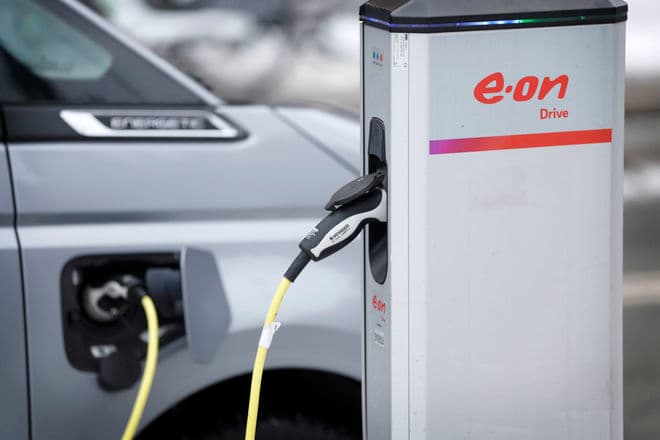



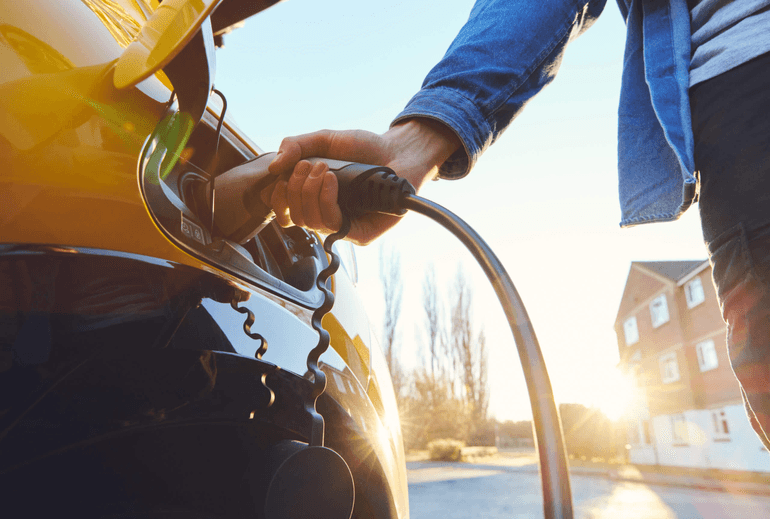
The total battery capacity in Danish electric cars reached 45.7 gigawatt-hours in the first quarter of 2026. This is an increase of 56 percent compared to the same period the previous year, and the development has occurred as more electric cars have entered the roads. At the same time, the capacity has multiplied since 2020. This is stated in a press release by Mobility Denmark, which has the figures from an extraction for the entire car fleet made by DBI IT directly from the information on battery capacity available in the Digital Motor Register (DMR).
The growth is primarily due to the number of electric cars increasing, although newer models also contribute with larger batteries. The development is also distributed across all regions of the country, which points to a broad potential for using electric car batteries as energy storage.
- With the implementation of technologies such as V2G, also known as two-way charging, electric cars have great potential to become an important part of our energy system that can benefit both individual consumers and the electricity grid. We expect that development will continue, especially if the green transition of road transport continues to be prioritized and supported by both politicians and Danish drivers, says Allan Skytte Christensen, Chief Economist at Mobility Denmark.
According to Mobility Denmark, the distribution of battery capacity largely reflects the population distribution. At the same time, the figures show that electric cars are no longer only widespread in the largest cities, but are increasingly found throughout the country. This also means that there is a nationwide potential for strengthening the energy system through technologies such as two-way charging.
- Electric vehicles are no longer a metropolitan phenomenon. It is widespread throughout the country, and thus there is significant potential to strengthen the electricity grid nationally. Bidirectional charging should therefore not be investigated exclusively in the largest cities,” says Allan Skytte Christensen, Chief Economist at Mobility Denmark.
amp
Text, graphics, images, sound, and other content on this website are protected under copyright law. DK Medier reserves all rights to the content, including the right to exploit the content for the purpose of text and data mining, cf. Section 11b of the Copyright Act and Article 4 of the DSM Directive.
Customers with IP agreements/major customer agreements may only share Danish Offshore Industry articles internally for the purpose of handling specific cases. Sharing in connection with specific cases refers to journaling, archiving, or similar uses.
Customers with a personal subscription/login may not share Danish Offshore Industry articles with individuals who do not themselves have a personal subscription to Danish Offshore Industry.
Any deviation from the above requires written consent from DK Medier.