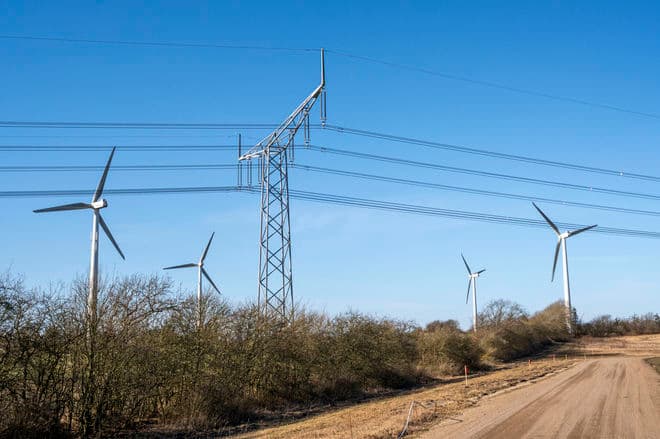



The power consumption from data centres in the project phase is growing significantly in municipalities and is putting pressure on the electricity grid. According to Energinet, the data centres currently in the queue for connection will demand over 15 gigawatts in total - equivalent to around 30 times the current consumption from data centres. "So these are very, very huge figures," says Energinet's operations director Søren Dupont Kristensen to DR.
According to the media outlet, there are around 50 data centres nationwide today, which support, among other things, streaming, cloud services and digital solutions. However, the demand from new projects is well above the current consumption, which is challenging the capacity of the electricity grid. "The data centers that are currently in the queue to be connected to the Danish electricity grid will use more than 15 gigawatts," explains the operations director.
However, the industry estimates that only a small part of the projects will actually be realized. "There is neither a need nor enough power for everything that is in the queue, and there is also a lot in the queue that is not serious projects," says CEO of Datacenter Industrien Henrik Hansen. He estimates that approximately ten percent of the projects up to 2030 will become actual data centers.
Local concerns
The development is seen, among other things, in Holbæk Municipality, where a planned hyperscale data center is expected to have a power consumption of 350 megawatts. This corresponds to about six times the municipality's current electricity consumption and illustrates the magnitude of the new facilities, writes DR.
The plans have raised concerns locally, where a citizens' movement has called out the municipality about the scope and consequences of the project. Mayor of Holbæk Christina Krzyrosiak Hansen (K) states that the project is still in an early phase and that no final decisions have yet been made. At the same time, the municipality emphasizes that a political process will be included, where consideration for both local communities and development must be weighed.
"We see some interesting synergies in relation to recycling excess heat from the center, and there will also be some new jobs if it becomes a reality. That said, I understand that the prospect of a data center on that scale may cause concerns among citizens," it says in a written response.
ap
Text, graphics, images, sound, and other content on this website are protected under copyright law. DK Medier reserves all rights to the content, including the right to exploit the content for the purpose of text and data mining, cf. Section 11b of the Copyright Act and Article 4 of the DSM Directive.
Customers with IP agreements/major customer agreements may only share Danish Offshore Industry articles internally for the purpose of handling specific cases. Sharing in connection with specific cases refers to journaling, archiving, or similar uses.
Customers with a personal subscription/login may not share Danish Offshore Industry articles with individuals who do not themselves have a personal subscription to Danish Offshore Industry.
Any deviation from the above requires written consent from DK Medier.