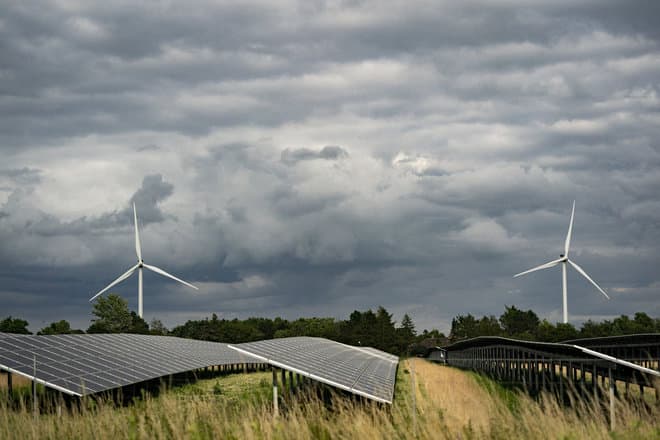
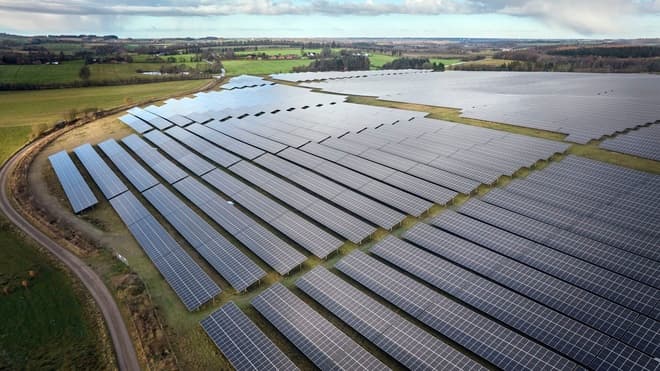
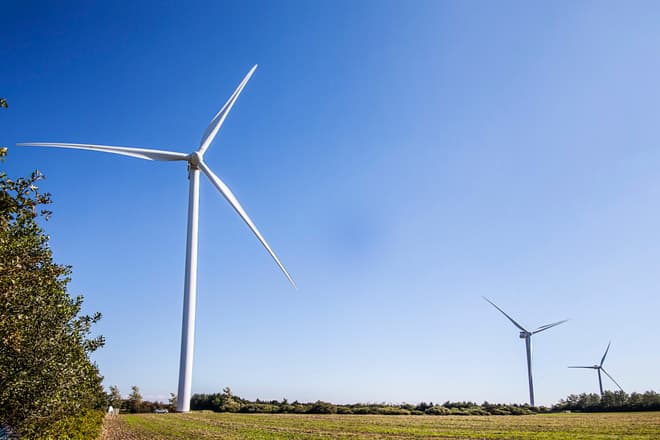
Denmark has great ambitions in the wind and solar field. Earlier this year, the government launched its reform package "Denmark can do more II", which is intended to help free Denmark from dependence on Russian gas, by, among other things, quadrupling the amount of electricity from solar cells and wind turbines by 2030.
One of the challenges on the way to achieving this ambition is connection times. Solar cell and wind turbine parks are normally connected to high-voltage substations. This ensures control, management and high security in the electricity system. However, many of the current high-voltage substations are "full" and cannot handle more electricity production. And it may take several years to expand stations or build new ones.
Energinet will now try to solve this challenge with two completely new and previously untested technical solutions in the Danish high-voltage grid to ensure an even faster transition to green energy.
In one of the new solutions, a temporary electricity mast will be installed between two masts on an existing high-voltage connection. From here, for example, a solar park can be installed directly on the overhead line with a "T-branch".
The second solution also consists of a temporary electricity mast and a "T-branch" installed on an overhead line, but here switching equipment on a mobile trailer is part of the solution. It may be necessary to be able to interrupt electricity production in some places in the electricity grid to maintain system security and security of supply.
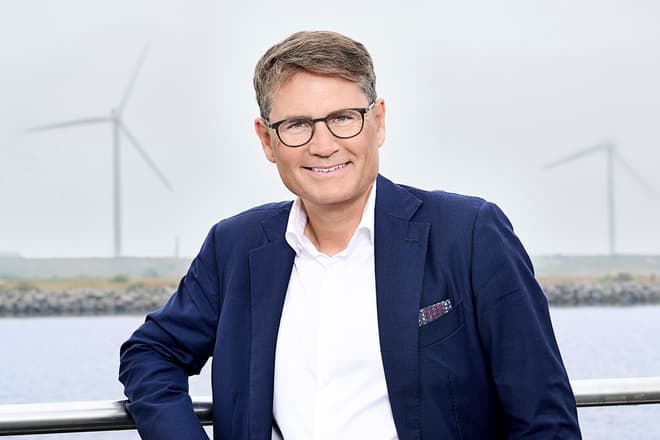
- Denmark must quadruple electricity production from solar cells and wind turbines on land in eight years. This requires a huge expansion of the electricity grid. While we are expanding and strengthening the electricity grid, we are now breaking new ground by making temporary connections so that green electricity can be connected even faster, says Henrik Riis, CEO of Energinet Eltransmission.
Connection time can be halved
Specifically, Energinet hopes to get approval from the Danish Electricity Supply Authority to be able to make ten pilot projects around the country. How much power the temporary connections will be able to receive depends entirely on where in the electricity grid they are placed. However, new large solar parks are typically 100-400 MW.
nergenet has examined a portfolio of 40 projects that are underway, and 15 are assessed to have the potential to be able to get on the grid faster with new temporary connection solutions. In cases where the electricity grid requires extensive expansion and completely new high-voltage stations, the connection time could be halved from 4-6 years to 2-3 years.
The new solutions can be used on 150 kV and 132 kV overhead lines, but not on 400 or 220 kV or on buried cables. This would compromise the security of the electricity system, explains Henrik Riis.
The new temporary connections pose a small risk of impairing the operational security of the electricity system, but Energinet assesses that this risk is small.
amp
Text, graphics, images, sound, and other content on this website are protected under copyright law. DK Medier reserves all rights to the content, including the right to exploit the content for the purpose of text and data mining, cf. Section 11b of the Copyright Act and Article 4 of the DSM Directive.
Customers with IP agreements/major customer agreements may only share Danish Offshore Industry articles internally for the purpose of handling specific cases. Sharing in connection with specific cases refers to journaling, archiving, or similar uses.
Customers with a personal subscription/login may not share Danish Offshore Industry articles with individuals who do not themselves have a personal subscription to Danish Offshore Industry.
Any deviation from the above requires written consent from DK Medier.