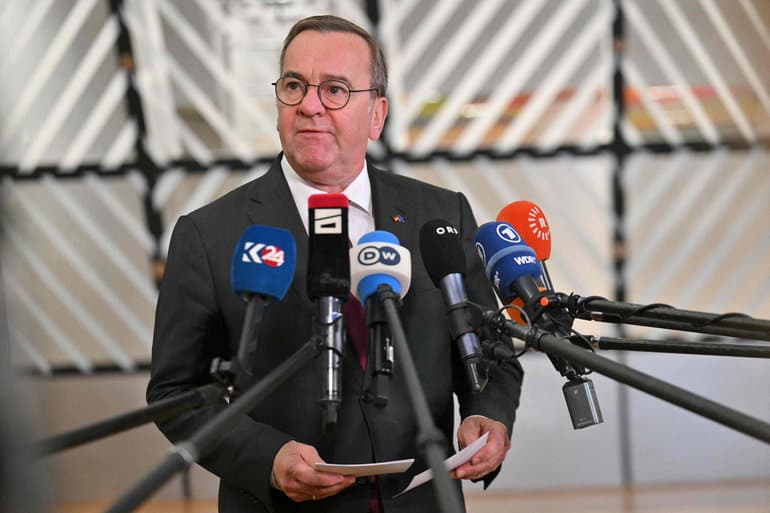
Germany believes that there was sabotage when two data cables in the Baltic Sea were damaged. This was reported by German Defense Minister Boris Pistorius, according to Reuters.
- No one believes that these cables were cut by accident. I also do not believe that anchors accidentally caused the damage to the cables, says Boris Pistorius before a meeting with the other EU defense ministers in Brussels.
He then states that it must be sabotage.
- Therefore, we must state - without knowing who is behind it - that it is a "hybrid action". And we must also assume without knowing yet that it is sabotage, says Pistorius.
Two data cables running between Finland and Germany and between Sweden and Lithuania were damaged. It is unclear when it happened, but disruptions were recorded in one of the cables running between Sweden and Lithuania on Sunday morning.
The foreign ministers of Germany and Finland issued a statement on Monday expressing their "deep concern" about a break in the other cable, which runs from Helsinki, Finland, to Rostock, Germany. At the time, the governments of the two countries did not comment on the disruptions in the cable between Sweden and Lithuania.
According to the Finnish security police Skypo, around 200 submarine cables break in the Baltic Sea every year. Human error is often the cause. Last year, several cables were damaged - both telecommunications cables and a gas pipeline.
It is not yet clear whether all cases were accidents or whether in one or more cases there were deliberate actions behind it.
Nord Stream sabotage not yet solved
The best-known case to date of rupture of cables or pipelines in the Baltic Sea is the case of the Nord Stream gas pipelines. They were blown up in September 2022 near Bornholm.
The case was subsequently investigated by both Danish, German and Swedish police. The police in Denmark and Sweden have since stopped their part of the investigation, while Germany is still investigating the case.
In August, it emerged that German police had identified three suspects - including a male Ukrainian diver. On this basis, a court in Karlsruhe issued a European arrest warrant for the man. There are no reports that the diver or any of the other suspects in the case have been apprehended.
/ritzau/
Text, graphics, images, sound, and other content on this website are protected under copyright law. DK Medier reserves all rights to the content, including the right to exploit the content for the purpose of text and data mining, cf. Section 11b of the Copyright Act and Article 4 of the DSM Directive.
Customers with IP agreements/major customer agreements may only share Danish Offshore Industry articles internally for the purpose of handling specific cases. Sharing in connection with specific cases refers to journaling, archiving, or similar uses.
Customers with a personal subscription/login may not share Danish Offshore Industry articles with individuals who do not themselves have a personal subscription to Danish Offshore Industry.
Any deviation from the above requires written consent from DK Medier.