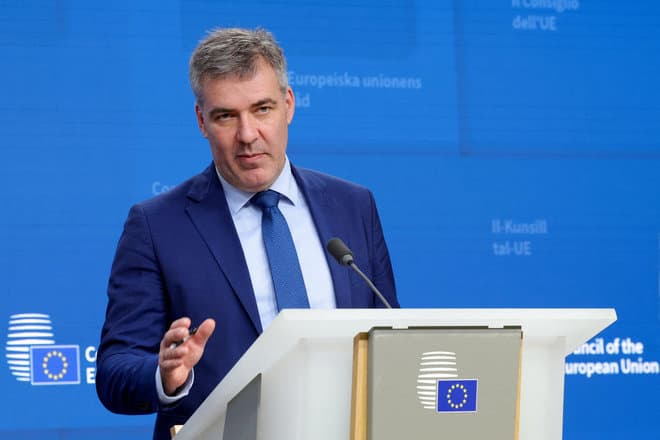
The vast majority of times that damage occurs to submarine cables, it is not sabotage that is the cause. This is according to Tomas Lamanauskas, Deputy Secretary-General of the UN Information Technology Organization (ITU). The organization works for common standards in the fields of data and telecommunications.
He estimates that 80 percent of the damage to the cables occurs in connection with fishing and when ships drop anchor. Other causes include natural hazards, aging, wear and tear and equipment failures, the Deputy Secretary-General adds.
Damage to submarine cables is far from uncommon. According to the International Cable Protection Committee (ICPC), an average of 150 to 200 outages occur on submarine cables per year.
- It is a fact that interest in the resilience of cables has clearly increased. This shows the importance of this infrastructure, on which we are so dependent, says Lamanauskas.
Undersea cables today form the backbone of global communications and account for about 99 percent of the world's internet traffic. Even when the traffic goes through satellites, it must be sent on to land stations and through submarine cables, says the Deputy Secretary-General.
Need for more protection
Today, around 500 cables are laid on the seabed. They measure over 1.4 million kilometers in total length.
According to Lamanauskas, there is a need for better protection of the cables, faster repairs and more cables so that data can be more easily rerouted in the event of an outage.
There is currently a lot of attention on submarine cables in the Baltic Sea after several incidents with damaged cables. In mid-November last year, two underwater cables were damaged in the Baltic Sea - one between Finland and Germany, the other between Sweden and Lithuania.
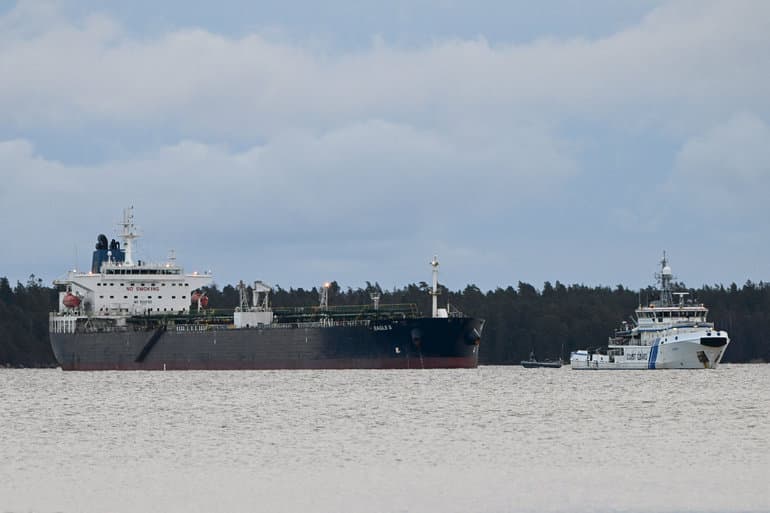
Suspicion was directed at Russia and the ship "Yi Peng 3", which had been anchored in the Kattegat for several weeks. And in Finland, the tanker "Eagle S" has been suspected of damaging several cables in the Baltic Sea. Last week, Finland reported that a Russian cable had been broken in the Gulf of Finland.
/ritzau/AFP
Text, graphics, images, sound, and other content on this website are protected under copyright law. DK Medier reserves all rights to the content, including the right to exploit the content for the purpose of text and data mining, cf. Section 11b of the Copyright Act and Article 4 of the DSM Directive.
Customers with IP agreements/major customer agreements may only share Danish Offshore Industry articles internally for the purpose of handling specific cases. Sharing in connection with specific cases refers to journaling, archiving, or similar uses.
Customers with a personal subscription/login may not share Danish Offshore Industry articles with individuals who do not themselves have a personal subscription to Danish Offshore Industry.
Any deviation from the above requires written consent from DK Medier.