While housing construction is growing again – especially in the capital area – it is a different story for the energy sector. New figures show that the construction of energy plants and infrastructure will fall significantly in 2025 compared to last year.
This is according to the Danish Housing Association, which is behind the analysis 'Bygherrebarometeret' in collaboration with the analysis agency Byggefakta.
The pipeline for projects within energy and renovation – which mainly covers energy plants – has fallen by a whopping DKK 14.4 billion. In total, there were plans to build for DKK 25.9 billion before the start of the year. After the first quarter, only DKK 11.5 billion will be realized. DKK in 2025. This corresponds to a decrease of 56 percent. In comparison, the decrease was only DKK 3.5 billion in the same period the year before.
- Compared to last year, when we were looking at a record year, and where the green transition of the energy sector was in full swing and resulted in double-digit growth rates, we are now experiencing challenges in the energy area, which have resulted in several projects being postponed and cancelled, says Rasmus Schulian, senior analyst at Byggefakta.
The development means that the year's total construction cost has decreased by around DKK 40 billion since the beginning of the year. In the first quarter, construction work was initiated for DKK 21.4 billion, and DKK 88.9 billion remains in the year's pipeline - a significant decrease from the expected DKK 155.4 billion. And it is therefore the large energy projects in particular that are pulling down the total expected construction stock in Denmark.
- An unusually large number of projects have been postponed. The pipeline for projects within the main group Energy and Renovation, which mainly includes energy plants, has fallen by DKK 14.4 billion since last autumn. In the same period the year before, there was a fall of DKK 3.5 billion. It should be noted that the sector has experienced strong growth in recent years. The many postponed projects are out of a record-sized pipeline, says Rasmus Schulian.
The consequences are also visible regionally.
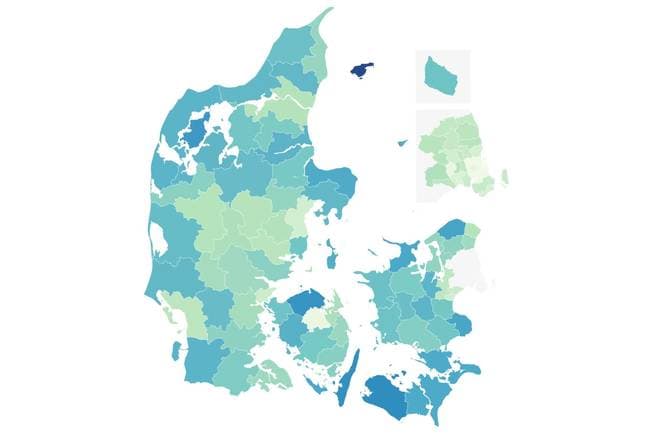
In the Capital Region, district heating projects fall from DKK 9 billion to just DKK 0.6 billion. In Region Zealand, energy projects fall by almost DKK 3 billion, while Region Southern Denmark and Region Central Denmark both report falling activity in the energy area.
Only North Jutland maintains a high energy level, where such projects account for a full 45 percent. of the region's pipeline – but without being able to prevent an overall decline of 15 percent.
amp
Text, graphics, images, sound, and other content on this website are protected under copyright law. DK Medier reserves all rights to the content, including the right to exploit the content for the purpose of text and data mining, cf. Section 11b of the Copyright Act and Article 4 of the DSM Directive.
Customers with IP agreements/major customer agreements may only share Danish Offshore Industry articles internally for the purpose of handling specific cases. Sharing in connection with specific cases refers to journaling, archiving, or similar uses.
Customers with a personal subscription/login may not share Danish Offshore Industry articles with individuals who do not themselves have a personal subscription to Danish Offshore Industry.
Any deviation from the above requires written consent from DK Medier.