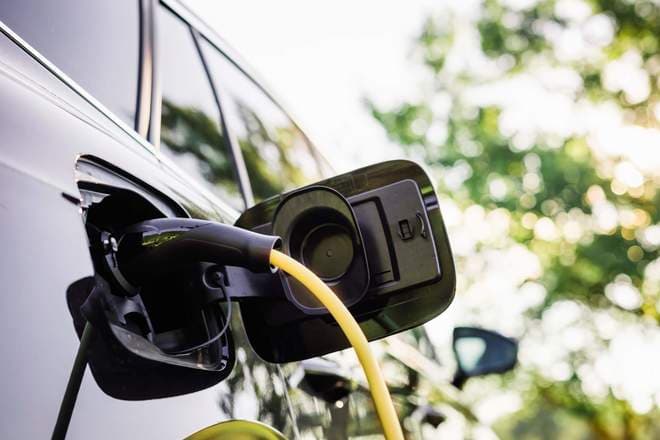
Denmark is responsible for emitting far more greenhouse gases than are taken into account in our climate targets.
Therefore, the government should include global pollution originating from our consumption in the next climate target for 2035, even if the emissions occur in another country. This is the opinion of 27 different NGOs that sent Climate Minister Lars Aagaard (M) a letter with the request on Monday.
- The climate crisis knows no borders, and when Danish activities extend beyond national borders, our climate responsibility must do the same, the letter states.
After lengthy internal discussions, the government presented its proposal for a new climate target for 2035 in November. Here, the government proposes that between 82 and 85 percent of Denmark's CO2 emissions be reduced in 2035.
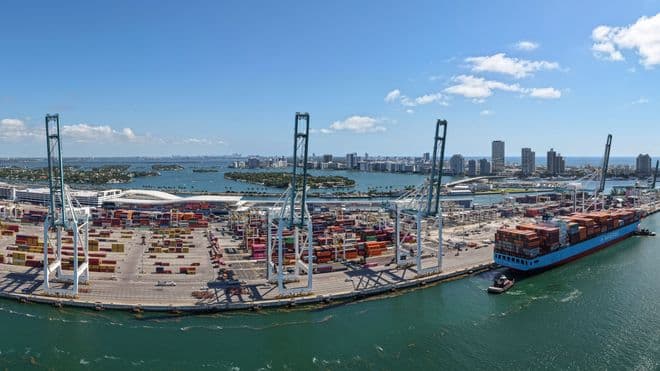
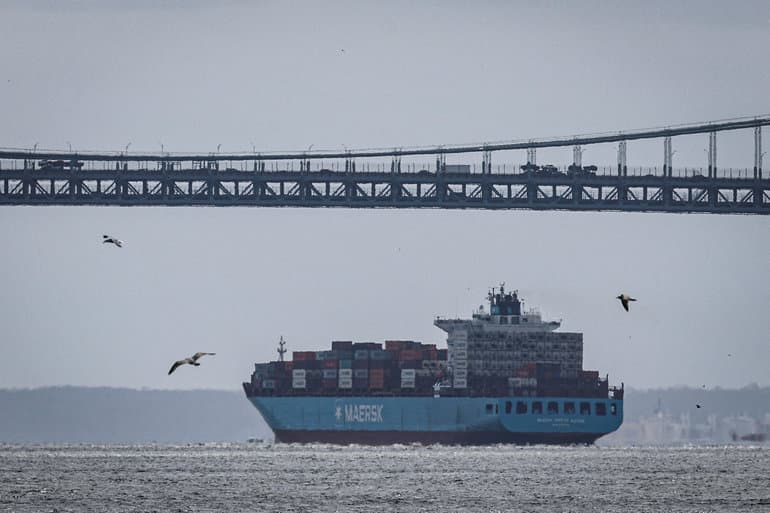
This includes greenhouse gases emitted from Danish territory. This means that the greenhouse gas emitted by a factory in China when producing goods for Danish consumption is not included. The same applies to emissions from the large Danish shipping industry that takes place in international waters.
The 27 NGOs include names such as the International Cooperation Organization, the Danish Society for the Conservation of Nature, Greenpeace, the WWF World Wildlife Fund and the Climate Movement.
Denmark is responsible for over 200 million tons of international CO2 emissions
In the letter, they propose expanding Denmark's climate goals to also set a framework for reducing emissions from investments in the financial sector, from Danes' consumption, for international transport and the use of biomass and imported animal feed such as soy. The CO2 footprint from this is significantly larger than what Denmark's climate targets themselves reflect.
According to the authorities' official calculations, Denmark's territorial CO2 emissions are 38 million tons, while the NGOs emphasize that the above international activities are responsible for over 200 million tons of CO2 emissions.
- Taking Denmark's massive global CO2 footprint into account, it is not sufficient to make a reduction effort in relation to Denmark's territorial emissions alone, the letter states.
However, it is a fixed UN methodology that each country is responsible for the emissions that occur within its borders. Therefore, China itself is responsible with its own climate policy for the emissions of its factories.
Question: Why should Denmark exceed the limits of other countries' climate policies?
- It is important that all countries take responsibility for their emissions. But we also have a responsibility for emissions that go beyond Danish borders, says Katrine Ehnhuus, chief advisor at Mellemfolkeligt Samvirke and responsible for the letter to the Minister for Climate.
Question: But it is other countries that have the formal responsibility?
- That is why we should still take it, because we have control over some of the emissions, says Katrine Ehnhuus and continues:
- When a Danish bank or pension fund invests in a company, that decision is made by a Danish actor. And therefore the responsibility must be taken there.
/ritzau/
Text, graphics, images, sound, and other content on this website are protected under copyright law. DK Medier reserves all rights to the content, including the right to exploit the content for the purpose of text and data mining, cf. Section 11b of the Copyright Act and Article 4 of the DSM Directive.
Customers with IP agreements/major customer agreements may only share Danish Offshore Industry articles internally for the purpose of handling specific cases. Sharing in connection with specific cases refers to journaling, archiving, or similar uses.
Customers with a personal subscription/login may not share Danish Offshore Industry articles with individuals who do not themselves have a personal subscription to Danish Offshore Industry.
Any deviation from the above requires written consent from DK Medier.