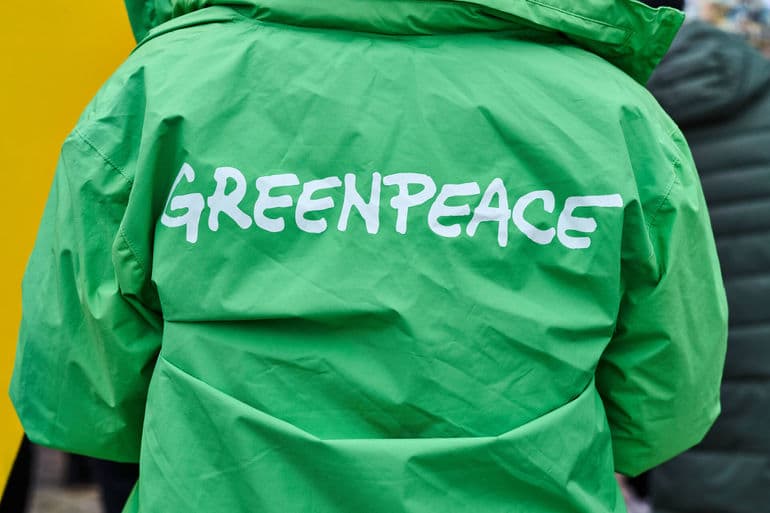
Greenpeace Norway and Natur og Ungdom have won a case at the EFTA Court (European Free Trade Association ed.) on Wednesday, which, according to Greenpeace, states that states must assess the full climate impact of an oil or gas field – also from the burning of fossil fuels – before granting permission for new extraction. Greenpeace Denmark sees the ruling as clear support for their complaint about the approval of the Hejre field in the North Sea. The environmental organization states this in a statement.
According to Greenpeace, the decision from the European EFTA Court in Luxembourg is that it is contrary to EU law to approve oil projects without including climate impacts from the consumption of the extracted fuels. This is the first time that a European court has ruled so unequivocally on this obligation, and according to Greenpeace, it should have direct consequences for the Danish authorities' approval of the Hejre field.
Greenpeace Denmark has had an ongoing appeal case against the Danish Energy Agency's approval of INEOS' expansion of the Hejre field since May 2024. The environmental impact report for the project does not contain calculations of the climate impact from burning oil and gas - so-called scope 3 emissions. According to Greenpeace, this is a requirement in the EU directive, which also formed the basis for the EFTA judgment.
- The Danish Energy Agency's arguments that the expansion of the Hejre field should be legal have just been completely thrown out of the table by the EFTA Court. This means that a massive crack has been made in the Danish Energy Agency's assessment. I expect that, regardless of the fact that the opinion is not binding on Denmark, the Energy Appeals Board will follow the EFTA Court and also declare the expansion of the Hejre field illegal. The regulatory basis is exactly the same in the Danish case, says Nikolaj Nielsen, a lawyer at Kontra Advokater.
Greenpeace believes that the decision should make Danish authorities reconsider the entire basis for the Hejre permit, and points out that Denmark's role as a climate-leading nation is at stake.
- We naturally expect that the Energy Appeals Board will now take a thorough look at both the EFTA decision and the various other judgments from abroad. And now that the regulatory basis is the same, I have a hard time imagining anything other than the appeals board also finding the Hejre permit illegal, says Lauren Bowey, campaign manager for climate, Greenpeace Denmark.
amp
Text, graphics, images, sound, and other content on this website are protected under copyright law. DK Medier reserves all rights to the content, including the right to exploit the content for the purpose of text and data mining, cf. Section 11b of the Copyright Act and Article 4 of the DSM Directive.
Customers with IP agreements/major customer agreements may only share Danish Offshore Industry articles internally for the purpose of handling specific cases. Sharing in connection with specific cases refers to journaling, archiving, or similar uses.
Customers with a personal subscription/login may not share Danish Offshore Industry articles with individuals who do not themselves have a personal subscription to Danish Offshore Industry.
Any deviation from the above requires written consent from DK Medier.