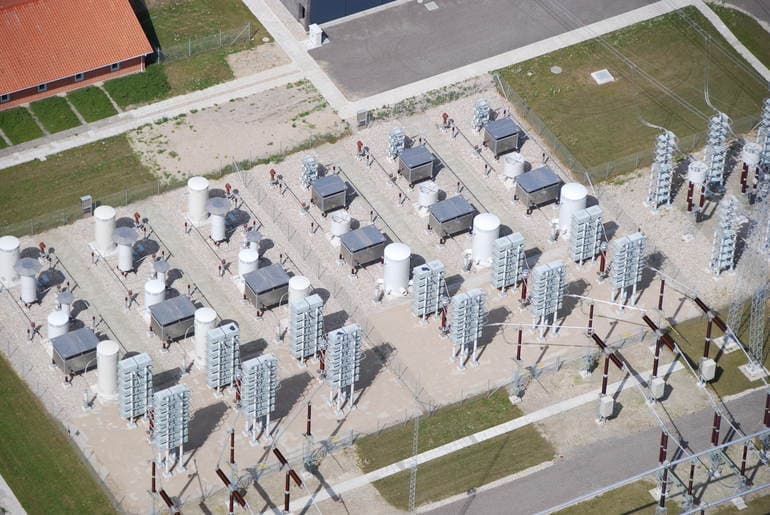
Energinet will take over the responsibility for installing so-called harmonic filters in the electricity grid - a task that has so far been the responsibility of grid customers such as solar and wind developers and large, industrial electricity consumers.
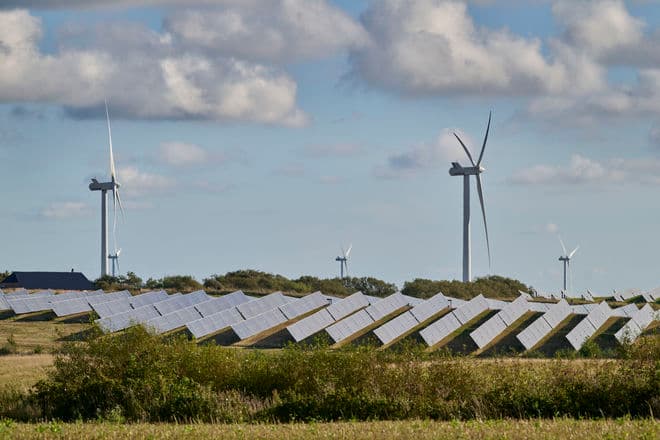
The filters are necessary to reduce "harmonic distortions" that can occur when more sun, wind and cables are connected to the electricity grid.
Without the filters, the quality of electricity can deteriorate, which can damage both the electricity grid and consumer equipment and, in the worst case, lead to power outages.
- This will not only remove a very large burden from many grid customers, it will also ensure more uniformity and thus more stable supply for the Danes. Furthermore, it could actually provide a socio-economic saving of four billion. over the next ten years, says Kim Willerslev, Director of System Responsibility at Energinet.
Increasing number of projects
The decision comes after the number of grid customer projects has grown sharply: From 16 in 2020 to 83 in 2024.
Until now, each player has had to calculate, design and install filters themselves, which is both expensive and complicated. Energinet believes that centralizing the task will ensure better electricity quality, higher security of supply and faster grid connection for new projects.
- New converter-connected solar and wind plants create harmonic distortions as a kind of by-product, which spread further into the electricity grid's wires and transformers, where already existing harmonic distortions from cables, among other things, can be amplified, explains Senior Director for Electricity Operation Development at Energinet, Christian Frank Flytkjær. He continues:
- If the distortions are not reduced, they can affect the quality of electricity and, in the worst case, the security of supply. It makes good sense to solve the challenge from one place, instead of many parties working with many different solutions that may not work together or directly counteract each other,
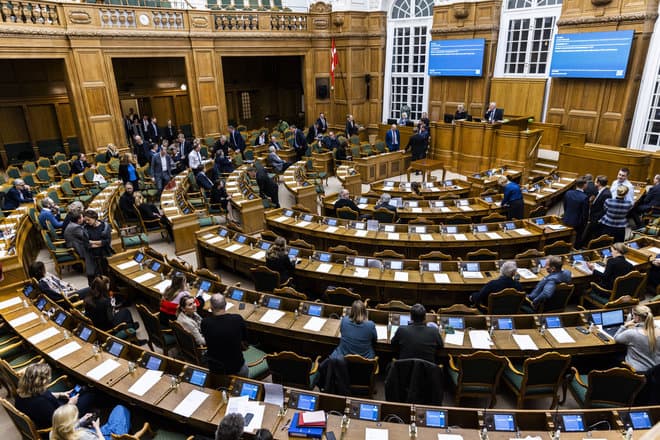
The decision must be approved by the Danish Electricity Supply Authority and the Danish Energy Agency, but Energinet estimates that the new practice can save society approximately four billion DKK by 2035 and make the installation of new grid connections both cheaper and more efficient.
ap
Text, graphics, images, sound, and other content on this website are protected under copyright law. DK Medier reserves all rights to the content, including the right to exploit the content for the purpose of text and data mining, cf. Section 11b of the Copyright Act and Article 4 of the DSM Directive.
Customers with IP agreements/major customer agreements may only share Danish Offshore Industry articles internally for the purpose of handling specific cases. Sharing in connection with specific cases refers to journaling, archiving, or similar uses.
Customers with a personal subscription/login may not share Danish Offshore Industry articles with individuals who do not themselves have a personal subscription to Danish Offshore Industry.
Any deviation from the above requires written consent from DK Medier.