


On the day that Crown Prince Frederik gave the signal to start the first storage of CO2, one of the major players in the field, the Danish District Heating Association, which represents Denmark's 354 district heating companies, comes up with a new proposal in which the organization presents a number of recommendations to fulfill the sector's great potential.
According to Danish District Heating, there is still no framework and coherent regulation in place to ensure a rapid and effective implementation of CO2 capture in the Danish energy and supply sector. The recommendations of the organization's CCUS initiative are intended to remedy this.
The initiative's recommendations are intended to ensure that CO2-emitting utilities can reduce emissions through CO2 capture, contribute to the Danish climate goals and supply biogenic CO2 for green fuels and negative emissions.
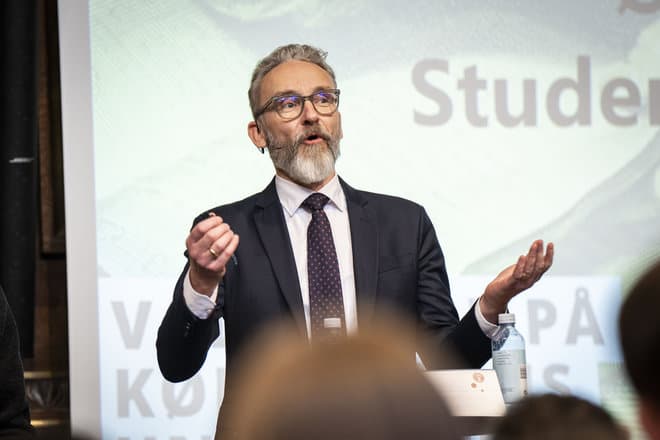
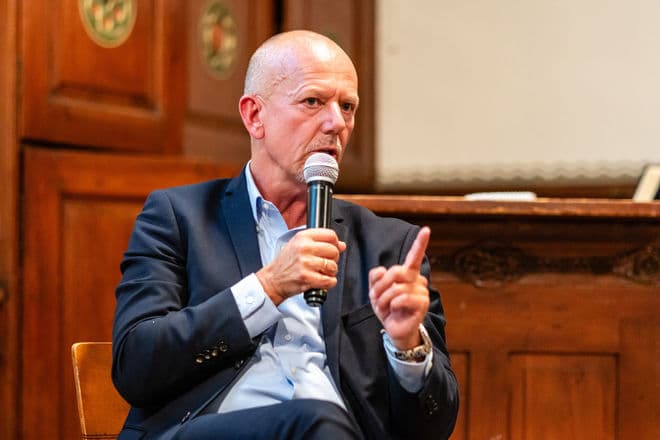
- We have enormous potential to deliver real CO2 reductions that can contribute to us meeting our overall climate goals. It is absolutely crucial that we as a society fulfill this potential so that we can ensure not just a green energy and utility sector, but a completely green Denmark. However, this requires that we change the framework conditions of the supply sector and that is why we have brought the entire sector together in a proposal that focuses on the necessary solutions, says Kim Mortensen, CEO of Dansk Fjernvarme.
Can supply CO2 for the production of green fuels
In the future, many of the world's planes, ships, trucks and industry will run on green fuels, which are produced at Power-to-X plants. Those plants need biogenic CO2 for their processes, where the district heating sector can supply this from waste-to-energy and biomass plants.
- We estimate that the need for CO2 from biogenic sources for the production of green fuels in 2050 will be between three and five million tons. Therefore, it makes good sense to establish CO2 capture at waste-to-energy plants and biomass plants, where the CO2 can be captured effectively, says Jannick Buhl, chief consultant at Dansk Fjernvarme.
Waste-to-energy plants in particular can contribute a large part of CO2 reductions by establishing CO2 capture at the plants. However, the new bill on exposing waste-to-energy capacity to competition puts this at risk, as the proposed competition model will lead to great uncertainty among waste-to-energy companies and prevent long-term investments.
- If a waste-to-energy plant is under competition and its existence is threatened by a political agreement that states that 30 percent must go bankrupt or close by 2030, then it will be very difficult to obtain financing for long-term and climate-friendly investments. This puts the companies in a strange limbo until 2030, when the interim target of 70 percent. CO2 reduction must be achieved, says Jannick Buhl and concludes:
- Our clear recommendation is that it is best for the climate and consumer prices if the competition model is dropped and a clear and well-known framework is created, so that we can instead invest in exploiting waste energy's great potential for CO2 capture.
Danish District Heating's CCUS proposal
- Stop the competition model for waste energy.
- Introduce a real negative CO2 tax, which is awarded through subsidies per ton of CO2 rather than competition-based pools.
- Include negative emissions in the EU's quota system
- CO2 capture must be possible part of the main activity of municipal corporations.
Text, graphics, images, sound, and other content on this website are protected under copyright law. DK Medier reserves all rights to the content, including the right to exploit the content for the purpose of text and data mining, cf. Section 11b of the Copyright Act and Article 4 of the DSM Directive.
Customers with IP agreements/major customer agreements may only share Danish Offshore Industry articles internally for the purpose of handling specific cases. Sharing in connection with specific cases refers to journaling, archiving, or similar uses.
Customers with a personal subscription/login may not share Danish Offshore Industry articles with individuals who do not themselves have a personal subscription to Danish Offshore Industry.
Any deviation from the above requires written consent from DK Medier.