Wednesday will be a fateful moment for Danish climate policy, when achieving the climate target for 2030 could be significantly hampered.
Here is the deadline for applications for the billion-dollar support to establish CO2 capture and storage, which is planned to reduce 3.2 million tons of CO2 in 2030.
But by the deadline, nine out of ten potential bidders had withdrawn their application.
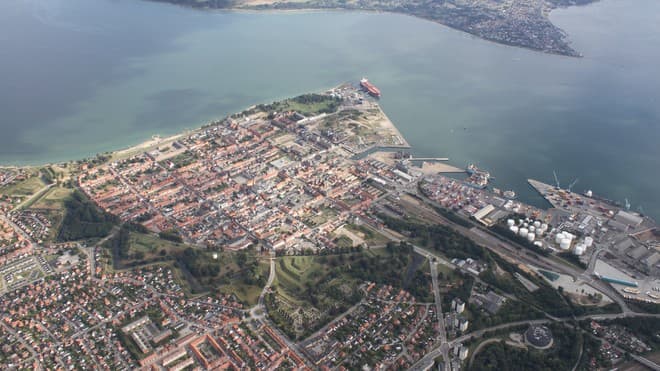
Only the cement factory Aalborg Portland, Denmark's largest emitter of CO2, is officially back in the race - and it is far from certain that it can deliver all the desired reductions.
This is causing both politicians and experts to look forward to Wednesday with nervousness.
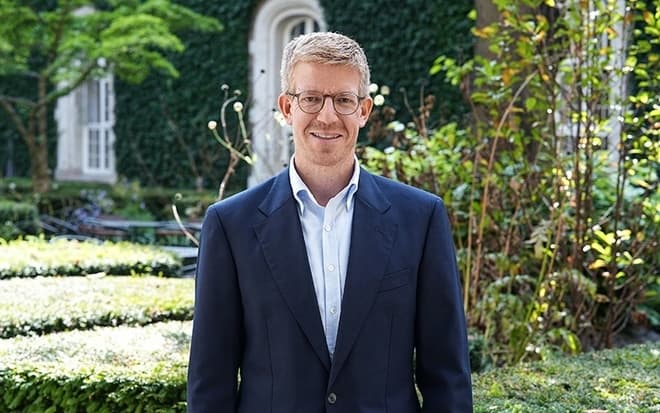
- It is crucial for Denmark's climate policy and our climate target that CO2 capture and storage is a success, says Frederik Bloch Münster, climate spokesman for the Conservative People's Party.
Capturing and storing CO2 from chimneys has for years been seen as playing an absolutely key role in the Danish transition.
The rationale is that some sectors, such as the cement industry and waste incineration, are so difficult to convert to climate-neutral practices that they would rather filter CO2 out of the smoke from the processes.
An unproven technology
Here, the Danish Parliament has allocated over 30 billion kroner to support the technology.
However, it is still a new and unproven technology, where the infrastructure for transport and storage is not yet in place.
This has been a key obstacle for many bidders, explains Tobias Johan Sørensen, senior analyst at the green think tank Concito.
At the same time, the government and a wide circle of parties have structured the tender conditions so that large fines will be imposed if the bidders do not deliver the required CO2 reductions by 2030.
This is done to ensure that the promised reductions are actually made on time, so that the climate target of a 70 percent reduction by 2030 can be met. But the risk of fines has also been a problem, especially for the municipally owned utility companies that have the waste incinerators.
- Small delays can be very expensive, and it is still a new technology that needs to be implemented. Many of the municipally owned utilities have had difficulty seeing themselves taking that risk at this time, says Tobias Johan Sørensen.
In the Danish Parliament's climate policy agreements, it is a prerequisite for the 2030 climate target that the tender delivers 3.2 million tons of CO2 reduction.
But it may prove difficult if only Aalborg Portland bids. Here, it is possible to reduce by up to 1.7 million tons of CO2 in 2030, and the plan from the authorities is that there should be several winners of the support.
In SF, it is hoped that the government is working on a plan B if the tender does not succeed as hoped. But climate rapporteur Signe Munk also acknowledges that errors in the process must be looked for.
- I think it is quite obvious that there is a need for a thorough evaluation of this bidding round, she says.
It should be investigated in particular how waste incineration can be brought into play anyway, she says.
/ritzau/
Text, graphics, images, sound, and other content on this website are protected under copyright law. DK Medier reserves all rights to the content, including the right to exploit the content for the purpose of text and data mining, cf. Section 11b of the Copyright Act and Article 4 of the DSM Directive.
Customers with IP agreements/major customer agreements may only share Danish Offshore Industry articles internally for the purpose of handling specific cases. Sharing in connection with specific cases refers to journaling, archiving, or similar uses.
Customers with a personal subscription/login may not share Danish Offshore Industry articles with individuals who do not themselves have a personal subscription to Danish Offshore Industry.
Any deviation from the above requires written consent from DK Medier.