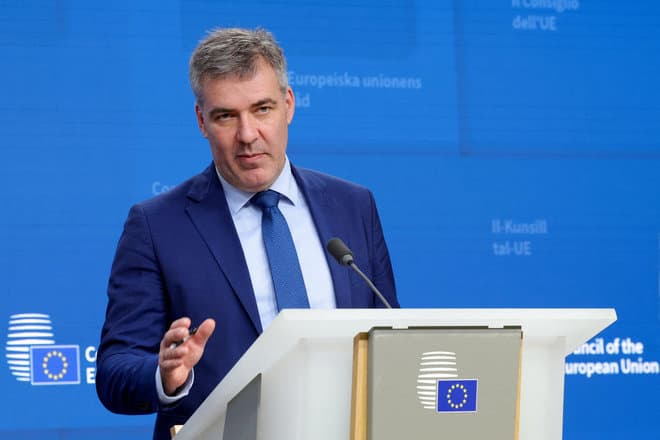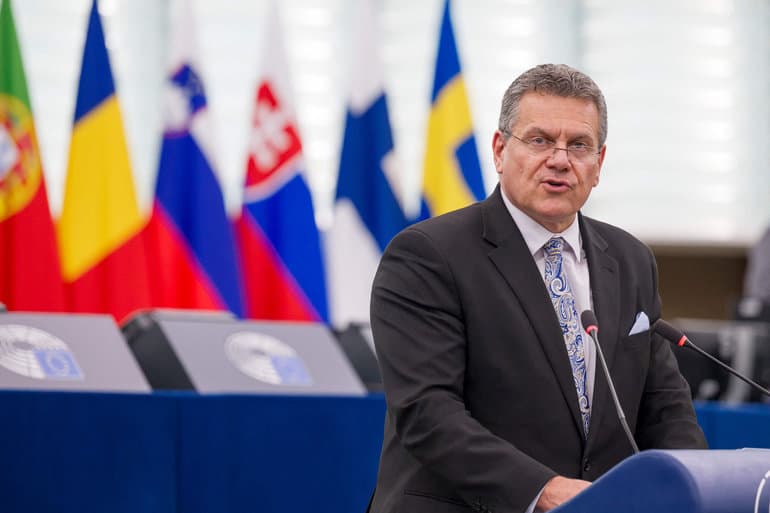
The EU and the US are working intensively on an agreement in principle on tariffs, and it could be in place "in the coming days". This was stated on Wednesday by EU Commissioner for Trade Maros Sefcovic, who is the EU Commission's chief negotiator on the agreement.
- We have made good progress in relation to a declaration of principle. I hope that we will be able to complete our work soon. I hope that we can reach a satisfactory result, perhaps within the coming days, says Maros Sefcovic.
He is thus advocating that the EU and the US will conclude an agreement in principle, which should be a framework for later agreements.
- It should be a framework that should pave the way for a completed agreement between the EU and the US, says Maros Sefcovic.
He has himself led the negotiations, which have been set in high gear ahead of Trump's original deadline of July 9.
- After Von der Leyen and Trump agreed in May to accelerate the negotiations, the negotiations have intensified. We have been in constant contact and ensured that real progress continues to be made, says Maros Sefcovic.
Daily negotiation meetings
He highlights that last week there were four days of political and technical negotiations. They have since been followed up with daily meetings via video link.
- The negotiations continue via remote connection every day, and they are constructive, says Maros Sefcovic.
Trump chose to postpone the deadline for when he will introduce additional tariffs from July 9 to August 1. This has given additional time to negotiate.
The messages from Maros Sefcovic indicate that the EU Commission has chosen the line that, among others, the German Chancellor, Friedrich Merz, has made himself the spokesman for.
Namely, to go for a limited agreement to avoid the situation escalating into a real tariff war with additional tariffs from both the US and the EU. Some EU countries are concerned, however, about whether a quick agreement will mean worse conditions.
EU maintains red line
According to Maros Sefcovic, the EU Commission is maintaining the red line, which concerns the EU's right to set its own standards for products entering the European market.
- There is nothing in our joint statement (with the US, ed.) that will affect our independence in terms of making our own rules, says Maros Sefcovic.
However, he suggests that there will be a change to trade with the US, which will ensure that the US gets more out of trading with the EU:
- Let me be very clear: While we would like to conclude a satisfactory agreement, we will have to strike a balance. Trade with the US is out of balance due to the US trade deficit, says Maros Sefcovic.
Trump has previously indicated that he will not remove the general ten percent tariff on goods from the EU. This could be a way for the US to limit EU exports to the US.
Maros Sefcovic is not revealing the details of the agreement, however. It is therefore unknown what tariff rates Trump would have to maintain despite a possible agreement in principle.
Due to Denmark's special role as the EU presidency country, Prime Minister Mette Frederiksen (S) was cautious about commenting on the negotiations when she visited the EU Parliament in Strasbourg on Tuesday. Here she supported the EU Commission's line in the negotiations:
- There is agreement on the European side that a trade war is a bad idea. I would like to repeat that today. No one will get richer from it. And since we are allies across the Atlantic, we should stand together rather than do the opposite. So my recommendation is clear that there are no tariffs or trade wars on the table, said Mette Frederiksen.
/ritzau/
Text, graphics, images, sound, and other content on this website are protected under copyright law. DK Medier reserves all rights to the content, including the right to exploit the content for the purpose of text and data mining, cf. Section 11b of the Copyright Act and Article 4 of the DSM Directive.
Customers with IP agreements/major customer agreements may only share Danish Offshore Industry articles internally for the purpose of handling specific cases. Sharing in connection with specific cases refers to journaling, archiving, or similar uses.
Customers with a personal subscription/login may not share Danish Offshore Industry articles with individuals who do not themselves have a personal subscription to Danish Offshore Industry.
Any deviation from the above requires written consent from DK Medier.