Around a quarter of Denmark's exports to the US will not be covered by the tariff increase that comes into effect on Wednesday. This is according to calculations from the business organisation Dansk Erhverv. A total of 1039 product groups are exempt from the so-called reciprocal tariffs that US President Donald Trump presented last week. Among other things, pharmaceuticals, parts for electronics and energy products are exempt. The tariff rates vary and will be 20 percent for goods from the EU.
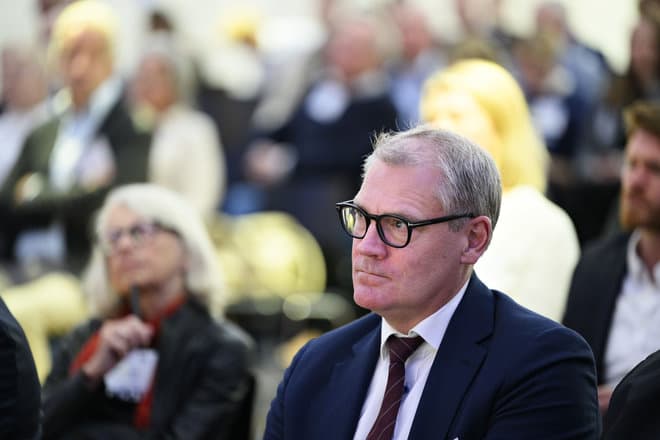
But a large number of Danish goods will not become more expensive when they enter the US, which may come as a surprise to some, says Tore Stramer, chief economist at Dansk Erhverv.
- The long list of exceptions is of great importance to a number of Danish export companies.
- That does not mean that the tariff hammer will not have an effect. It will for a number of companies, but overall the effect will be less than many probably initially assumed, says the economist. According to calculations from the Danish Chamber of Commerce, goods worth 15 billion kroner in Danish exports will be exempt. Total exports to the US amount to around 64 billion kroner.
That is almost a quarter of exports that are exempt. However, that calculation may change soon. Donald Trump said on Wednesday night that he will "soon" introduce extensive tariffs targeting the pharmaceutical industry, which is an important sector for the Danish economy. The president has also previously announced that he will impose tariffs on pharmaceuticals.
In addition to looking at Danish exports, the Danish Chamber of Commerce has also calculated what the list of exemptions means for the US's total imports from abroad. Around 20 percent of imports are exempt from the new tariffs, and in many cases these are goods that are critically important for the US economy, it says. Therefore, the retaliatory tariffs will hit the Americans less hard than it initially appeared.
- It is our impression that the list appears both well-worked and detailed.
- The list excludes a large number of critical goods, which means that the economic shock from the higher tariffs will, all other things being equal, hit the American economy and American consumers less hard. This is hardly a coincidence, says Tore Stramer.
Trump's tariff policy - especially the calculations behind the reciprocal tariffs - has been widely criticized by economists who believe that important factors have not been included. In addition to the reciprocal tariffs, Trump has also introduced a basic tariff of 10 percent on imports, which came into effect on Saturday.
jel /ritzau/
Text, graphics, images, sound, and other content on this website are protected under copyright law. DK Medier reserves all rights to the content, including the right to exploit the content for the purpose of text and data mining, cf. Section 11b of the Copyright Act and Article 4 of the DSM Directive.
Customers with IP agreements/major customer agreements may only share Danish Offshore Industry articles internally for the purpose of handling specific cases. Sharing in connection with specific cases refers to journaling, archiving, or similar uses.
Customers with a personal subscription/login may not share Danish Offshore Industry articles with individuals who do not themselves have a personal subscription to Danish Offshore Industry.
Any deviation from the above requires written consent from DK Medier.