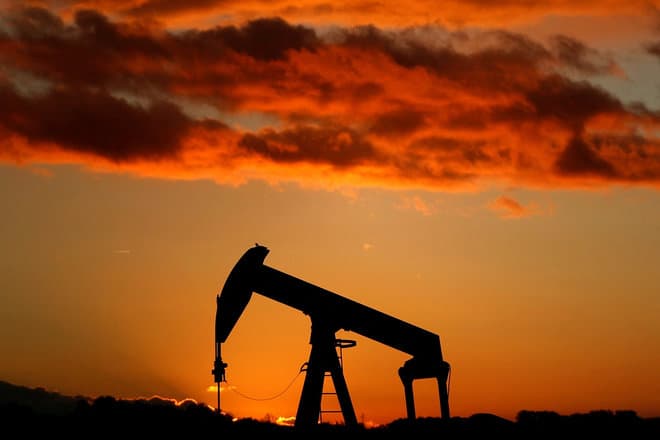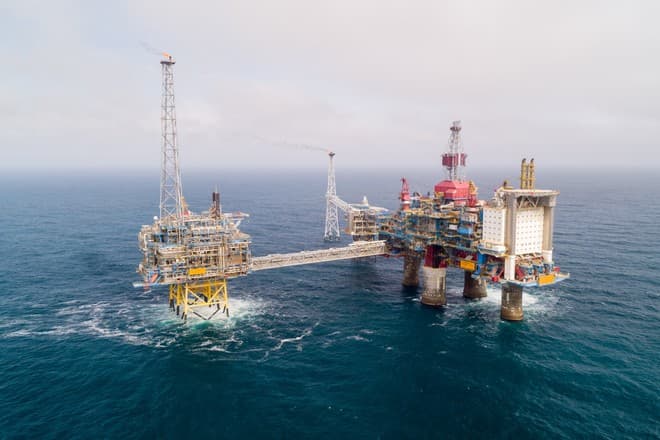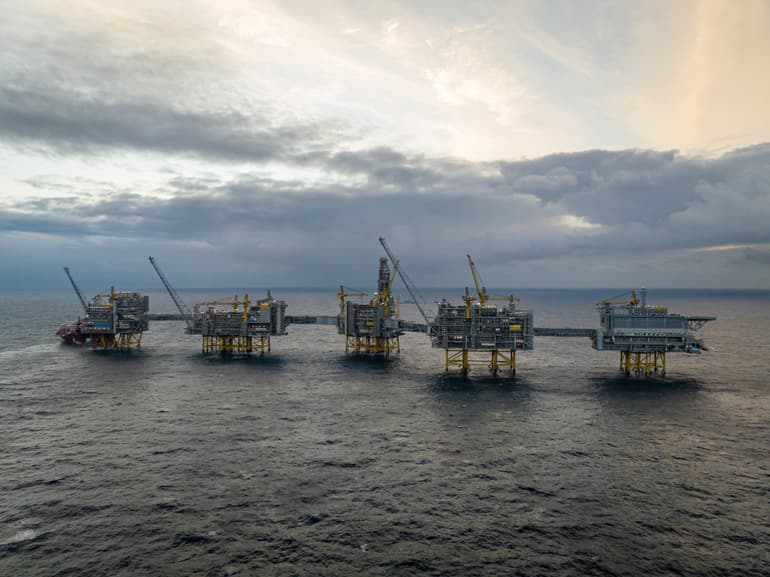
Norwegian police are tightening security at oil and gas installations in the western part of the country. This is reported by Bergensavisen.
- We have increased focus on preventive patrolling at oil and gas installations in our area, says operations manager in the West Police District Helge Blindheim to the newspaper.
This is happening after a gas leak in a pipeline between Finland and Estonia in the Baltic Sea on Sunday, which Finland suspects was caused by "external activity."
When the Nord Stream 1 and 2 gas pipelines were hit by explosions on September 26 last year, the police sent a request to the Armed Forces for assistance and received help from the Norwegian Home Guard to set up a guard at the two areas of Mongstad and Kollsnes, where an oil refinery is located. This has not happened this time.
- We are close and visit the areas more frequently with patrols, but we only use our own forces, says Blindheim.
Finland also increases security
Finland has also increased security. This is reported by Reuters. Here, the country's Ministerial Committee for Foreign and Security Policy states that "with regard to Finland's critical infrastructure, the preparedness level has been increased. From a security and supply perspective, the situation is stable." It has not yet been clarified what this effort specifically consists of.
On Sunday night, the pressure suddenly dropped in one of the pipelines that connect the Northern European gas network.
Finland's Prime Minister, Petteri Orpo, announced on Tuesday afternoon that it is likely that the gas leak was caused by an "external action".
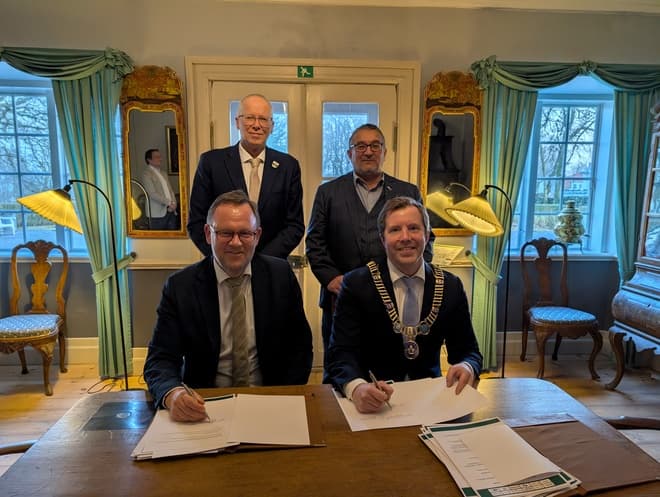
In May, Norway and the United Kingdom signed a memorandum of understanding to improve the protection of critical infrastructure on the seabed, which was intended to strengthen the countries' ability to protect common interests in the North Sea. Among other things, by increasing patrolling the sea areas with aircraft. This happened after leaks at Nord Stream 1 and 2 the year before.
/ritzau/
Text, graphics, images, sound, and other content on this website are protected under copyright law. DK Medier reserves all rights to the content, including the right to exploit the content for the purpose of text and data mining, cf. Section 11b of the Copyright Act and Article 4 of the DSM Directive.
Customers with IP agreements/major customer agreements may only share Danish Offshore Industry articles internally for the purpose of handling specific cases. Sharing in connection with specific cases refers to journaling, archiving, or similar uses.
Customers with a personal subscription/login may not share Danish Offshore Industry articles with individuals who do not themselves have a personal subscription to Danish Offshore Industry.
Any deviation from the above requires written consent from DK Medier.