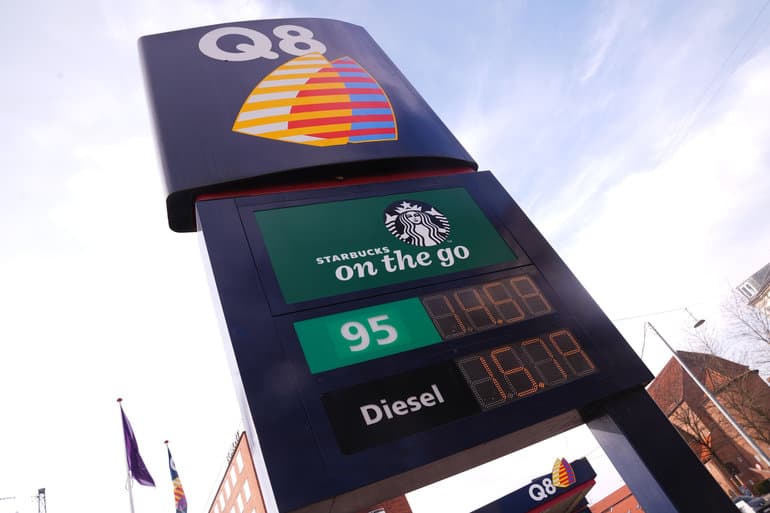
Since the conflict in the Middle East flared up, the price of gasoline has increased by about one krone per liter - and diesel even more. The limited traffic in and out of the Strait of Hormuz in particular is causing fuel prices to rise. This is according to Jens Nærvig Pedersen, a commodities analyst at Danske Bank.
- The key thing is when ships can start sailing through the Strait of Hormuz again. As long as that is not the case, prices will remain high, says Jens Nærvig Pedersen.
A fifth of the world's oil is transported through the Strait of Hormuz, and the lack of transport has put pressure on the price. Lukas Lausen, head of global trade and investments at the Confederation of Danish Industry, says that the likely continued closure of the Strait of Hormuz will be felt directly by consumers.
- If so, it will put further pressure on fuel prices with direct consequences for both consumers and businesses.
In addition, attacks on oil refineries in the Middle East have made it difficult to process oil, which has also had an effect on the rising prices of gasoline and diesel.
The price of diesel in particular has increased. In March, there was a price increase of around two kroner per liter. Commodity analyst Jens Nærvig Pedersen says that this increase may be due to the limited possibilities for processing and the increase in the price of natural gas.
- The price of natural gas is rising, and so is the price of diesel. This is because if the price of gas becomes too high, people can start burning diesel instead.
As long as the conflict in the Middle East does not seem to end, fuel prices will continue to risk rising, says Jens Nærvig Pedersen.
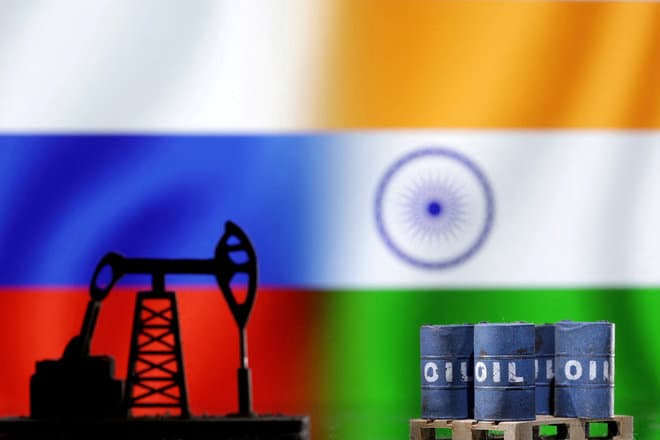
The price of oil is up to 116 dollars per barrel, and Jens Nærvig Pedersen says that there is a risk that prices will reach 130 dollars per barrel of oil, as was experienced when Russia invaded Ukraine four years ago.
Jens Nærvig Pedersen emphasizes that even though rising prices may affect households' private finances, the citizens' economy is in a healthy place - with high employment and wage increases.
/ritzau/
Text, graphics, images, sound, and other content on this website are protected under copyright law. DK Medier reserves all rights to the content, including the right to exploit the content for the purpose of text and data mining, cf. Section 11b of the Copyright Act and Article 4 of the DSM Directive.
Customers with IP agreements/major customer agreements may only share Danish Offshore Industry articles internally for the purpose of handling specific cases. Sharing in connection with specific cases refers to journaling, archiving, or similar uses.
Customers with a personal subscription/login may not share Danish Offshore Industry articles with individuals who do not themselves have a personal subscription to Danish Offshore Industry.
Any deviation from the above requires written consent from DK Medier.