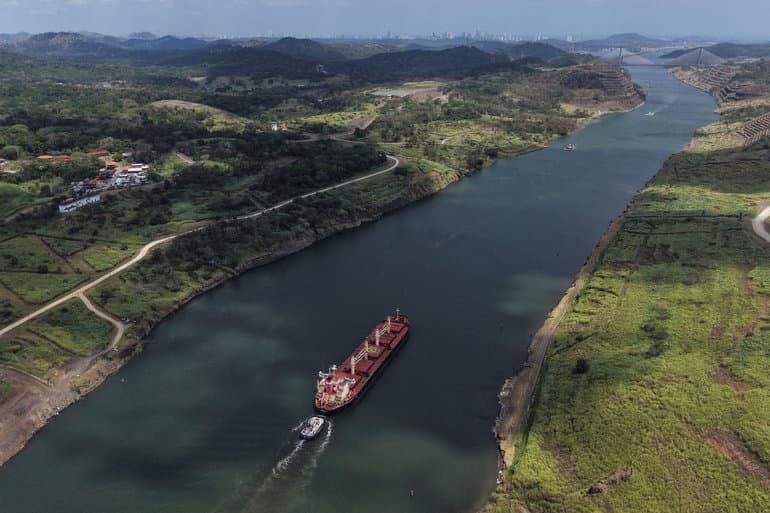
The war in the Middle East has led to an increase in the number of ships sailing through the Panama Canal. This was stated by a deputy administrator of the Panama Canal in an interview with the local television channel Telemetro.
The US and Israel's war against Iran has meant that Iran has effectively closed the Strait of Hormuz. It is a crucial sea route for a fifth of all the world's oil and liquefied natural gas.
- We had expected around 34 daily crossings this year, but in recent weeks we have had 38, 39, 40, says Ilya Espino de Marotta.
Five percent of the world's total seaborne trade passes through the Panama Canal, whose largest users are the US and China.
The US is by far the largest user of the canal, while China is the second largest. The canal makes it possible to sail between the Atlantic and Pacific Oceans without having to round the southern tip of South America. This makes it crucial for international shipping traffic. The sea route primarily connects the US East Coast with China, as well as South Korea and Japan.
- The Panama Canal is a safe and short route that, even with gas prices, still reduces costs, says Ilya Espino de Marotta.
However, she warns that 40 ships a day is not sustainable due to the limited capacity of the Panama Canal. Marotta adds that in April the Panama Canal expects to see an increase in the number of ships carrying liquefied natural gas, after a drop due to Russia's invasion of Ukraine.
- We were up to over 500 transits a year, but that dropped due to the war in Ukraine and Russia - and now it is coming back, she says.
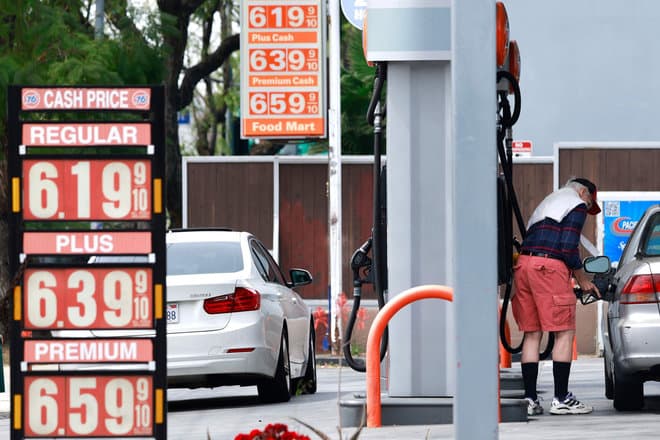
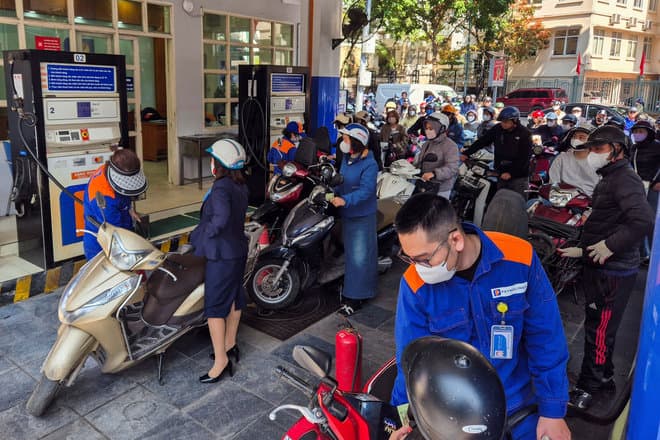
Shipping traffic through the Strait of Hormuz in the Middle East has largely come to a standstill in recent weeks. This has caused energy prices to rise significantly worldwide.
The Strait of Hormuz is a crucial sea route for exporting oil and natural gas from the Gulf states, and the narrow strait is vulnerable to Iranian attacks. The Strait of Hormuz is not officially closed, but most ships have rerouted for fear of attack.
A number of European countries - including Britain, France, Germany and Denmark - have said they will contribute to the effort to secure the Strait of Hormuz.
/ritzau/AFP
Text, graphics, images, sound, and other content on this website are protected under copyright law. DK Medier reserves all rights to the content, including the right to exploit the content for the purpose of text and data mining, cf. Section 11b of the Copyright Act and Article 4 of the DSM Directive.
Customers with IP agreements/major customer agreements may only share Danish Offshore Industry articles internally for the purpose of handling specific cases. Sharing in connection with specific cases refers to journaling, archiving, or similar uses.
Customers with a personal subscription/login may not share Danish Offshore Industry articles with individuals who do not themselves have a personal subscription to Danish Offshore Industry.
Any deviation from the above requires written consent from DK Medier.