27 named Russian ships have apparently been banned from sailing to ports or anchorages in Danish waters. At least that is what is stated in an internal guide from the Danish state pilotage Danpilot, which is responsible for guiding ships through Danish waters. This is reported by Information and Danwatch, who have seen the email with the guide.
- It is prohibited to directly or indirectly provide access to ports, anchorages and to provide services, including bunkering and ship supplies, etc. to the following ships, the email states according to the two media outlets.
The 27 ships in question are then listed. It is not clear from the two media outlets' stories when the email was sent. It is also not clear whether it has been specifically enforced yet.
The ban is due to the EU's 14th sanctions package, which was adopted at the end of June. Here, the 27 named vessels were subject to EU sanctions.
Shadow fleet
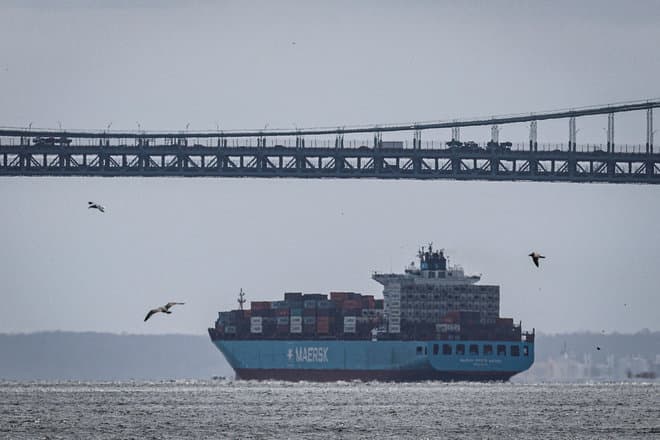
Among them are a number of oil tankers that are believed to be part of the growing Russian shadow fleet, which is increasingly transporting Russian oil from ports in the Baltic Sea through Danish waters.
The ships in the so-called shadow fleet are old and worn out and often with unknown insurance and ownership. The Russians use them to circumvent international sanctions because they cannot be traced back to Russia.
Although the sanctions package was already adopted in June, several media outlets - including Information, Danwatch and Zetland - have described that ships from the shadow fleet have continued to have access to Danish anchorages.
The Danish Minister of Foreign Affairs, Lars Løkke Rasmussen (M), has previously stated that he "takes the challenges with the shadow fleet very seriously". At the same time, the Russians have warned of retaliation if their ships are affected in the Baltic Sea.
Difficult for Denmark to implement the ban
A spokesperson for the Russian Foreign Minister said in early May that "any Danish measure that restricts Russian ships in the Baltic Sea will be seen as hostile and will lead to retaliation". Reuters wrote.
Therefore, it is not a simple matter for Denmark to implement the ban. This is the assessment of Marie Dumoulin, who is a member of the European think tank European Council on Foreign Relations.
- Denmark is really on the front line when it comes to implementing the new sanctions, and you are more exposed to disasters from the shadow fleet in the event of an oil accident or similar. So it is not an easy decision to implement them, she tells Information and Danwatch.
/ritzau/
Text, graphics, images, sound, and other content on this website are protected under copyright law. DK Medier reserves all rights to the content, including the right to exploit the content for the purpose of text and data mining, cf. Section 11b of the Copyright Act and Article 4 of the DSM Directive.
Customers with IP agreements/major customer agreements may only share Danish Offshore Industry articles internally for the purpose of handling specific cases. Sharing in connection with specific cases refers to journaling, archiving, or similar uses.
Customers with a personal subscription/login may not share Danish Offshore Industry articles with individuals who do not themselves have a personal subscription to Danish Offshore Industry.
Any deviation from the above requires written consent from DK Medier.