Annual savings of up to 6000 hours per product :
AI goes offshore with HempaWise: Saving time and resources
The Danish paint giant Hempel is already experienced in the offshore segment – but a chatbot has changed the game. What has happened at Hempel is in a way new territory for the company headquartered in Lyngby north of Copenhagen. The company has started using AI, and it has borne fruit.
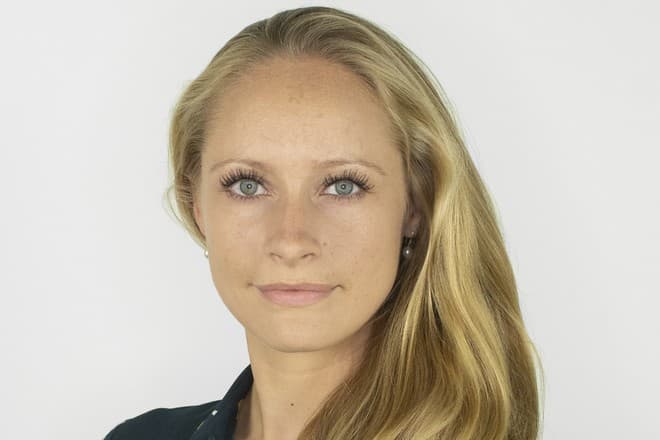
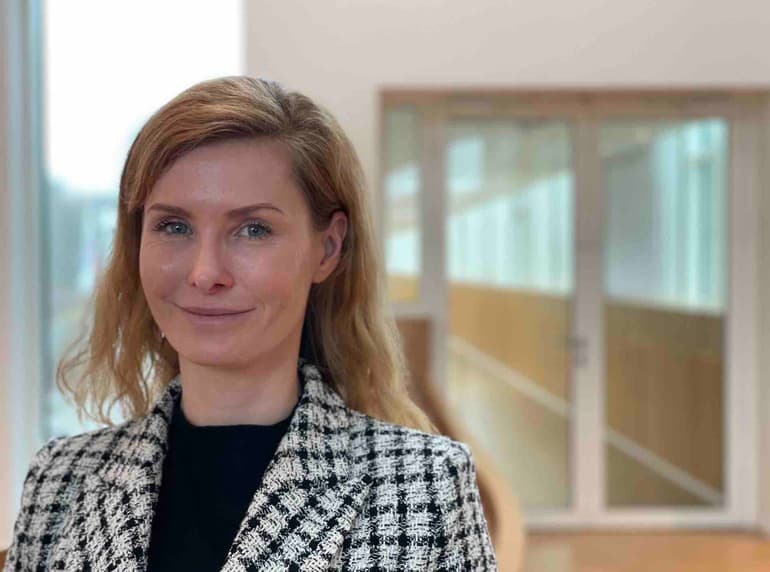
- We have created a small AI chatbot called HempaWise, explains Emilie Lundblad, Director of AI & Automation at Hempel A/S, and elaborates:
- On just one product, we could have spent up to 6,000 hours a year on documentation in the past. AI can now provide answers about, for example, surface treatment for an offshore wind turbine.
When answering, for example, surface treatment for a wind turbine or another offshore installation, one thing is always central.
- When you get an answer from HempaWise, there is full transparency. There is always the underlying documentation. If there is no underlying documentation, it responds that there is no underlying documentation, says Emilie Lundblad.
Users of AI will know that situations can arise where the answers are fictional. At Hempel, we have also taken into account how correct the answer should be. Here, we work at a level where only answers are given that can be supported by documentation.
- We have set it very, very high in terms of how secure it should be. We are working to get to 100 percent, she says.
AI with company values intact
But it's not just that it has to be correct, other parameters are also being worked on.
- We add several layers so that it knows the tone, its role, and both our values, but also what is not our values in Hempel, says Emilie Lundblad.
It can also end up with very concrete answers, where it doesn't have to be complicated.
- I asked a question about what we can offer for offshore wind turbines, and then it comes up with a bid for exactly that, says Emilie Lundblad.
Normally AI will come up with an answer, but there can also be a question about whether a particular paint is suitable as a surface treatment for the customer's task.
- Let's deal with the fact that it doesn't answer, then a specialist and perhaps a test are needed. The test is then carried out both in our laboratory and outside where panels are exposed to both salt water and UV rays, says Emilie Lundblad.
From here it's back to basics and yet not quite.
- It's old school testing, and then someone comes out and looks at a panel once a month and takes a picture, she explains.
From here AI comes back into the picture, because the photograph is used for an analysis with artificial intelligence.
- It's the same technique as when AI assesses pre-cancerous conditions. You can then see, as you do with precursors to cancer, whether there are precursors to rust or what is called corrosion, says Emilie Lundblad.
Only the beginning of the future
The development has only just begun, and there is no sign that it is a development that will stop.
- It is only the imagination that sets the limits, and hopefully the legislators, says Emilie Lundblad, pointing to a company that she already knew before her employment at Hempel:
- The company photographs windmills with drones, and from the images, AI can determine whether the blades have damage that requires repairs, she explains.
But there is also an area where regulation is needed, and it is on the way.
- The EU's Artificial Intelligence Act is important to us. It is because it provides clarity about which data can be used. In other words, it provides clarity so that the use of AI will be fair, ethically sound and transparent. That way you can explain the answers that AI provides, and I'm sure companies are already looking at it now, says Emilie Lundblad about the EU's Artificial Intelligence Act, which has been approved by the EU Parliament, but has not yet been ratified by the EU member states.
Text, graphics, images, sound, and other content on this website are protected under copyright law. DK Medier reserves all rights to the content, including the right to exploit the content for the purpose of text and data mining, cf. Section 11b of the Copyright Act and Article 4 of the DSM Directive.
Customers with IP agreements/major customer agreements may only share Danish Offshore Industry articles internally for the purpose of handling specific cases. Sharing in connection with specific cases refers to journaling, archiving, or similar uses.
Customers with a personal subscription/login may not share Danish Offshore Industry articles with individuals who do not themselves have a personal subscription to Danish Offshore Industry.
Any deviation from the above requires written consent from DK Medier.