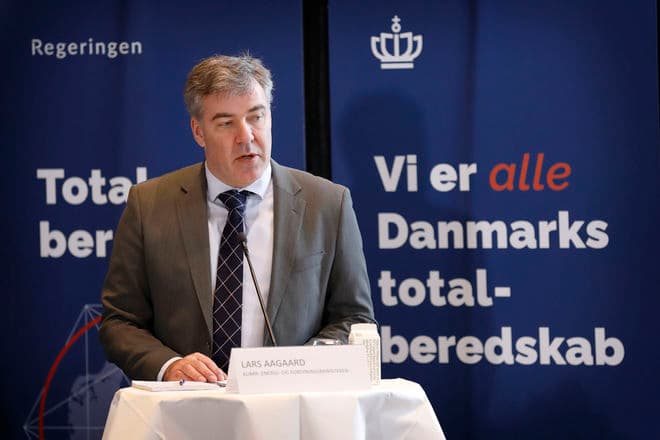
The neutralization of the CO2 tax on fishing will mean lost CO2 reductions of around 400,000-500,000 tons in Denmark in the years leading up to 2030. This is according to Climate Minister Lars Aagaard (M), after the government presented a proposal on Monday to neutralize the tax on fishing up to 2030.
However, the minister does not believe that the canceled tax will have a real climate impact. Because the fishermen's emissions would simply have been moved abroad instead of being reduced in Denmark.
- We are not interested in pursuing a climate policy where 100 percent of CO2 emissions simply move out of the Danish accounts and into neighboring countries, says Lars Aagaard.
The lost reductions are not expected to affect the climate target for 2030, as the tax will be phased in again at that time.
Nevertheless, the proposal is being criticized by the green think tank Concito. The climate problem requires action now, and temperature increases are indifferent to a target in 2030.
- Of course, it doesn't matter. Every single ton we emit is important, says Torsten Hasforth, chief economist at Concito.
A month ago, the CO2 tax on greenhouse gas emissions came into effect for industry and fishing.
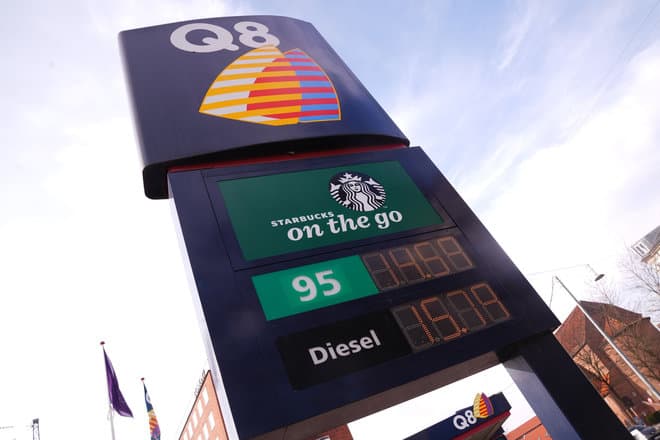
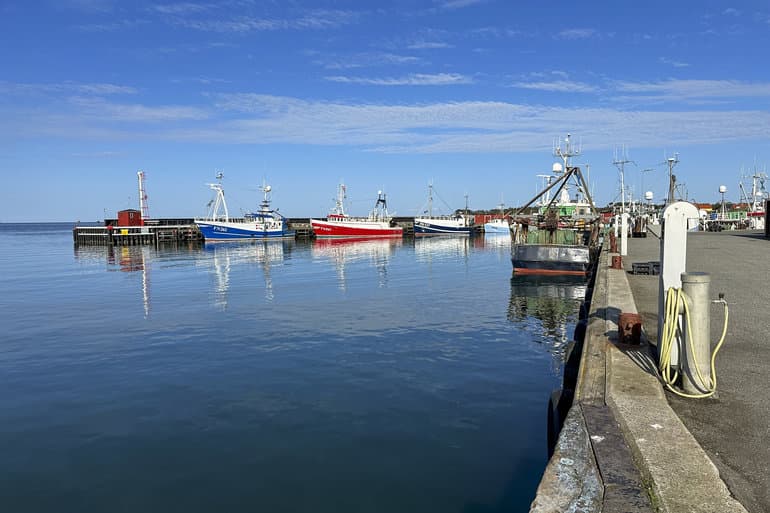
However, this has led to challenges for the fishing industry, with more people starting to add to their emissions in other countries in order to save on the CO2 tax. It is imposed when a fishing boat refuels with diesel in a Danish port.
Lack of alternative fuels
The fishing industry has argued that they do not have the opportunity to convert their diesel boats to electric engines or use green fuels. That is why there is joy among the fishermen.
- It gives us five extra years in which we avoid mass bankruptcies solely because of the tax. Then we hope that there will be technological development by 2030 that can deliver the climate-neutral fuels that we are waiting for, says Svend-Erik Andersen, chairman of the Danish Fisheries Association (DFPO).
Therefore, in the government's view, there will not be any real reductions, but simply a shift of activity and pollution away from Denmark.
- There is a requirement for social balance, and there are some local communities in Denmark for whom this will hit them really hard. It is not Greater Copenhagen that is affected – it is some of the provincial towns where fishing is important, says Lars Aagaard.
Question: Other sectors in the industry will be able to apply the same logic and thus be dissatisfied with fishing getting a discount because they complain?
- I do not agree with that at all. Firstly, the classic industry has a very large restructuring pool. And many industrial companies have the opportunity to move away from using fossil fuels for renewable energy and thus get rid of paying the tax altogether, says Lars Aagaard.
The minister points out that a fisherman has more difficult conditions for adapting his operations.
Concito: Fishing can adapt
However, Torsten Hasforth from Concito believes that fishing could well have adapted to a more climate-friendly practice.
- It is a truth with modifications that fishing does not have the opportunity to adapt. You can switch to a less energy-intensive fishery compared to where you are today, he says.
In the summer of 2022, SF helped to conclude the agreement behind the CO2 tax. Two and a half years later, they are now very dissatisfied with the cancellation of the fishing industry.
- I think that Climate Minister Lars Aagaard should have at least held a meeting with us climate rapporteurs before doing something as radical as postponing a climate tax that we have jointly agreed upon, says climate rapporteur Carl Valentin.
The government's actions will undermine the credibility of the climate policy that the Folketing is pursuing. And it will send an unhealthy signal to the industries that need to adapt, says the climate rapporteur.
- If there was a fisherman who had prepared to pay the tax, they would just get a long nose.
Carl Valentin is also worried about whether agriculture will be inspired when the tax hits them in 2030.
This is how the proposal is structured:
- The CO2 tax will be phased in from 2025 to 2030 and will amount to 350 kroner per ton of CO2 in 2025, increasing by 80 kroner per ton of CO2 annually to 750 kroner per ton of CO2 in 2030.
- However, this must be offset by a corresponding refund, suggests government.
- When a fisherman has filled up with diesel in a Danish port, the fisherman must be able to receive compensation for that payment.
- Therefore, the fisherman will not have to pay any taxes until 2030.
- The proposal must be negotiated with the parties in the Danish Parliament.
Source: Ministry of Food, Agriculture and Fisheries.
amp/ritzau/
Text, graphics, images, sound, and other content on this website are protected under copyright law. DK Medier reserves all rights to the content, including the right to exploit the content for the purpose of text and data mining, cf. Section 11b of the Copyright Act and Article 4 of the DSM Directive.
Customers with IP agreements/major customer agreements may only share Danish Offshore Industry articles internally for the purpose of handling specific cases. Sharing in connection with specific cases refers to journaling, archiving, or similar uses.
Customers with a personal subscription/login may not share Danish Offshore Industry articles with individuals who do not themselves have a personal subscription to Danish Offshore Industry.
Any deviation from the above requires written consent from DK Medier.