With a new employment reform, the politicians at Christiansborg are doing something that they otherwise find difficult. They are stopping managing and deciding.
- It is not easy, as Minister of Employment Ane Halsboe-Jørgensen (S) said on Wednesday at the presentation of the reform.
But it is necessary, she emphasized. Because it is an area where politicians have built rules on top of and managed in detail for years. And that has not been beneficial to employees in the systems or citizens. That is why it must end now.
- It is fundamentally about how to meet people when they lose their jobs or if they become ill, said the Minister of Employment.
With the reform, a broad political majority removes a "massive amount of rules" and frees up the area. Among other things, the government will exempt municipalities from the obligation to establish job centers and will save 2.7 billion kroner. DKK on the largest reform of employment efforts ever.
This means that municipalities can in future close down job centres and must organise the efforts themselves. Therefore, there may be a big difference in the results around the country. Professor and labour market researcher at Aalborg University Flemming Larsen calls the discussion about job centres a bit strange, because the task will be the same in the future.
- Municipalities are currently obliged to have a job centre, although they already look a little different today. After the reform, municipalities can organise the efforts themselves. But the task is in principle the same.
- But if nothing else, it can indicate that people want to think about employment efforts differently, he says in a written comment.
Basically, the system must be made simpler with fewer interviews, fewer rules and less sanctions. Half of the rules in the area will be abolished. Nine out of ten sanctions will be removed. Vulnerable citizens must be met with trust rather than sanctions. The number of interviews in municipalities and unemployment insurance funds will be reduced by 500,000 according to an estimate. This means, among other things, that 3,500 fewer case managers are expected.
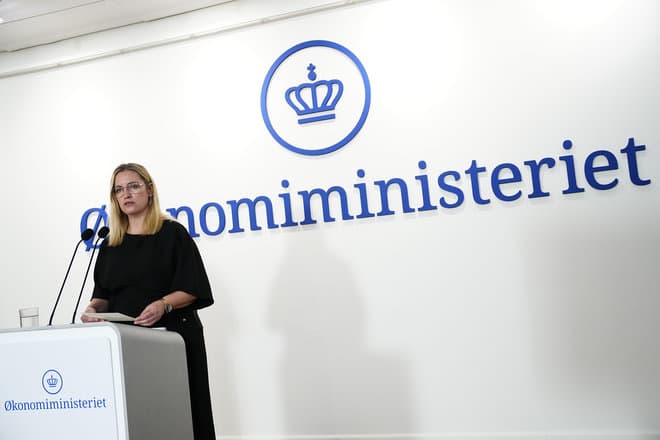
The government gambled on saving three billion kroner, but it ended up at 2.7. This corresponds to over a quarter of the current expenses in the area, which is called the most expensive system in the world. Minister of Economic Affairs Stephanie Lose (V) believes that it is time to clean up.
- It is not an ordinary cleaning. It is a thorough, thorough head cleaning. It is a system that has been created by politicians over a number of years, says Stephanie Lose.
In the municipalities, the reform is seen as a much-needed showdown with bureaucracy and regulatory management. Chairman of the Danish Association of Local Authorities (KL) Martin Damm (V) reports "sweet music" to his ears.
- With the new employment reform, we will get the long-awaited and much-needed paradigm shift that we in the municipalities have been calling for for years, he says in a comment.
However, the new system is criticized by parts of the trade union movement because the unemployment funds do not receive greater responsibility, as they have demanded. Today, the unemployment funds are responsible for contact with the unemployed in the first three months. According to the trade unions, it would have been obvious to extend the unemployment funds' responsibility permanently. Instead, it has become a pilot scheme, where every fourth unemployed person is linked to their unemployment insurance fund for the first four months.
- The government could save a three-digit million amount if we were given responsibility for the unemployed who are ready to work for six months or more.
- And the unemployed could get faster and better access to the labor market, which the unemployment insurance funds know far better than the job centers, says Eva Obdrup, business manager of the trade union 3F's unemployment insurance fund, in a press release.
jel /ritzau/
Text, graphics, images, sound, and other content on this website are protected under copyright law. DK Medier reserves all rights to the content, including the right to exploit the content for the purpose of text and data mining, cf. Section 11b of the Copyright Act and Article 4 of the DSM Directive.
Customers with IP agreements/major customer agreements may only share Danish Offshore Industry articles internally for the purpose of handling specific cases. Sharing in connection with specific cases refers to journaling, archiving, or similar uses.
Customers with a personal subscription/login may not share Danish Offshore Industry articles with individuals who do not themselves have a personal subscription to Danish Offshore Industry.
Any deviation from the above requires written consent from DK Medier.