It may be that politicians have decided to accelerate the green transition with more wind turbines, charging stations and district heating cables in the ground. But in the business community and the trade union movement there is concern about whether there will be enough employees to carry out the tasks, and this seems to be justified.
A new analysis that the engineering company Cowi has done for the organization Industriens Uddannelser, estimates that 126,000 additional employees are needed in industry by 2030 if the goal of reducing emissions by 70 percent is to be achieved. That is a startling number, says CEO of the Confederation of Danish Industry Lars Sandahl Sørensen.
- I am a little overwhelmed because I already know how huge the demand is for skilled workers in general in all corners of our society. Both in the private and public sectors, he says.
According to the analysis, there will be a great need for blacksmiths, industrial technicians and mechanics, for example. In many of the professional groups in the industry, there is currently a shortage of employees, and at the same time, many will retire in the coming years. At the same time, the tasks are growing.
Upgrade from last year
A year ago, the same analysis from Cowi showed that 116,000 additional employees will be needed in the industry in 2030. But since then, several political initiatives have been introduced, especially after Russia's invasion of Ukraine.
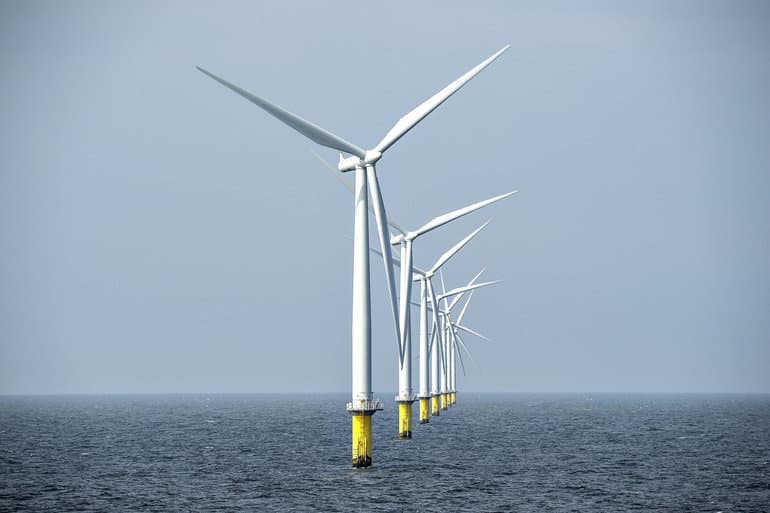
It is especially the advancement of the goal of climate neutrality to 2045 and plans to expand offshore wind and plants with Power-to-X technology, which can convert electricity into green fuel, that are increasing the need for labor. The analysis includes everything from the rollout of district heating and private individuals who need to have heat pumps installed and their houses insulated.
According to the chairman of the Danish Metal Confederation Claus Jensen, a new narrative is needed about how young people can contribute to the green transition if more people are to take up vocational training. He believes that many young people would like to help combat climate change.
- But many of them have no idea where they can do it best. Is it a desk job, or is it learning to build a windmill or make charging stations for cars?
- We will only move something if we can push for a development so that more people can participate in actually building the green transition, says Claus Jensen.
The government will, among other things, solve the problem by giving more money to vocational schools and recently set out to allocate 300 million kroner from next year, increasing to 900 million in 2030.
- If we do not train more skilled workers, we will simply not achieve our climate ambitions, said Prime Minister Mette Frederiksen (S) on August 15.
/ritzau/
Text, graphics, images, sound, and other content on this website are protected under copyright law. DK Medier reserves all rights to the content, including the right to exploit the content for the purpose of text and data mining, cf. Section 11b of the Copyright Act and Article 4 of the DSM Directive.
Customers with IP agreements/major customer agreements may only share Danish Offshore Industry articles internally for the purpose of handling specific cases. Sharing in connection with specific cases refers to journaling, archiving, or similar uses.
Customers with a personal subscription/login may not share Danish Offshore Industry articles with individuals who do not themselves have a personal subscription to Danish Offshore Industry.
Any deviation from the above requires written consent from DK Medier.