On Friday, Energinet announced that the expansion of the electricity transmission network is not going fast enough, and that the electricity grid is therefore under pressure. As a solution, they would, among other things, at the request of the Minister of Climate, Energy and Utilities Lars Aagaard (M) set up a fast-working working group with participation from the industry to speed up the pace.
However, the working group will not be the only initiative to speed up the pace. The government and a number of parties in the Danish Parliament have entered into a new agreement that will give the Parliament greater insight into Energinet's work on expanding the electricity grid. The agreement is intended to strengthen the political processes for information and reporting, so that the parties can react early to barriers that delay the grid expansion. This is stated in a press release by the Ministry of Climate, Energy and Utilities.
The agreement is supported by the government together with the Socialist People's Party, the Liberal Alliance, the Conservative People's Party, the Unity List, the Radikale Venstre and the Alternative. The purpose is to ensure that Energinet has the necessary framework to expand the electricity grid efficiently and in a future-proof manner, while at the same time informing the Folketing quarterly about the status of Energinet's project portfolio.
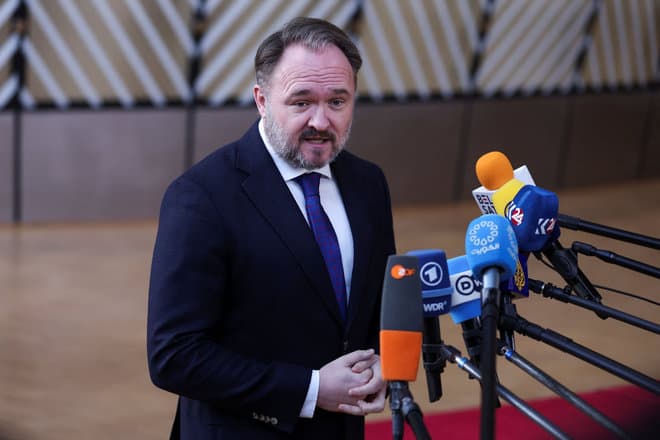
- The electricity grid in Denmark has reached its limit in several places, and this is a clear barrier to both the expansion of renewable energy and electrification. Energinet is challenged, and although a number of initiatives have already been launched, we need to be politically ready to act if we identify specific barriers that hinder the expansion. Therefore, I am pleased that with this broad agreement we are joining hands to follow it closely politically and, among other things, be ready to prioritize what we use the grid for if capacity becomes more scarce, says Lars Aagaard.
As part of the agreement, the government will continuously present solutions that will support faster and more efficient grid expansion, including through faster regulatory processing, greater flexibility and storage, and tariffs that promote efficient use of the electricity grid.