


In a showroom in Hanoi of Vietnamese carmaker VinFast, office worker Do Thi Lan looks at electric cars. Like many others in Southeast Asia, she is currently considering whether now is the time to make the leap.
- We need to calculate our monthly expenses, as the money we spend on petrol has increased, she tells AFP.
The same goes for schoolteacher Dao Thi Hue, who is also looking around the car dealership in the Vietnamese capital.
- Driving an electric car is so much better than driving a petrol-powered vehicle. Both in terms of costs and fuel savings and standing in line to refuel, she says.
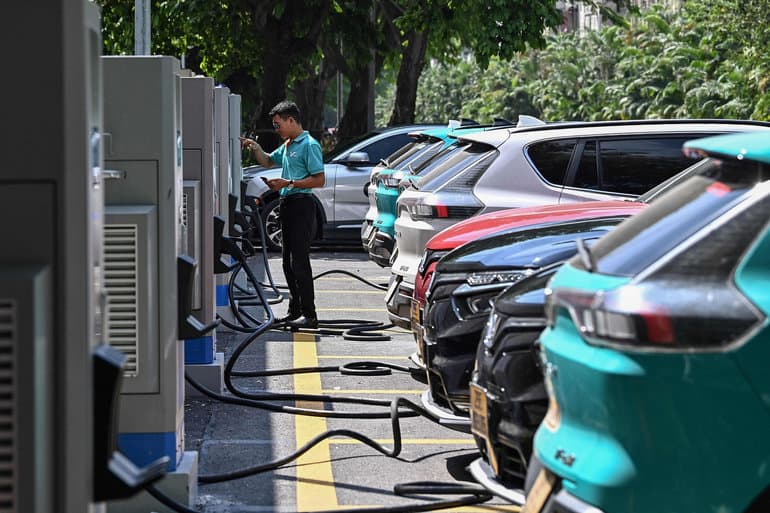
The two Vietnamese are far from alone in wanting to replace their petrol car. Sales of electric cars have surged in Southeast Asia as price-conscious buyers flock to car dealerships to avoid fuel price hikes driven by the Middle East war.
Crude oil prices have risen by about 50 percent since the war began. And earlier this week, the price per barrel topped $100 again, making it expensive for the average consumer to refuel.
Several Asian countries have been hit particularly hard by a sharp drop in the crude oil supplies they depend on and few alternatives to replace them.
In Vietnam, however, the energy crisis has been an unexpected boon for the country’s leading electric car manufacturer, VinFast. In March, the company saw a 127 percent increase in annual sales.
VinFast’s showroom in Hanoi sold between 300 and 400 cars last month. Normally, sales are 200 to 250 cars a month, says the dealership's deputy manager, Pham Minh Hai.
Hai estimates that more than 50 percent of his customers have switched from gasoline to electric cars last month, while the number of customers in the showroom increased by about 30 percent.
- Opening hours have been extended to accommodate the busyness, he adds.
It is not only VinFast that is benefiting from the global turmoil in oil prices. This also applies to several Chinese electric car manufacturers. BYD in particular, which, according to the BBC, overtook American Tesla in January as the world's largest manufacturer of electric cars, is having a great time.
At the Thai car fair Bangkok Auto Show, held earlier this month, BYD secured the most orders of all manufacturers, thus surpassing Japan's Toyota for the first time.
In Thailand, a visit to the local gas station has also become an expensive affair, says 36-year-old pharmacist Pleng Nawintham, whom AFP meets.
- I drive a lot, almost 100 kilometers a day. With the current fuel situation and no idea how long it will last, it has become an important factor that has made me switch, he says.
In the Philippines, BYD is also experiencing increased sales. At a local dealer in the capital, Manila, interest in the Chinese electric cars is "at a whole new level," says the dealer's manager.
In China, however, BYD's sales are falling due to fierce local competition. That's why the manufacturer is focusing on gaining international momentum. The company expects to exceed 1.5 million exported vehicles by 2026, well above the target of 1.3 million announced in January.
Southeast Asia is a huge market for Chinese electric car exports, which is being accelerated by the fact that the number of charging stations in the region is also growing rapidly.
In Indonesia's capital, Jakarta, the city government last week pledged to take "more serious steps to accelerate the development of a national electric vehicle ecosystem" to combat "high energy consumption."
/ritzau/AFP
Text, graphics, images, sound, and other content on this website are protected under copyright law. DK Medier reserves all rights to the content, including the right to exploit the content for the purpose of text and data mining, cf. Section 11b of the Copyright Act and Article 4 of the DSM Directive.
Customers with IP agreements/major customer agreements may only share Danish Offshore Industry articles internally for the purpose of handling specific cases. Sharing in connection with specific cases refers to journaling, archiving, or similar uses.
Customers with a personal subscription/login may not share Danish Offshore Industry articles with individuals who do not themselves have a personal subscription to Danish Offshore Industry.
Any deviation from the above requires written consent from DK Medier.