
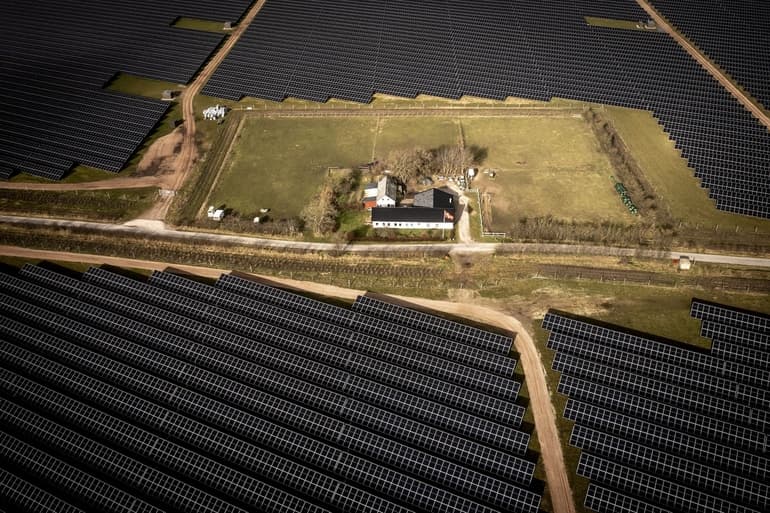
More support should be given to neighbors of solar parks.
This is the opinion of the government, which will increase compensation for neighbors of solar parks with a new proposal, writes Jyllands-Posten. In addition, the owner of a future solar park should be more obligated to take over a house if the solar panels come close.
The proposal, which the Ministry of Climate, Energy and Utilities presented on Wednesday morning, shows that there are 17 initiatives in the proposal.
According to the ministry, a neighbor of a solar plant currently receives an average of approximately 4,500 kroner tax-free per year in renewable energy compensation. That amount is to increase to 9,000 kroner. VE is an abbreviation for renewable energy.
Among the initiatives is that municipalities must be obliged to ensure that there is at least 750 meters from a home to solar cells in the open countryside, if it is a solar cell system that is set up on three or more sides of the home.
For solar cell systems of 100 megawatts or more, homeowners will in future have the right to have the property purchased if it is located less than 275 meters from the system. Today, the requirement is 200 meters.
- We are finally creating a scheme so that neighbors of solar cells and wind turbines have the opportunity to buy cheap green electricity, produced locally, Aagaard tells Jyllands-Posten.
New costs
Some of the 17 initiatives are already known. Including the government's desire to lower the electricity tax in 2026 and 2027, and that it should be easier for municipalities and regions to install solar cells on public buildings.
The government will spend a total of 850 million kroner to ensure more renewable energy on land. The Minister for Climate Change will now discuss the proposals with the rest of the parties in the Folketing.
In 2022, Danish solar cells supplied around six percent of Denmark's net electricity production.
In 2024, that figure had increased to more than nine percent, according to figures from Energinet.
In just three years, from 2020 to 2023, the capacity for electricity production from solar cells in Denmark tripled. This was mainly through the construction of large field plants.
- The government's proposal imposes new costs on those who build solar cell parks, which is effectively an extra tax on these companies. This is hardly the way to more green electricity, says Ulrich Bang, deputy director for climate, energy, environment and construction at the Danish Chamber of Commerce in a written comment to Ritzau.
The same criticism comes from the business organization Green Power Denmark.
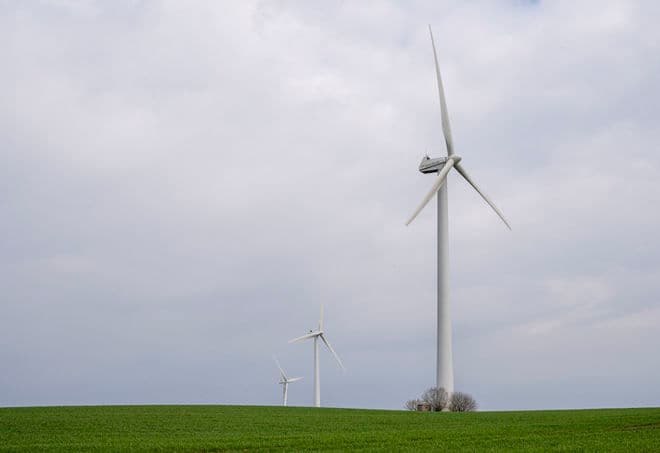
Here, director of renewable energy Camilla Holbech, on the other hand, is pleased that it will be possible to install wind turbines in production forests, i.e. in forest areas where trees grow, for example.
- It is proposals like this that we have worked purposefully for, and that is why we are also extremely happy that the government has accepted it, says Camilla Holbech in a written comment to Ritzau.
/ritzau/
Ed: Last four paragraphs with comments added at 9.03
Text, graphics, images, sound, and other content on this website are protected under copyright law. DK Medier reserves all rights to the content, including the right to exploit the content for the purpose of text and data mining, cf. Section 11b of the Copyright Act and Article 4 of the DSM Directive.
Customers with IP agreements/major customer agreements may only share Danish Offshore Industry articles internally for the purpose of handling specific cases. Sharing in connection with specific cases refers to journaling, archiving, or similar uses.
Customers with a personal subscription/login may not share Danish Offshore Industry articles with individuals who do not themselves have a personal subscription to Danish Offshore Industry.
Any deviation from the above requires written consent from DK Medier.