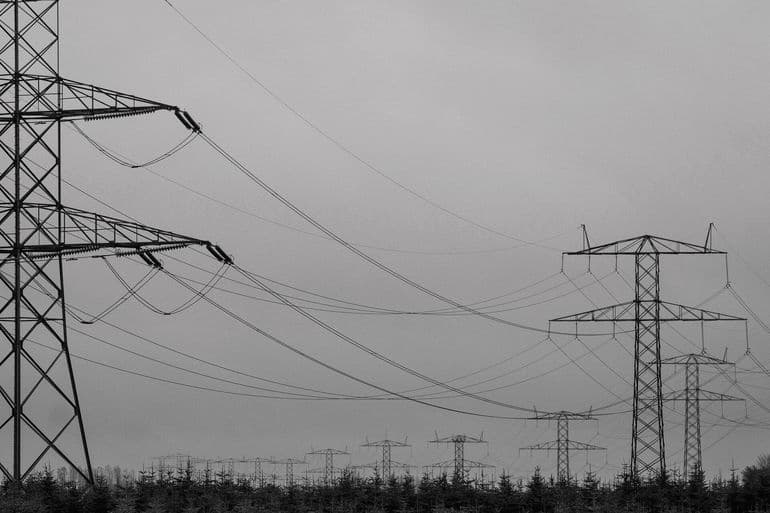
The country's grid companies are investigating solutions to meet the increasing need for electricity. Trefor El-net and Cerius-Radius are now offering a proposal for these solutions. The grid companies will try a model where they buy flexibility from customers to reduce pressure on the grid and thus postpone investments in infrastructure.
The grid companies are facing a major task of expanding the grid so that it can handle increasing demand. In order to optimize resources, Trefor El-net and Cerius-Radius have sent a method report to the Danish Utilities Authority, where they will test pilot projects where customers can receive payment for reducing their power consumption during periods of high load.
- The grid companies have been entrusted with a major responsibility to enable the electrification of society, which is a crucial part of the green transition. We must do this in the most efficient and economically responsible way. We have now taken the initiative to investigate whether it could be interesting for customers to help the grid companies with this task for a fee. Because when we postpone some of the grid expansion, we also minimize the pressure on our operations organization, says CEO of Trefor El-net, Per Sørensen.
Not an alternative to grid expansion
Cäthe Bay-Smidt, function manager at Cerius-Radius, emphasizes that the solution is not an alternative to grid expansion, but a tool to handle the load smarter. According to her, it is important to investigate whether a flexibility model can be implemented where customers are paid to temporarily reduce their electricity consumption during pressure periods.
- With this model, we would like to investigate whether it is possible to create a setup where we agree with customers for a limited period that if there are times when our network is about to reach its maximum load, we will pay them to reduce their consumption by a few megawatts, says Cäthe Bay-Smidt.
The two grid companies are each testing their own model. Cerius-Radius' model involves an availability payment and a variable payment for activated flexibility. Customers receive 15 minutes' notice upon activation. Trefor El-net works with a model where customers commit not to exceed a set capacity in a given period, with a fixed price upon conclusion of the agreement.
Both Trefor El-net and Cerius-Radius look forward to the dialogue with the authorities and expect to launch the pilot projects before the end of the year. The ambition is to gather experience that can form the basis for a permanent model.
- It is important for us to emphasize that this method review is our attempt to get the ball rolling, and that it will be a model that develops over time in interaction with both the industry, the authorities and our customers. And we would like to investigate whether there are players who have an appetite for this market. We believe that there is great potential, and we hope that this model can mean that we unfold this potential to the benefit of both the customers, us and the entire electricity grid, says Per Sørensen.
The models:
Trefor El-net and Cerius-Radius want to test two different models for "market-based procurement of flexibility" to establish alternatives where customers in a given area can receive payment for minimizing their power draw during limited periods of time. For the pilot projects, some suitable locations in the grid will be selected.
The models in brief:
The grid companies identify bottlenecks in the electricity grid. A tender is then made, where interested parties are informed of how much flexibility (MW) the grid companies are requesting, and what period it is for. It will typically be during the winter, when consumption is highest. There will be a prequalification to be able to bid. Interested bidders will submit bids according to a tender specification.
Cerius-Radius’ model:
- The winning bidder(s) will receive an amount for being available upon conclusion of the agreement (availability payment) as well as a variable payment if the grid companies activate the desire for downregulation of the customers’ electricity grid drawdowns
- Activation: The grid companies give the customers a 15-minute notice of activation of the agreement, after which the customers reduce their electricity grid drawdowns
- Finally, there will be a validation of whether the agreement was fulfilled, and then a settlement.
Trefor El-net’s model:
- The winning bidder(s) will be responsible for ensuring that the specified capacity is not exceeded
- The price for the entire period will be fixed upon conclusion of the agreement
- This will be an indirect validation, as it is only in cases where the capacity is exceeded that there is a lack of delivery.
amp
Text, graphics, images, sound, and other content on this website are protected under copyright law. DK Medier reserves all rights to the content, including the right to exploit the content for the purpose of text and data mining, cf. Section 11b of the Copyright Act and Article 4 of the DSM Directive.
Customers with IP agreements/major customer agreements may only share Danish Offshore Industry articles internally for the purpose of handling specific cases. Sharing in connection with specific cases refers to journaling, archiving, or similar uses.
Customers with a personal subscription/login may not share Danish Offshore Industry articles with individuals who do not themselves have a personal subscription to Danish Offshore Industry.
Any deviation from the above requires written consent from DK Medier.