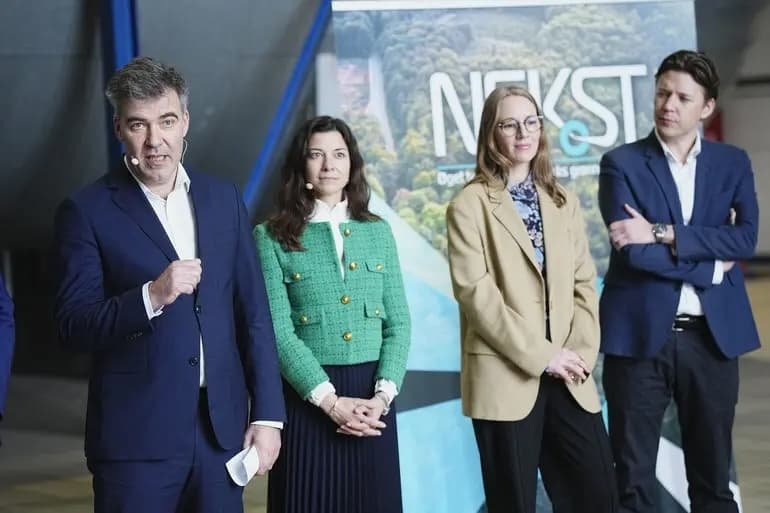
In December last year, the government launched a national energy crisis team (Nekst). Nekst was launched after inspiration from the national operational team (Nost), which was launched during the corona period, and which was supposed to help solve the acute challenges during the pandemic. Nekst is to come up with proposals that can ensure faster action on acute green challenges.
In March, two working groups were established under Nekst and now one of these working groups in the Nekst work track "More sun and wind on land" has come up with five new partial recommendations that can speed up the processing of complaints. This is according to the Ministry of Climate, Energy and Utilities.
- If a rule or workflow that can be dispensed with delays the expansion of renewable energy, it must be removed or changed. The purpose of establishing NEKST was precisely to do away with the 'we care' mentality. It has succeeded. Now we must ensure that the working group's good ideas are put into practice, which we are fully underway, says Minister of Climate, Energy and Utilities Lars Aagaard (M).
Template for applications will help on the way
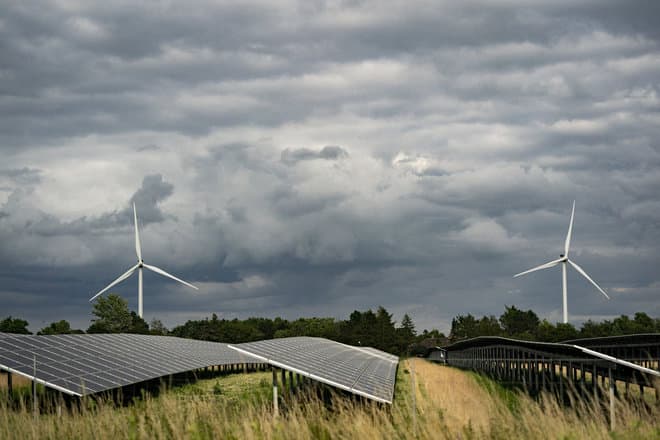
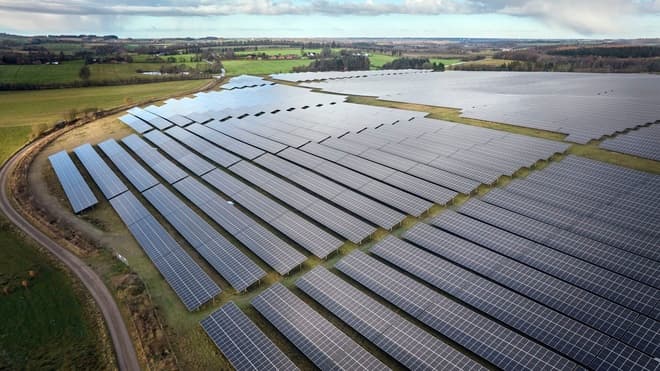
The NEXT working group's "More solar and wind on land" partial recommendations aim to remove barriers that stand in the way of or delay the expansion of renewable energy systems such as solar cells and wind turbines on land. They are targeted at complaint handling in the complaints boards and case handling in the municipalities.
For example, the working group recommends that the consultation period for re-processing an environmental assessment be halved – from eight weeks to 30 days, corresponding to the EU's minimum requirements.
The working group has also prepared a template for "The good renewable energy application", which should be seen as inspiration for municipalities and developers on how application forms can be structured to help renewable energy projects get off to a good start.
- Far too large a proportion of applications for new wind and solar projects end up in complaint handling. That is why we have focused on both creating a template for the good application, in order to minimize the volume of complaints, and on optimizing complaint handling. There is much to be gained here, both in terms of time and resource waste across municipalities, authorities and installers, says Nana Bule, leader of the Nekst working group "More solar and wind on land".
Launching campaign
In continuation of the new recommendations, the working group is launching the video series "Mythbusters," in which leader Nana Bule delves into a number of myths about renewable energy on land. Among other things, the misconception that wind turbines and solar cells destroy nature and biodiversity.
NEKST is continuously submitting recommendations to the government. The More Solar and Wind on Land working group has previously submitted partial recommendations to ensure local support for the expansion of renewable energy on land.
The government has taken part in the political proposal Climate Action - Together for More Green Energy from Solar and Wind on Land. Based on the proposal, an agreement has just been reached on energy parks.
amp
The NEKST work track More sun and wind on land five partial recommendations:
- Makes it possible to set a deadline for submitting final complaints and reject complaints that are obviously without substance. The Ministry of Business and Industry will look into the recommendation.
- More direct and transparent communication in the processing of complaints. The Ministry of Business and Industry will look into the recommendation.
- Focus on the complaint, not the case. The appeals board must limit its review to the points complained about – not look at the entire case. The Ministry of Business and Industry will look into the recommendation.
- Shorter consultation periods when environmental assessments are re-processed. The initiative has been initiated by the Ministry of the Environment. Bill expected to be tabled in 2024.
- RE developers do not have to “start over” when a complaint is sent back. It is being clarified whether this is possible within the current EU regulations.
Source: Ministry of Climate, Energy and Utilities
Text, graphics, images, sound, and other content on this website are protected under copyright law. DK Medier reserves all rights to the content, including the right to exploit the content for the purpose of text and data mining, cf. Section 11b of the Copyright Act and Article 4 of the DSM Directive.
Customers with IP agreements/major customer agreements may only share Danish Offshore Industry articles internally for the purpose of handling specific cases. Sharing in connection with specific cases refers to journaling, archiving, or similar uses.
Customers with a personal subscription/login may not share Danish Offshore Industry articles with individuals who do not themselves have a personal subscription to Danish Offshore Industry.
Any deviation from the above requires written consent from DK Medier.