UPDATED: The EU Commission proposes a 2040 climate target of reducing greenhouse gas emissions by 90 percent compared to 1990 emissions. To achieve the target, the Commission proposes to allow climate credits of up to three percent from 2036.
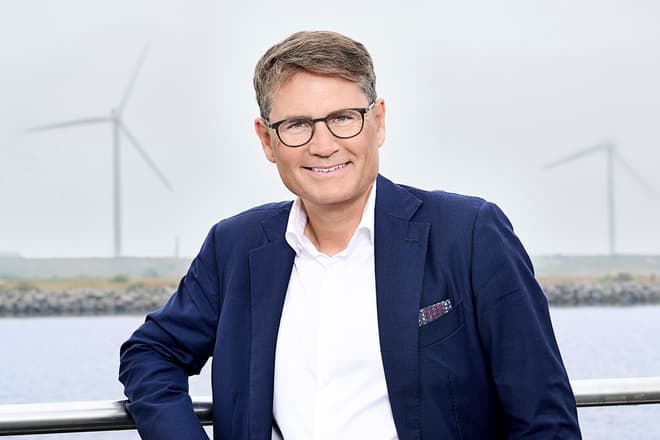
This was announced by Executive Vice-President of the Commission, Teresa Ribera, and Commissioner for Climate Action Wopke Hoekstra at a joint press conference on Wednesday.
To achieve the 2040 target, the Commission proposes three measures that will make the path to the targets more flexible and thus achievable for the countries. One of them is climate credits, which are investments in projects in third countries that reduce CO2 emissions. A further proposal is to give countries greater flexibility to meet the target across sectors.
In concrete terms, this means that a failure to meet the reduction target in one sector can be offset if another sector compensates for it in the form of lower emissions.
The final proposal for more flexibility is to allow domestic permanent carbon removal as part of the EU Emissions Trading System (EU ETS). The emissions trading system requires polluters to pay for their emissions.
Permanent carbon removal is a process of removing and storing greenhouse gases from the atmosphere.
Limited use of climate credits
The use of climate credits must be limited and is intended as an option for European industries that have particular difficulty meeting the reduction target.
According to a spokesperson from the European Commission, the reason why countries are only allowed to use climate credits from 2036 is that it gives more time to investigate effective and transparent projects.
The Commission believes that the 2040 target can give investors more stability, so they can be sure that their investments will bear fruit in the future.
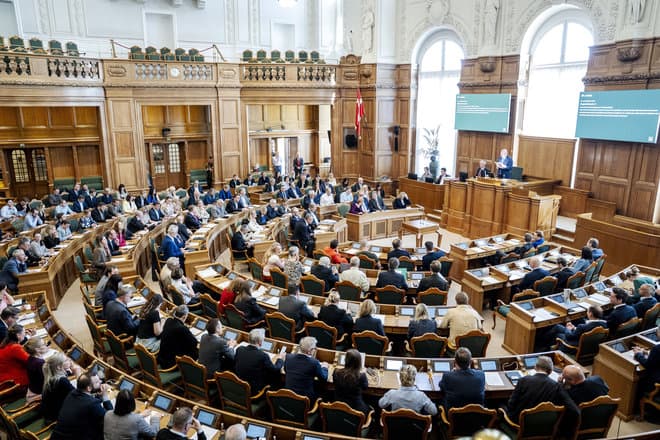
The European Commission's proposal is not final. To be adopted, the proposal must be voted through in the EU Parliament and by a qualified majority in the EU Council of Ministers.
Also to adopt 2035 target
In addition to the 2040 target, the EU institutions must agree on a 2035 climate target, which must be adopted in September this year, so that it can be ready to be presented at COP30 in Brazil later this year. The 2040 target is expected to determine the direction of the 2035 target. Both targets should ultimately pave the way for climate neutrality in 2050.
Climate advocates fear that the EU institutions will not be able to agree on the 2040 target before the 2035 target is to be presented. This may lead to a less ambitious 2035 target.
This is because the 2035 target is not a sub-target for achieving the 2040 target, but rather a sub-target for achieving the longer-term 2050 target.
According to the Commission, due to the short deadline, the negotiations in the EU Council of Ministers are expected to start as soon as possible. The Danish EU Presidency will steer the negotiations for the 2040 target in the EU Council of Ministers.
/ritzau/
Text, graphics, images, sound, and other content on this website are protected under copyright law. DK Medier reserves all rights to the content, including the right to exploit the content for the purpose of text and data mining, cf. Section 11b of the Copyright Act and Article 4 of the DSM Directive.
Customers with IP agreements/major customer agreements may only share Danish Offshore Industry articles internally for the purpose of handling specific cases. Sharing in connection with specific cases refers to journaling, archiving, or similar uses.
Customers with a personal subscription/login may not share Danish Offshore Industry articles with individuals who do not themselves have a personal subscription to Danish Offshore Industry.
Any deviation from the above requires written consent from DK Medier.