

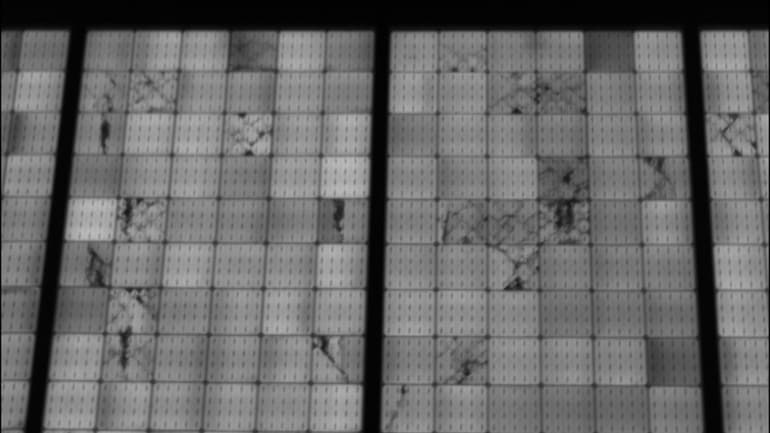
Researchers from DTU, together with the company UXV Technologies, have developed a newly developed special camera for drones that, using artificial intelligence, can detect errors in solar cell systems and increase the production of green electricity. The technology makes it possible to inspect systems faster and more systematically than today. This is stated by DTU - Technical University of Denmark in a press release.
Today, inspections of solar cell systems typically only take place every two to four years, because it is a resource-intensive process. This means that defective modules can in some cases remain for a longer time without producing electricity.
- To know what is going on in the solar cell systems, we must regularly check the modules: Are they connected correctly, is the glass intact, is there dirt blocking them, is safety optimal? With drone inspections, we can quickly get the full overview, says Gisele Benatto, a senior researcher at DTU Electro.
But the newly developed solution makes it easier and cheaper. The solution works by sending up the drone after the sun has set and powering up the solar modules. When the drone flies over the modules, a form of X-ray images are taken from the air, where the solar cells light up using the imaging technology electroluminescence. Cells that glow dimly or have completely dark spots on the otherwise illuminated images reveal if the production of electricity is low – or has completely stopped.
The images are analyzed by an AI platform that can assess the cause of the errors, how big the production loss is, and what measures can improve operations. This gives owners of solar cell systems a better basis for prioritizing repairs.
Can increase energy production
According to the researchers, the technology can increase energy production by 1-2 percent annually in well-functioning systems and between 2 and 5 percent in older systems in poor condition. For a 100 MW system, 1 percent corresponds to to power around 230-250 households per year.
In the long term, the ambition is to automate the solution further, so that the drones can carry out the inspections themselves. At the same time, the researchers are working on new imaging technologies that can simplify the process without the need to supply electricity to the facilities. However, these are solutions that lie some way off in the future.
- It is a solution where we get rid of the heavy setup and can get high-quality images faster, says Gisele Benatto.
Text, graphics, images, sound, and other content on this website are protected under copyright law. DK Medier reserves all rights to the content, including the right to exploit the content for the purpose of text and data mining, cf. Section 11b of the Copyright Act and Article 4 of the DSM Directive.
Customers with IP agreements/major customer agreements may only share Danish Offshore Industry articles internally for the purpose of handling specific cases. Sharing in connection with specific cases refers to journaling, archiving, or similar uses.
Customers with a personal subscription/login may not share Danish Offshore Industry articles with individuals who do not themselves have a personal subscription to Danish Offshore Industry.
Any deviation from the above requires written consent from DK Medier.