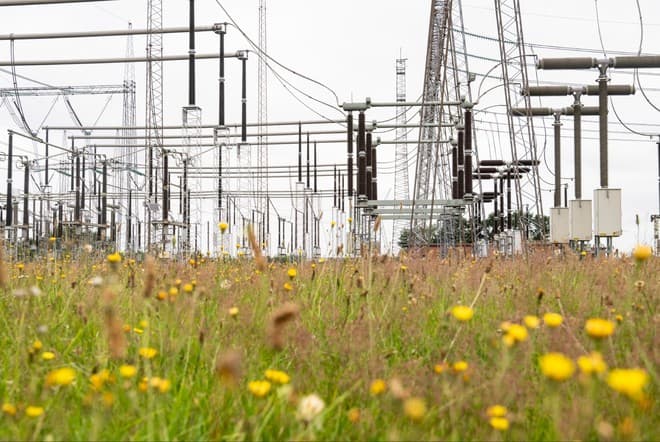
In Tønder Municipality, the so-called Tønder model has come under heavy fire. The Danish Planning and Rural Development Agency considers several of the model's elements to be illegal, and criticism is also being raised by the municipal council. The model was supposed to create local support for wind turbine and solar cell projects. This is what JV.dk writes.
– It is a bomb under the Tønder model. It is illegal. In my book, it has always been that way, says Allan Svendsen, who is a member of the municipal council in Tønder for the Danish People's Party.
The Tønder model means, among other things, that project owners can voluntarily contribute financially to a local non-profit fund and support the surrounding areas around the renewable energy projects. The model also includes advisory referendums. The criticism from the board is that these requirements are not legal as part of the municipality's planning process.
Defense of the Tønder model
The mayor of Tønder, Jørgen Popp Petersen from the Slesvigsk Parti, rejects the criticism and emphasizes that financial contributions are voluntary.
– A guideline is a guideline - not legislation. Yes, reference is made to the Tønder model. When it comes to financial contributions, one must remember that these are voluntary commitments from the project owners, says the mayor.
He also points out that the guidelines limit the municipalities' ability to reject projects and thus risk wasting resources.
The committee chairman: The model is the future
Thomas Ørting Jørgensen, chairman of Tønder Municipality's climate, growth and development committee, defends the model as a necessary solution to promote renewable energy.
– Absolutely not. The Tønder model is the way forward if we in Denmark want to ensure faster and more sustainable renewable energy production in the open countryside and a Denmark in better balance, says Thomas Ørting Jørgensen.
He highlights the model's focus on private law agreements and local co-ownership as a way to ensure support and value in the affected areas.
jel
Text, graphics, images, sound, and other content on this website are protected under copyright law. DK Medier reserves all rights to the content, including the right to exploit the content for the purpose of text and data mining, cf. Section 11b of the Copyright Act and Article 4 of the DSM Directive.
Customers with IP agreements/major customer agreements may only share Danish Offshore Industry articles internally for the purpose of handling specific cases. Sharing in connection with specific cases refers to journaling, archiving, or similar uses.
Customers with a personal subscription/login may not share Danish Offshore Industry articles with individuals who do not themselves have a personal subscription to Danish Offshore Industry.
Any deviation from the above requires written consent from DK Medier.