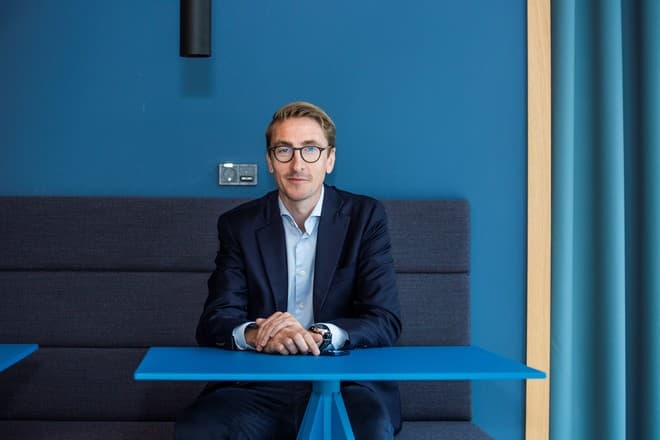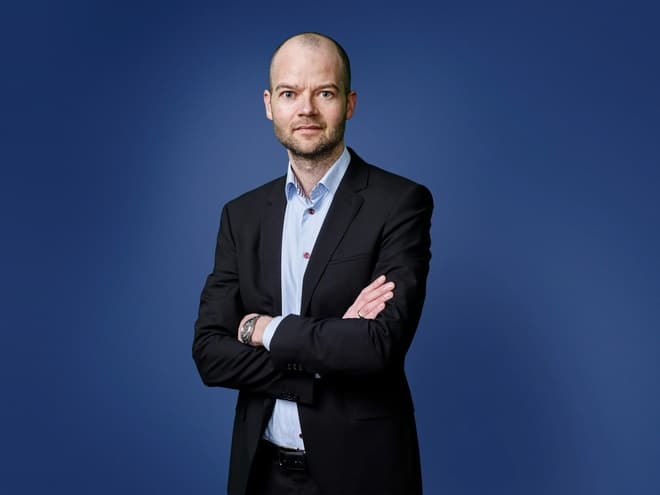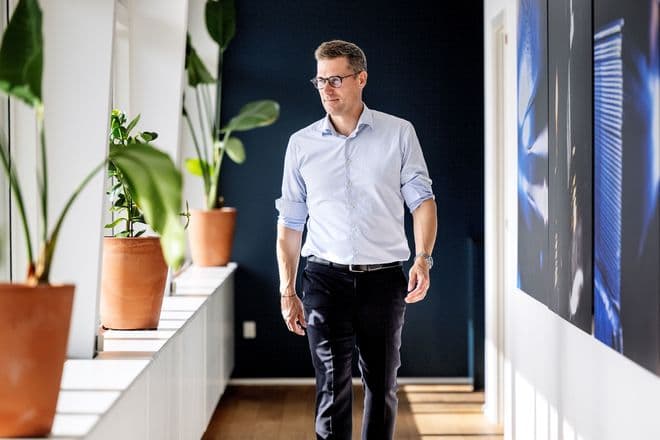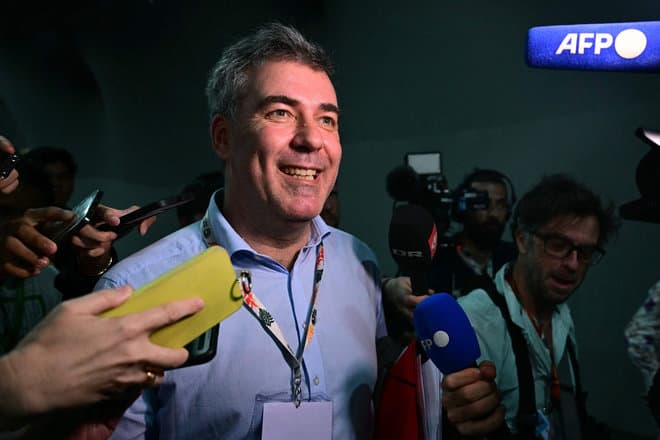
- You have to start somewhere, even if it takes decades, says Pat A Han, CTO at Skovgaard Energy in Lemvig.
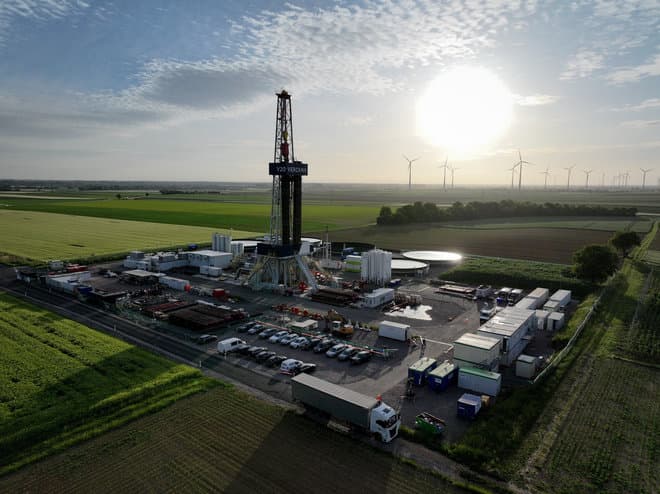
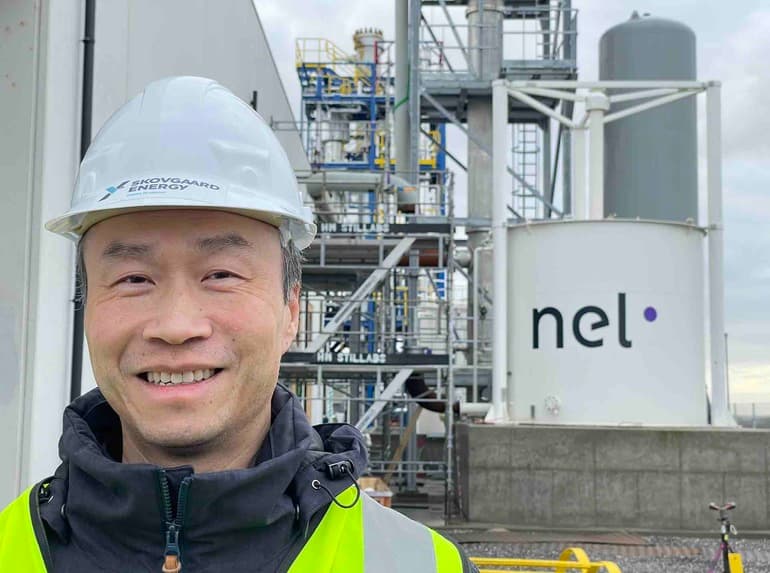
That's the way forward in the green transition that Skovgaard Energy's technical director talks about when we meet REDDAP PtX south of Lemvig. The plant will soon be producing green ammonia, but right now the craftsmen are still working.
Pat A Han is, despite his name, a true Danish. He is from Smørum and has Vietnamese roots. The DTU-educated chemical engineer already has experience from Topsoe with ammonia production from fossil sources. And even though he divides his working week between Lemvig and his family in Zealand, this is not a short visit to Northwest Jutland on the career ladder. He has already bought a home in Lemvig, so if anything, Skovgaard Energy's technical director seems ready for the long, tough stretch of the green transition.
- The plan is to replace fossil energy, otherwise nothing will happen. You have to start somewhere, even if it takes decades, says Pat A Han, who has a realistic and honest approach.
But something is already happening at Skovgaard Energy, because REDDAP PtX outside the village of Ramme is rapidly approaching its final completion. It is nothing less than the world's first dynamic PtX plant, which can start and stop production in just ten minutes.
- We have done what could be done. The plant is ten MW, and there is a direct line according to the old rules, explains Pat A Han about the direct line from solar cells and wind turbines, bypassing the public grid's expensive grid tariffs.
Apart from the fact that the plant is dynamic, there is little new.
- They have been doing it for over 100 years. The new thing is that we are running on renewable energy, he says and adds:
- It is an energy storage project that helps balance the electricity grid, because we can store the liquid ammonia. Otherwise, production and consumption should ideally match.
The plant will produce around 5,000 tons of green ammonia per year. This is where the green electricity is stored. He can also explain why it is a necessary piece of the green transition.
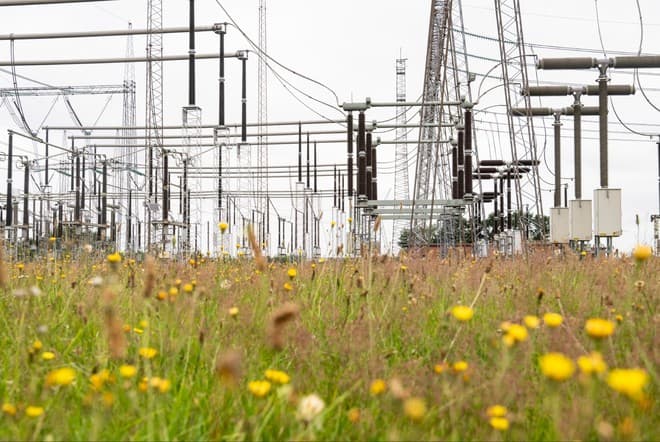
- No wind turbines have been installed for the last six years because there is no capacity in the electricity grid, adds Pat A Han.
Refining is the way to Danish growth
When the planned expansion of offshore wind takes off in the future, there is also an opportunity to send a refined product further out into the world.
- Here we refine it into ammonia, because it does not benefit society to send electricity out of the country, explains Pat A Han, who also points to the development of the local community:
- We act locally, and it must happen here in Northwest Jutland, where there is both space and sun and wind.
The dynamic plant will be the cornerstone of the green transition, and it can be made even larger.
- It can be scaled up to one GW – a scaling of ten to twenty times at first. The challenge is the commercial aspect, says Pat A Han and points out:
- It will only be commercial if there is legislation that supports it. It could be a CO2 tax on fossil energy. This does not apply to food production.
Otherwise, there is a factor that naturally pulls the other way.
- Don't forget the market, take a trip across the border into the world. It's about security of supply and jobs, because energy is big politics. In Denmark, it's the elite that sets the agenda, explains Pat A Han, even though he himself can be said to be part of the elite but just with a different attitude.
There is also a joy in work that the technical director wants to share.
- I'm proud that we're getting something done, even though we're only about 30 people in addition to the 12 employees at Måbjerg Biogas, says Pat A Han.
Text, graphics, images, sound, and other content on this website are protected under copyright law. DK Medier reserves all rights to the content, including the right to exploit the content for the purpose of text and data mining, cf. Section 11b of the Copyright Act and Article 4 of the DSM Directive.
Customers with IP agreements/major customer agreements may only share Danish Offshore Industry articles internally for the purpose of handling specific cases. Sharing in connection with specific cases refers to journaling, archiving, or similar uses.
Customers with a personal subscription/login may not share Danish Offshore Industry articles with individuals who do not themselves have a personal subscription to Danish Offshore Industry.
Any deviation from the above requires written consent from DK Medier.