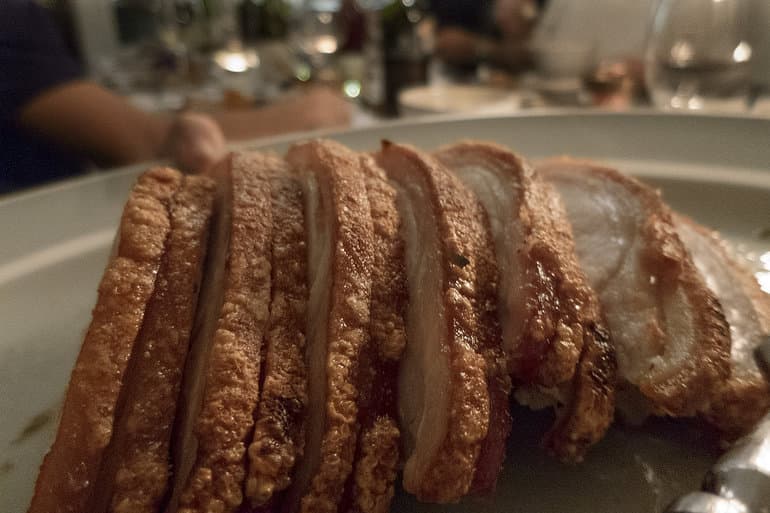
Duck, pork and other fatty foods are on the tables around Danish homes these days.
And what is not eaten ends up being used as input to the country's biogas plants to a large extent.
Figures from the industry organization Biogas Denmark show that the country's biogas plants receive 30 percent more organic waste in January compared to the other months of the year.
The large amounts of food waste mean almost 60 percent higher production of biogas in January compared to a normal month.
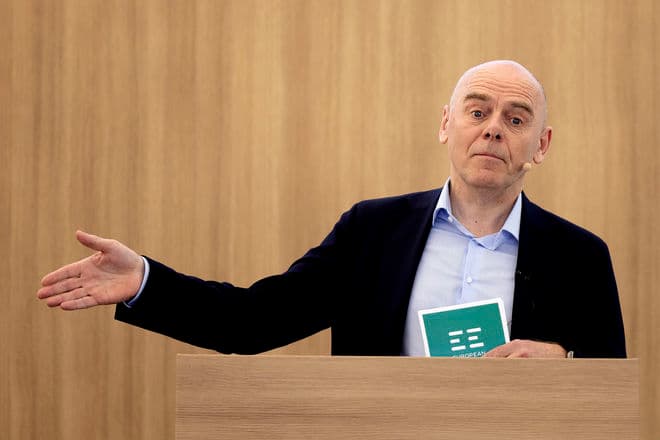
This is explained by CEO Lars Kaspersen.
- Duck fat at Christmas simply produces more gas than carrots in July. This means that even if the volume only increases by 30 percent, gas production increases by almost 60 percent, he says.
According to the director, this is because the rich Christmas food is more energy-rich than the food we typically consume the rest of the year.
The waste company Gemidan A/S processes food waste from approximately half of the country's municipalities.
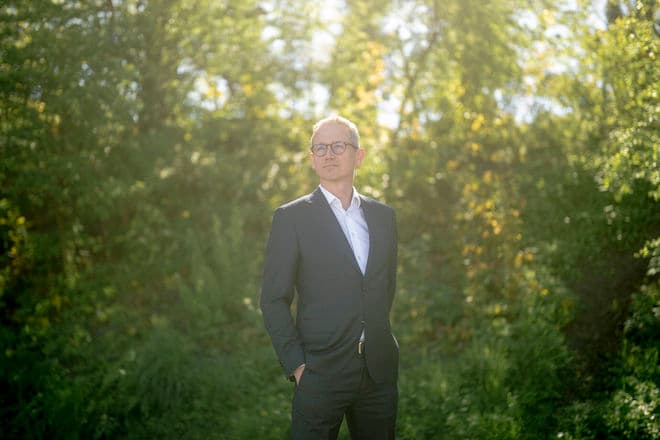
January is by far the busiest month of the year, explains sales manager Tobias Breinholt Hoffmann.
- In January, we actually can't keep up. There are only so many hours in the day, he says.
Gemidan has five facilities across the country for receiving and pre-treating food waste.
They are located in Viborg, Frederikshavn, Holsted, Odense and Ølstykke.
- We have designed our facilities so that we can keep the organic waste until it is pre-treated, and there is space at the biogas plants to receive it, says Tobias Breinholt Hoffman.
At the facilities, machines remove the bags and other non-organic material.
The sales manager praises the Danes for generally being good at sorting food waste correctly.
- It is approximately 85 percent food waste when we receive it. The rest is bags and other non-organic material. It's actually quite excellent, he says.
When the waste has been pre-treated, it is sent to the biogas plants, where it is converted into various forms of energy.
- It is used for heating in households, gas boilers in industry, where the green gas is used in production instead of fossil gas, and it is then used in the transport sector and in many other places.
- The residual product that you get back is something you can use to spread on the fields as fertilizer and thus help ensure next year's harvest, so it is a green cycle that provides both energy and fertilizer, says Lars Kaspersen from Biogas Danmark.
According to the director, it is about recycling food waste.
- The most important thing is that you do not cook more food than you and your family can and want to eat, and then make sure that the rest ends up in the green bag (sorting of food waste, ed.) to green energy.
- It's remembering the last thing that makes it successful, says Lars Kaspersen.
According to the Danish Energy Agency, in 2024 around 620,000 tonnes of food waste from households and commercial kitchens were fed to biogas plants. This corresponds to an average of 50,000 tonnes per month.
The production of biogas in Denmark has been increasing in recent years.
Manure and other livestock manure make up almost 75 percent of the input to agricultural-based biogas plants.
/ritzau/
Text, graphics, images, sound, and other content on this website are protected under copyright law. DK Medier reserves all rights to the content, including the right to exploit the content for the purpose of text and data mining, cf. Section 11b of the Copyright Act and Article 4 of the DSM Directive.
Customers with IP agreements/major customer agreements may only share Danish Offshore Industry articles internally for the purpose of handling specific cases. Sharing in connection with specific cases refers to journaling, archiving, or similar uses.
Customers with a personal subscription/login may not share Danish Offshore Industry articles with individuals who do not themselves have a personal subscription to Danish Offshore Industry.
Any deviation from the above requires written consent from DK Medier.