A political agreement postpones a CO2 tax on fishing, and as compensation, the entire Belt Sea and large parts of the inland Danish waters will be exempt from environmentally harmful trawl fishing.
It has been just over six months since the government itself introduced a CO2 tax, but now fishing is exempted until 2029, after which the tax will be introduced gradually. This is because the development of green fuels is not as far along as hoped.
- When the CO2 tax was introduced several years ago, it was hoped that the opportunity for conversion would be present now that the CO2 tax has come into force, says Fisheries Minister Jacob Jensen (V) to Ritzau.
The tax on fishing will be postponed until 2029, when it will be phased in by 50 percent, corresponding to 375 kroner per ton of CO2. This is money that is returned to the industry as conversion support. The industry will pay a CO2 tax from this year.
The government proposed using money from the Green Fund to compensate fishermen for the CO2 tax. But several parties rejected this because the money should go to sustainable development, while this is the opposite.
Instead, they have been found in the financial room for manoeuvre, which is the state's expected surplus in the coming years, if the forecasts hold.
Criticism from the Economic Council
A month ago, the Economic Council harshly criticized the government's plans to suspend the fisheries climate tax.
The Council believes that there are technical solutions that could reduce the industry's fuel consumption and climate bill. For example, trawl fishing, which uses a lot of energy to be dragged across the seabed, could be abandoned.
It is precisely part of the agreement, which has been a long time in the making and costs two billion kroner, that a large trawl-free area will be introduced throughout the Belt Sea.
This also applies to several areas in the Kattegat around existing Natura 2000 areas and a large sea area off Djursland.
Today, only Øresund is a trawl-free zone. According to the Ministry of the Environment, this corresponds to an area of 4.6 percent of total Danish waters. From now on, it will be prohibited to use bottom-trawling gear in areas corresponding to 19 percent of total Danish waters.
Environment Minister Magnus Heunicke (S) believes that there will be no more environmentally harmful emissions due to the agreement, and when the CO2 tax comes into full force in 2030, the trawl-free zones will continue to apply.
- This is one of the biggest agreements to get our marine nature in good condition. It is absolutely necessary to protect our seabed and get better habitats for fish fry, both for cod, turbot, plaice and of course our porpoises, which are also suffering at the moment, he says.
The Danish Fishing Association calls it a relief that the CO2 tax is being postponed, but is concerned about the ban on trawl fishing. This will have a severe impact on coastal fishing from the smaller fishing ports such as Bagenkop, Grenaa, Bønnerup, Østerby on Læsø and Gilleleje, which are called "the backbone of Danish fishing".
- When you politically ban fishing with bottom-trawling gear, it has major local consequences. This agreement eliminates the possibilities for fishing from Bønnerup and Grenaa. And the fishing on Læsø and from Gilleleje is coming under pressure, says chairman Svend-Erik Andersen in a statement.
The conversion is postponed
However, the Danish Nature Conservation Association is happy about the ban, which heralds a new "paradigm" in nature protection.
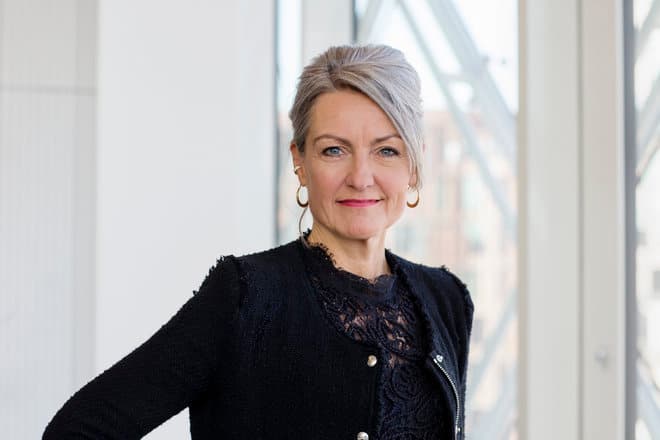
But president Maria Reumert Gjerding calls the postponement of the CO2 tax special treatment, because fishing will be the only industry that does not pay for their climate pollution.
- This is targeted support for the part of fishing that should be converted to sustainable fishing, but now does not have to start the conversion at all. It is an unfortunate signal that you can avoid climate taxes if you complain enough, says Maria Reumert Gjerding in a statement.
/ritzau/
Updated 13.28
Text, graphics, images, sound, and other content on this website are protected under copyright law. DK Medier reserves all rights to the content, including the right to exploit the content for the purpose of text and data mining, cf. Section 11b of the Copyright Act and Article 4 of the DSM Directive.
Customers with IP agreements/major customer agreements may only share Danish Offshore Industry articles internally for the purpose of handling specific cases. Sharing in connection with specific cases refers to journaling, archiving, or similar uses.
Customers with a personal subscription/login may not share Danish Offshore Industry articles with individuals who do not themselves have a personal subscription to Danish Offshore Industry.
Any deviation from the above requires written consent from DK Medier.