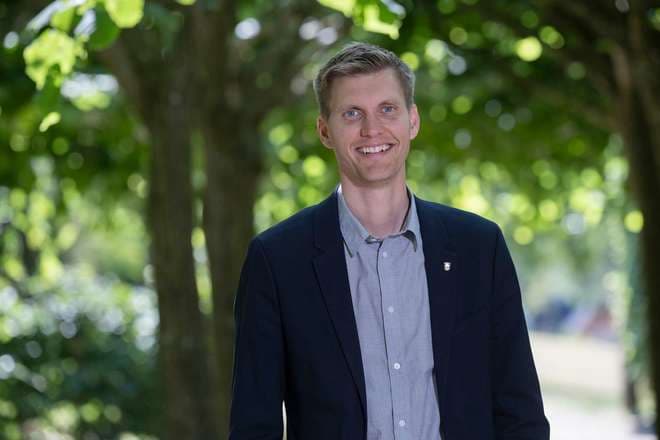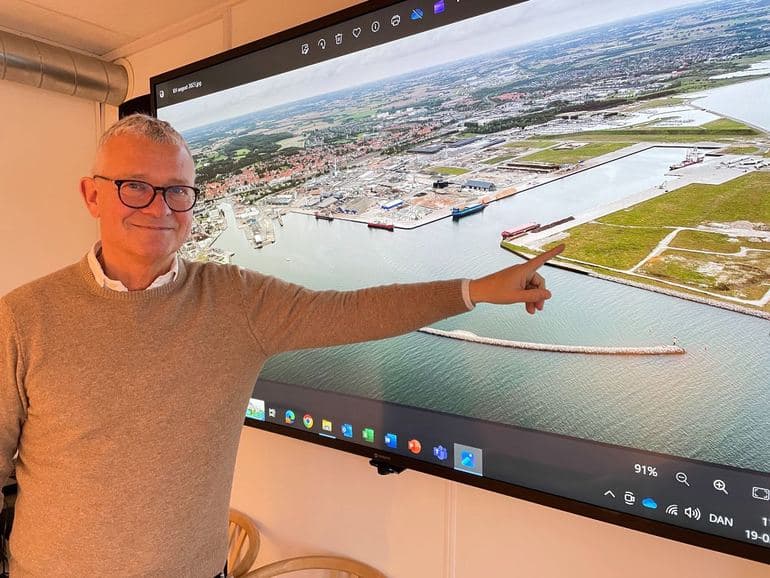
The rumor about the Port of Køge as a shipping port for offshore wind turbines has been widespread over the past year. The director of the Port of Køge, Thomas Elm Kampmann, is happy to acknowledge the port's ambitions.
- Our immediate area is full of planned wind farms, so we have a justification as a shipping port in the coming decade, explains Thomas Elm Kampmann and further explains:
- The port depth is 9.5 meters all the way to the quay, which is standard throughout the Baltic Sea.
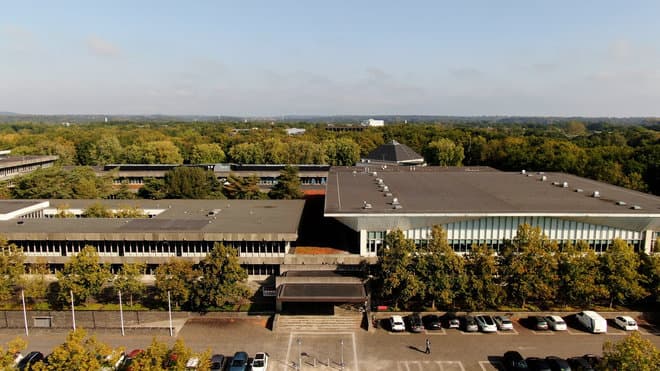
The port is about to complete an expansion that began back in 2005, and at that time, shipping turbines was not considered part of the port expansion.
- The shipping port was not part of the plan for the port expansion, but we have enough space to prepare 120-130,000 m2 for use tomorrow, adds the port director.
A shipping project that missed
The Port of Køge has already been involved in Kriegers Flak, although the unloading took place from the Port of Rønne.
- We have had numerous support ships and a ship with the steel foundations in the Port of Køge in connection with Kriegers Flak, says the director, before mentioning the project that everyone thought would be the port's first unloading project:
- We had put our trust in Aflandshage, but that project is now uncertain due to studies of bats.
The Aflandshage Wind Farm south of Copenhagen in Køge Bay would have been an obvious first unloading project for the Port of Køge. The park was supposed to supply electricity to 300,000 households in the capital area for the energy company Hofor.
- But even though that possibility probably no longer exists, it doesn't stop us, he continues.
- We are continuing the preparations as if there were a wind project, so that an installation vessel can operate inside the port basin, explains Thomas Elm Kampmann, pointing to the area where unloading projects will possibly take place.
Economically sustainable port expansion
Thomas Elm Kampmann has been port director at Køge Port since 2000, which means that he has been part of the port's development for three decades. This long-term stability is also reflected in the port expansion, which started back in 2005.
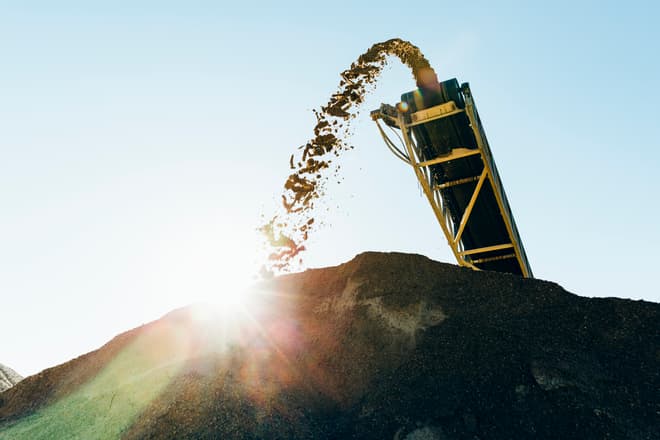
While other ports borrow money for the expansion, approximately half of the 1.2 billion kr. is financed by receiving land to fill the port area. The port has received contaminated and other soil, which has been used to fill the inner port area. In contrast to the soil scandal at Nordic Waste in Ølstykke, this has been done in a safe manner with ongoing control and full security.
- We received the permit in 2005, when Roskilde County granted the permit, and the Danish Environmental Protection Agency has been the supervisory authority. We have double sheet piles in the ground, and there is a natural clay layer below the ground, explains the director.
However, the soil is only moderately contaminated.
- It is category three contaminated soil, which corresponds to the contamination next to a motorway, says Thomas Elm Kampmann, pointing out that the soil will no longer be contaminated after 30 years.
The payment for the soil received has meant that the port, unlike many others, is in a strong financial position. The expansion has almost been financially sustainable.
- The expansion has taken several years, but about half of it has been financed by receiving land, he explains.
Port with a holistic view
Due to the receipt of land, the port director is also the director of Køge Land Depot and the Scandinavian Transport Center. The mission extends beyond running a successful port.
- It's about creating activity, and we have a holistic approach to running the port. It's about the employees settling here, and when the companies locate here, everything must follow, says Thomas Elm Kampmann, who is also a local politician in the Conservative People's Party and is currently in his second term on the city council.
While the port has 15 employees, the companies at the port have a total of 300 employees, but the companies in the Scandinavian Transport Center have between 4,000 and 5,000 employees. The entire municipality currently has just over 62,000 inhabitants.
The long-term goal for the port is to become a hub, where the upcoming Fehmarnbelt connection opens up opportunities for electrified freight transport of containers all the way from Hamburg to Køge. Here, the Scandinavian Transport Center and the port will then become the hub for the entire region.
The Port of Køge is also in a favorable situation because urban development in Copenhagen does not take port operations into account. This opens up opportunities for the East Zealand port.
- Everything that is happening in Copenhagen right now means that we are almost alone as a commercial port in East Zealand, says Thomas Elm Kampmann unique opportunity.
"Come back in a year"
The director is quite sure of one thing, though.
- If you come back in a year, I hope there is more to tell, he says with an expression that shows that the rumors about the Port of Køge as a shipping port may soon be confirmed.
When it comes to the wind projects that will definitely come to Denmark, he has a clear position.
- Danish turbines - from Siemens Gamesa, Vestas or even Chinese turbines - must be shipped from Danish ports to the Danish parks, says Thomas Elm Kampmann.
The Port of Køge has also received help from the world's leading port within shipping of turbines.
- It is a new area for us, and we have had really good sparring with the Port of Esbjerg and Dennis there, says Thomas Elm Kampmann about the director of the Port of Esbjerg, Dennis Jul Pedersen, who has extensive experience with the wind market for ports.
Text, graphics, images, sound, and other content on this website are protected under copyright law. DK Medier reserves all rights to the content, including the right to exploit the content for the purpose of text and data mining, cf. Section 11b of the Copyright Act and Article 4 of the DSM Directive.
Customers with IP agreements/major customer agreements may only share Danish Offshore Industry articles internally for the purpose of handling specific cases. Sharing in connection with specific cases refers to journaling, archiving, or similar uses.
Customers with a personal subscription/login may not share Danish Offshore Industry articles with individuals who do not themselves have a personal subscription to Danish Offshore Industry.
Any deviation from the above requires written consent from DK Medier.