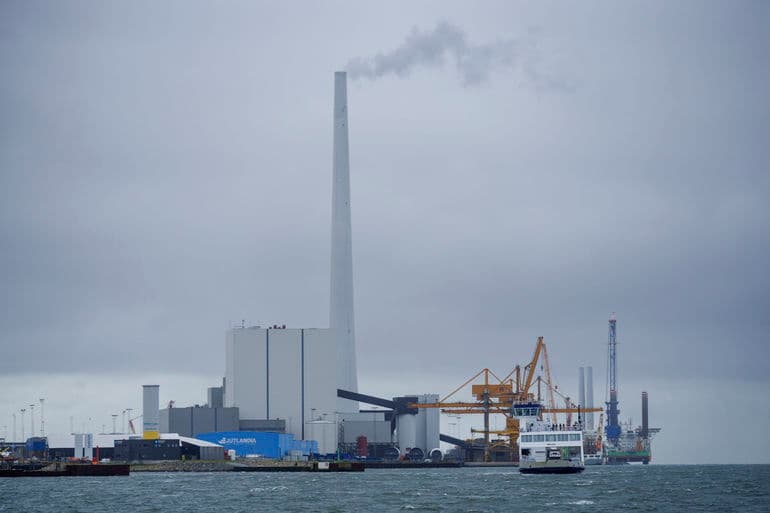
Coal consumption in Denmark has fallen by a good 31 percent in 2024 compared to the previous year. This is shown by the Danish Energy Agency's preliminary energy statistics, the agency writes in a press release. The energy statistics provide an overall overview of Denmark's energy production and consumption.
The Energy Agency's statistics also show how renewable energy - primarily from biomass and wind power - "more than offset the decline in coal consumption". This follows the trend, where Danish coal consumption has fallen by almost 90 percent since 2010. According to Deputy Director of the Danish Energy Agency, Stine Leth Rasmussen, the new figures show that coal is rapidly becoming a thing of the past in Danish electricity production.
- The phasing out of coal is a central piece in the green transition and crucial for meeting Denmark's ambitious climate goals. It is therefore gratifying that we can see that coal consumption has decreased significantly last year, she says in the press release.
The Danish Energy Agency also writes that the use of coal was discontinued at both the Fynsværket and the Esbjergværket during the past year. This means that coal in electricity and district heating production is now only the main fuel at the Nordjyllandsværket, the agency writes. As a consequence of the decrease in coal consumption, Denmark's actual CO2 emissions from energy consumption fell by 4.4 percent in 2024, it says.
While we are seeing a decrease in total coal consumption in Denmark, things are not going the same way on a global level. In December, a report from the UN's International Energy Agency (IEA) stated that it was expected that the world's total consumption of coal would reach a record level for the third year in a row. According to the agency's report, coal consumption is expected to peak in 2027 and then probably decline again.
Burning coal is one of the most polluting ways to generate electricity. Scientists have warned for decades about the effects of burning coal - including air pollution and climate change. Burning releases greenhouse gases, which make it harder for the Earth to release its heat. This causes temperatures to rise, which can have major consequences for, among other things, ocean currents and weather systems.
jel /ritzau/
Text, graphics, images, sound, and other content on this website are protected under copyright law. DK Medier reserves all rights to the content, including the right to exploit the content for the purpose of text and data mining, cf. Section 11b of the Copyright Act and Article 4 of the DSM Directive.
Customers with IP agreements/major customer agreements may only share Danish Offshore Industry articles internally for the purpose of handling specific cases. Sharing in connection with specific cases refers to journaling, archiving, or similar uses.
Customers with a personal subscription/login may not share Danish Offshore Industry articles with individuals who do not themselves have a personal subscription to Danish Offshore Industry.
Any deviation from the above requires written consent from DK Medier.