The country's largest industrial CO2 emitter, Aalborg Portland, reduced its emissions by 16 percent last year, corresponding to 269,000 tons of CO2. This means that the cement producer has cut more than a third - 36 percent - of its annual emissions since 2021. The company announced this on Tuesday.
- We have met our own target for 2024, says Michael Lundgaard Thomsen, the company's director of external affairs.
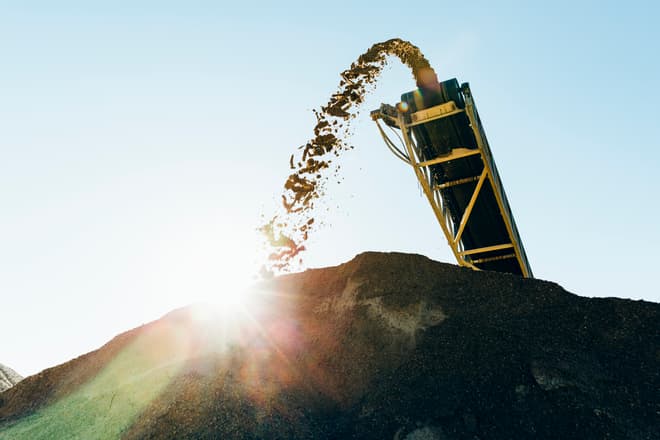
According to the company, the total reduction corresponds to the annual emissions of 73,000 Danes. A large part of Aalborg Portland's energy consumption comes from large kilns that must be able to heat chalk at 1,500 degrees in order to make cement. Therefore, the fuels used have been a major focus in recent years in order to reduce the climate footprint.
Almost two-thirds of the reduction in the three-year period has occurred because fossil fuels have been replaced with alternative fuels. This means that, for example, oil and coal have been replaced with industrial waste or biomass in the form of cashew nut shells.
The remaining reduction comes partly from more sustainable products and partly from market effects. The latter part covers a decrease in sales after the products were imposed a CO2 tax. This is also what is called leakage effects. Leakage is a concept that covers the fact that if higher taxes, for example, affect a production in Denmark, there is a risk that the same product will simply be produced elsewhere, without the total CO2 emissions falling.
Many of the company's CO2-reducing initiatives have been initiated after it made an agreement with the then government in 2020. The agreement was to lead to a reduction of 660,000 tons of CO2 by 2030.
- It was based on the assumptions that existed at the time. A few years ago we raised the reduction target to 1.6 million tons, says Michael Lundgaard Thomsen and continues:
- To get there, the major element is still the fuels, which will contribute approximately 900,000 tons. When we are finished with these biomass fuels, we will also look into using natural gas and biogas.
The latest target means that Aalborg Portland will reduce its emissions by 73 percent. by 2030 compared to emissions in 2021. To achieve the goal, the company is also preparing the construction of a CO2 capture plant, which is expected to be ready in 2029. In October last year, it was announced that it had been granted 1.6 billion kroner from the EU for the plant.
jel /ritzau/
Text, graphics, images, sound, and other content on this website are protected under copyright law. DK Medier reserves all rights to the content, including the right to exploit the content for the purpose of text and data mining, cf. Section 11b of the Copyright Act and Article 4 of the DSM Directive.
Customers with IP agreements/major customer agreements may only share Danish Offshore Industry articles internally for the purpose of handling specific cases. Sharing in connection with specific cases refers to journaling, archiving, or similar uses.
Customers with a personal subscription/login may not share Danish Offshore Industry articles with individuals who do not themselves have a personal subscription to Danish Offshore Industry.
Any deviation from the above requires written consent from DK Medier.