Oil prices are rising in the wake of the US attack on three nuclear facilities in the oil-producing state of Iran over the weekend. The AFP news agency reports this on Monday night Danish time.
When trading opened after the weekend, prices rose by more than four percent for both European Brent oil and American WTI oil. The price reached its highest level since January this year at the stock exchange opening. Prices have since fallen slightly.
On Monday night, the price of a barrel of Brent oil is 2.2 percent higher than at the stock exchange opening, while the price of a barrel of WTI oil has increased by 2.1 percent since trading opened.
Iran is the world's ninth largest producer of oil. The country produces around 3.3 million barrels of oil per day. Half of the oil is exported, while the country keeps the other half for its own consumption.
The price of oil typically moves when a conflict unfolds in that part of the world. Tensions in the Middle East can create concerns that it will have an impact on oil supplies - and thus the price.
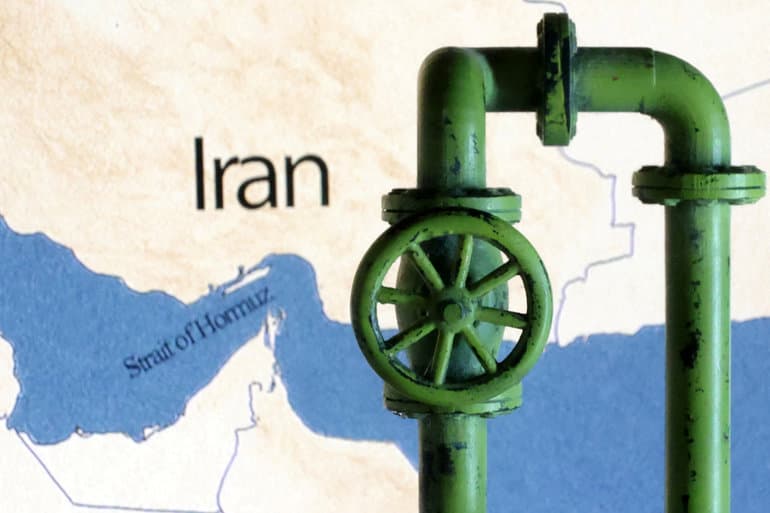
Oil market observers fear that Iran will close the Strait of Hormuz in response to the American attacks. On Sunday, there were reports that Iran's parliament will close the Strait of Hormuz. However, the final decision reportedly lies with Iran's Supreme National Security Council.
The strait, which lies between the Persian Gulf and the Gulf of Oman, is one of the busiest in the world. A fifth of the world's oil is transported via this route.
According to AFP, economists at the bank MUFG warn of great uncertainty in the development of the oil price. An analysis from economists suggests that the price of oil could rise by up to $10 per barrel.
/ritzau/
Text, graphics, images, sound, and other content on this website are protected under copyright law. DK Medier reserves all rights to the content, including the right to exploit the content for the purpose of text and data mining, cf. Section 11b of the Copyright Act and Article 4 of the DSM Directive.
Customers with IP agreements/major customer agreements may only share Danish Offshore Industry articles internally for the purpose of handling specific cases. Sharing in connection with specific cases refers to journaling, archiving, or similar uses.
Customers with a personal subscription/login may not share Danish Offshore Industry articles with individuals who do not themselves have a personal subscription to Danish Offshore Industry.
Any deviation from the above requires written consent from DK Medier.