How do you transform industrial ports into global wind hubs? How do you design tenders that attract long-term investments? And how do you build a national supply chain while ensuring local support?
These are not theoretical questions, but urgent, practical challenges for Australia, which is working to unlock its enormous potential for offshore wind.
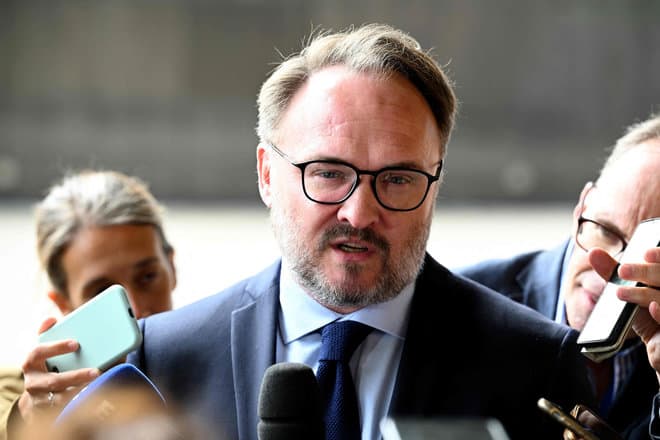
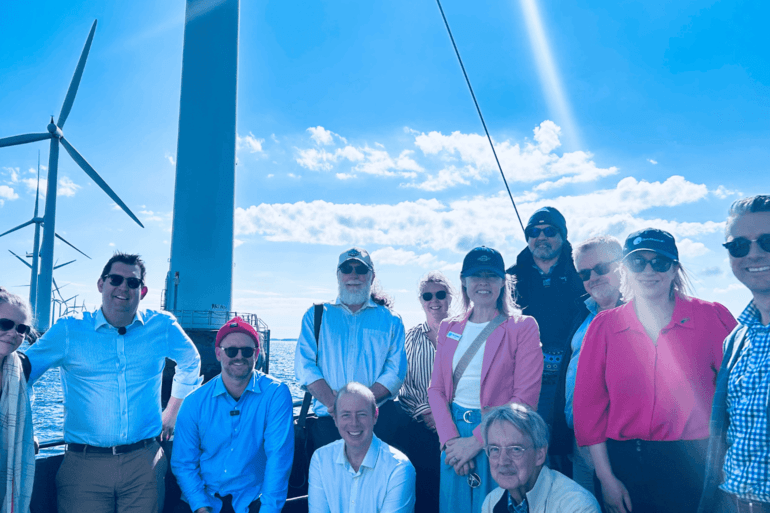
That is why Denmark is welcoming an Australian delegation this week, consisting of politicians, top officials and representatives from NGOs, all of whom will learn more about Denmark's work with offshore wind and help Australian decision-makers strengthen their national capacity in the green transition.
Australia's climate ambitions
The ambitions are already clear, as Australia already has a legally binding climate target to reduce emissions by 43 percent by 2030 and reach net zero by 2050.
A cornerstone of the plan is that 82 percent of electricity production must come from renewable sources by 2030, with offshore wind as a central piece. Here, the state of Victoria is leading the way with plans for 2 GW of offshore wind by 2032 and 9 GW by 2040, while New South Wales has designated a new offshore wind zone of 4.5 GW in the Hunter region.
But like other countries moving into offshore wind, development in Australia requires solutions to complex challenges such as investment conditions, planning and infrastructure.
- The delegation to Denmark is an important opportunity for strategic discussions about the relationship between our countries and what Australia can learn about investment and citizen engagement through ambitious climate policies. The Danish One Stop Shop model for offshore wind is an approach that Australia could quickly adopt and transfer to other types of green infrastructure, says Alice Thompson, CEO of Committee for the Hunter, an NGO representing industry, business, unions, governments and civil society to support sustainable growth in the region.
State of Green
- The Australian visit is organised by the Danish Embassy in Canberra in collaboration with State of Green, a non-profit, public-private partnership between the Danish government and the country's three leading business organisations (Danish Industry, Green Power Denmark and Agriculture & Food).
- State of Green acts as a gateway to more than 600 Danish companies, authorities, knowledge institutions, experts and researchers and connects international actors with Danish frontrunners working to drive the global transition to a sustainable, low-carbon and resource-efficient society.
Source: State of Green
Denmark's green transition
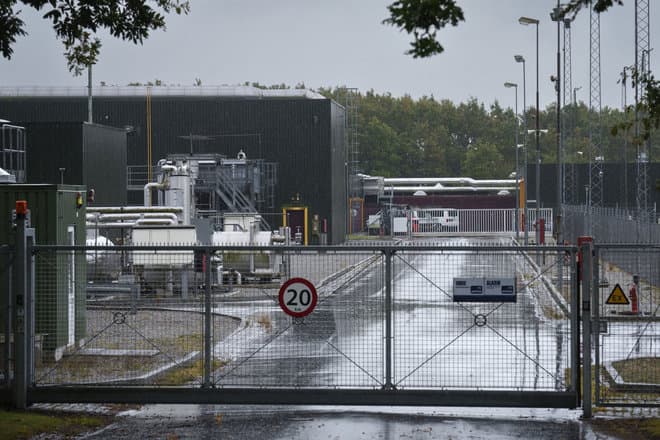
During the week, the delegation will meet some of the leading players in the Danish offshore wind sector, including Ørsted, Vestas, Copenhagen Infrastructure Partners, Cadeler and the Danish Energy Agency. They will also visit important infrastructure locations such as the Port of Esbjerg, the Port of Aalborg and Hvide Sande, all of which play key roles in Denmark's offshore wind and port development.
A central theme in the delegation's program is how to secure public support for offshore wind.
Securing local support is not only a challenge in Australia. DR's current documentary "Not in my backyard" follows the project surrounding Northern Europe's largest planned energy park in Ringkøbing-Skjern Municipality, where Deputy Mayor Søren Elbæk (S) has experienced how complex it is to balance national climate goals with local considerations.
The Megaton project, which combines solar cells, wind turbines and power-to-x for the production of hydrogen, was presented at a citizens' meeting in February 2023 as an important part of the green transition. Since then, however, the project has created debate and division among neighbors, politicians and citizens alike.
- These are billion-dollar investments. These are billion-dollar businesses. This is energy policy at a very high level. That has been put in the hands of leisure politicians, because that is who we are, says Søren Elbæk to DR.
ap
Text, graphics, images, sound, and other content on this website are protected under copyright law. DK Medier reserves all rights to the content, including the right to exploit the content for the purpose of text and data mining, cf. Section 11b of the Copyright Act and Article 4 of the DSM Directive.
Customers with IP agreements/major customer agreements may only share Danish Offshore Industry articles internally for the purpose of handling specific cases. Sharing in connection with specific cases refers to journaling, archiving, or similar uses.
Customers with a personal subscription/login may not share Danish Offshore Industry articles with individuals who do not themselves have a personal subscription to Danish Offshore Industry.
Any deviation from the above requires written consent from DK Medier.