It must end with churches being able to veto construction of solar cells, wind turbines or mobile phone masts in an extraordinary manner. This is the opinion of both the Danish Association of Local Authorities, KL, and the industry organization Green Power Denmark, writes TV2 Østjylland.
- The churches are helping to disable the democratic decision-making process, and we think that is problematic, says Johan Brødsgaard (RV), chairman of the Culture, Business and Planning Committee in KL.
The reaction comes after a case this week, where a mobile mast in Silkeborg was first approved by the city council and subsequently taken down when the Aarhus Diocese used its right of veto.
It is stipulated in Section 29 of the Planning Act that churches have a special right to veto a building if the project may disrupt the view to or from the church, and the right has also been used in several cases to block Renewable energy plants.
- We represent some interests for some very old buildings that have been there for generations. And it is our task to speak on their behalf, says Henrik Wigh-Poulsen, Bishop of Aarhus Diocese.
KL and Green Power Denmark: Unnecessary and undemocratic
But KL is not satisfied with the special right of the Danish Church.
- We think that the church has too much power in these cases. We believe that the influence and decision-making should lie with the locally elected city councils, says Johan Brødsgaard (RV).
This is also seen with those who propose large-scale construction projects.
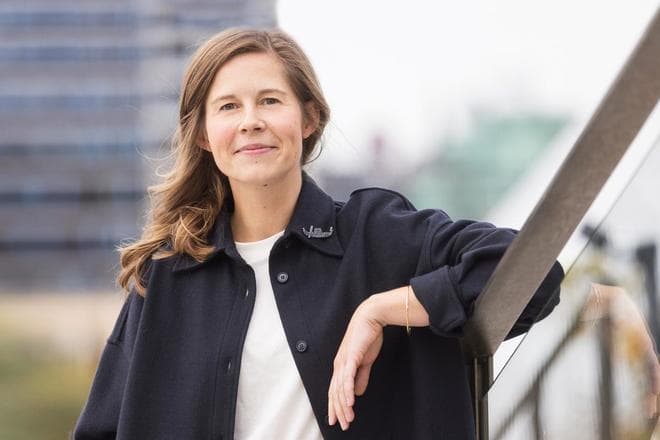
- We think it is both unnecessary and to a certain extent undemocratic that they still have this extended right of veto, says Camilla Holbech, director of renewable energy production at Green Power Denmark.
She believes that the churches could easily make do with the general right of consultation and the current church building line, where high-rise buildings are not allowed within 300 meters of the church.
- This is fully sufficient to make the necessary considerations for preserving the cultural history that the churches represent, believes Camilla Holbech.
But it is not only the direct use of the right of veto or objection that is being criticized.
- It matters if one has a presumption in advance that some projects cannot be done, it is rare that they even reach the politicians' desk, says Johan Brødsgaard (RV).
Church veto used 11 times since 2017
According to a calculation from the Danish Housing and Planning Agency in 2024, the veto right has been used at least 11 times since 2017. So even though the veto right is not used that often, KL and Green Power Denmark believe that it has put an end to many more construction projects.
- When you go out and screen the landscape and know that there is a potential hammer that can hit you quite late in the process, you might be more likely to shy away and say no, I don't want to take that risk, says Camilla Holbech.
Back in 2024, a bill was put forward to remove the churches' veto right. However, the Minister for Urban and Rural Areas and Minister for Church Affairs, Morten Dahlin (V), chose to drop it again. The bishop of the Diocese of Aarhus is very happy with this.
- I would be sad if it had to be removed. It is not something we just do every time, not at all, it is often resolved in dialogue with the municipality, says Henrik Wigh-Poulsen.
Isn't it a bit old-fashioned to think that the church has such a special right that the rest of us don't have?
- You might say that, but I think it is good that we have an opportunity to raise our voices and say: "Timeout, we have to look at this again," says Henrik Wigh-Poulsen.
amp
Text, graphics, images, sound, and other content on this website are protected under copyright law. DK Medier reserves all rights to the content, including the right to exploit the content for the purpose of text and data mining, cf. Section 11b of the Copyright Act and Article 4 of the DSM Directive.
Customers with IP agreements/major customer agreements may only share Danish Offshore Industry articles internally for the purpose of handling specific cases. Sharing in connection with specific cases refers to journaling, archiving, or similar uses.
Customers with a personal subscription/login may not share Danish Offshore Industry articles with individuals who do not themselves have a personal subscription to Danish Offshore Industry.
Any deviation from the above requires written consent from DK Medier.