The government's green aviation route in Denmark should not contain the term "green". Because it would be misleading if an airline marketed the flight route as green.
This is the warning from the airline Norwegian in a consultation response. Norwegian is the second largest player in the Danish market, and the company itself has "both the desire and ambition to bid on the route".
The government reached an agreement on green aviation in December last year. It includes, among other things, the ambition of a green domestic route in Denmark in 2025. But it is "uncertain" whether a green flight route can even be done next year, the Danish Air Traffic Management assessed in July in a consultation response.
One of the significant uncertainty factors is that it is not currently permitted to fly on 100 percent green fuel. Safety regulations state that a maximum of 50 percent green fuel may be mixed in an aircraft tank. Norwegian addresses several uncertainties in its consultation response.
- Several airlines have come under fire for using "green" or "sustainable" in their marketing and communication regarding both blending and flights on 100 percent SAF (sustainable aviation fuel, ed.).
- SAF is currently not 100 percent green, and it is therefore misleading to describe the route as green, Norwegian writes, among other things.
Norwegian: We will keep our promises
On Monday, the Norwegian airline elaborated on its concerns to the media Mobilitywatch.
- We do not want to promise our customers something that we cannot keep. This puts the airlines in a bad light because we can be penalized if we market the route as green, said Communications Manager Sara Westphal Neergaard to Mobilitywatch.
The Danish Consumer Council Think has also noted the government's use of terms such as "green fuels", "green flights" and "sustainable aviation fuel" in the draft executive order that has been under consultation.
In the consultation response from the Danish Consumer Council Think, the council "would like to point out that we find it very inappropriate to use this kind of term in the draft, as it could potentially end up forming the basis for misleading marketing".
- In the opinion of the Danish Consumer Council Think, such language use can create ambiguity about what is legal language use, which could ultimately result in consumers being exposed to misleading marketing in the form of greenwashing, it says in consultation response.
Minister: Governments rely on international standards
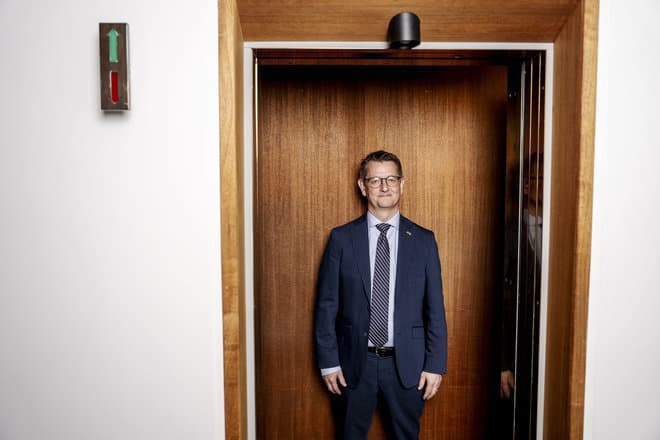
Minister of Transport Thomas Danielsen (V) says in a written response that the government relies on international standards in its definitions.
- The government's goal is to create the world's first domestic flight route that uses 100 percent green fuels. Here we cannot just invent our own definitions, but rely on international standards.
- The industry says that it is far too ambitious, and I find it very difficult to imagine that the competition authorities would call it greenwashing, says the Minister of Transport.
/ritzau/
Text, graphics, images, sound, and other content on this website are protected under copyright law. DK Medier reserves all rights to the content, including the right to exploit the content for the purpose of text and data mining, cf. Section 11b of the Copyright Act and Article 4 of the DSM Directive.
Customers with IP agreements/major customer agreements may only share Danish Offshore Industry articles internally for the purpose of handling specific cases. Sharing in connection with specific cases refers to journaling, archiving, or similar uses.
Customers with a personal subscription/login may not share Danish Offshore Industry articles with individuals who do not themselves have a personal subscription to Danish Offshore Industry.
Any deviation from the above requires written consent from DK Medier.