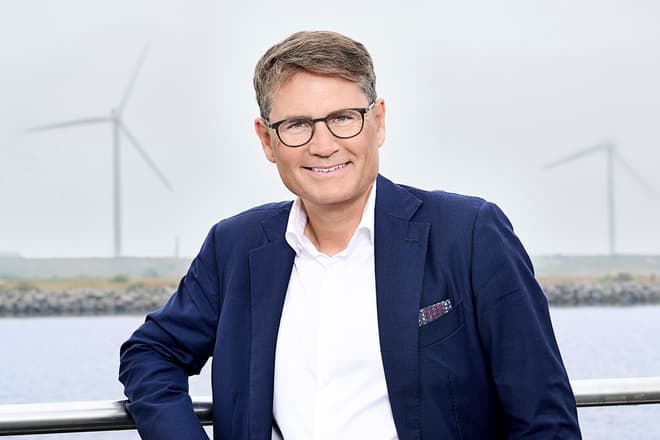
The government and several parties in the Danish Parliament have high expectations for the export of green hydrogen through a future hydrogen pipeline to Germany. But the decision risks costing the state over 15 billion DKK, without a robust business model behind it. This is what Bjarke Møller, director of the Council for Green Transition, writes in a debate post.
– The hydrogen pipeline to Germany is an expensive and risky experiment, where the money could be used more cost-effectively and with a greater climate effect for other purposes. It is very doubtful that a robust business case can be created for the export of green hydrogen to Germany, says Bjarke Møller, director of the Council for Green Transition.
The Danish Parliament has decided to give Energinet the opportunity for a state-guaranteed loan of DKK 7.4 billion and a possible operating subsidy of up to DKK 8.3 billion. Behind the desire to promote hydrogen exports are, among others, lobbyists such as Copenhagen Infrastructure Partners, the Confederation of Danish Industry and Green Power Denmark, who have long pressed for support.
However, the Council for Green Transition believes that the decision is based on overly optimistic projections of both price and demand. According to the organization's analysis, only 1 percent of over 1,600 potential green hydrogen projects have reached an investment decision – and that primarily because the price is too high.
– In the future, the price of green hydrogen is unlikely to fall as much as supporters hope. International analyses show that the price in 2050 could still be up to 7.6 euros/kg, says Bjarke Møller, director of the Danish Council for the Green Transition.
He emphasizes that direct electrification is in many cases both cheaper and more efficient than using hydrogen. At the same time, hydrogen is difficult and energy-intensive to transport, and it results in greater energy losses than when transmitting electricity.
“Why should we in the EU build two parallel energy infrastructures when we can save money by focusing on electric highways?” asks Bjarke Møller, director of the Danish Council for the Green Transition.
According to the Danish Council for the Green Transition, there is also no well-functioning market for green hydrogen, and transport over long distances is in practice both expensive and inefficient. The organization therefore recommends that hydrogen be used locally in industrial clusters and for applications where there are no fossil-free alternatives.
– At RGO, we agree that Denmark will need to scale green hydrogen production in PtX projects, but the hydrogen should not be exported with expensive hydrogen pipes, which have an extremely dubious business case, says Bjarke Møller, director of the Council for Green Transition.
jel
Text, graphics, images, sound, and other content on this website are protected under copyright law. DK Medier reserves all rights to the content, including the right to exploit the content for the purpose of text and data mining, cf. Section 11b of the Copyright Act and Article 4 of the DSM Directive.
Customers with IP agreements/major customer agreements may only share Danish Offshore Industry articles internally for the purpose of handling specific cases. Sharing in connection with specific cases refers to journaling, archiving, or similar uses.
Customers with a personal subscription/login may not share Danish Offshore Industry articles with individuals who do not themselves have a personal subscription to Danish Offshore Industry.
Any deviation from the above requires written consent from DK Medier.