Climate People's Meeting :
Høje-Taastrup District Heating expands and breaks through the municipal boundary

HØJE-TAASTRUP / GREVE: District heating is a central part of the heating of Danish households, and part of the green transition with sector coupling and efficient utilization of residual heat from PtX in the future. But when more people are going to have district heating and away from fossil fuels from natural gas and oil, municipal borders can be an obstacle to expansion for existing district heating companies.
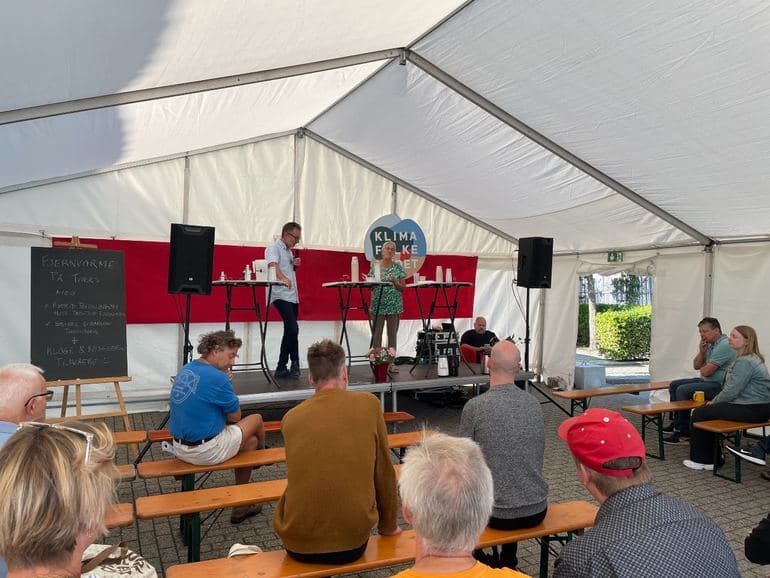
However, that obstacle is being overcome in Høje-Taastrup. Here, Høje-Taastrup Fjernvarme is expanding precisely across the municipal border, and at the Climate People's Meeting, the director of the district heating company made it clear that this is new ground that is being trodden. The independent district heating company is expanding across the municipal border in Høje-Taastrup with 2,000 households in Tune, which is located in the neighboring municipality of Greve. This gives the village's residents the opportunity to get rid of the gas boilers that currently heat their homes.
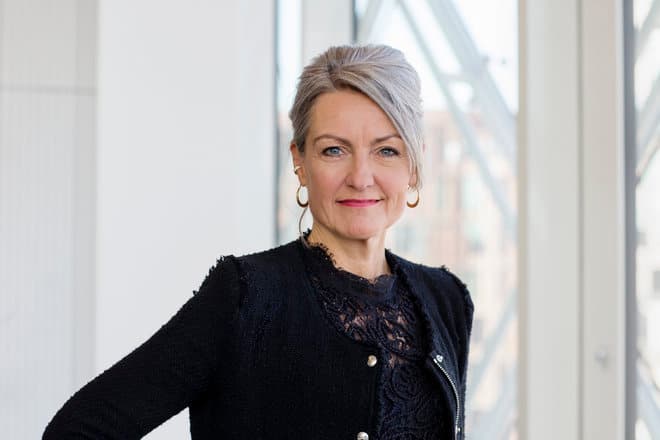
- When I stood here a year ago, I didn't know this was going to happen. But why can't you expand across the municipal border, asks Høje-Taastrups Fjernvarme's CEO Astrid Birnbaum and explains part of the process:
- We have a good business case for the expansion with corporate economics. The residents of Tune are happy because they are getting rid of their natural gas boiler. They will probably pay a little more than our existing district heating customers in Høje-Taastrup because we will have to lay the pipes to Tune.
The only requirement that remains for the project to be implemented is that 56 percent of the potential users accept the offer of connection to district heating from the neighboring municipality.
- In Tune, they are just happy to get rid of their natural gas boiler. It would have been a shame if Tune had set up their own district heating company, Astrid Birnbaum emphasizes to a gathering of listeners who mainly come from other Danish district heating companies. The moderator, the director of Danish District Heating, Kim Mortensen, has no problem remembering the names of the individual participants.
The road to expansion
When you listen to Astrid Birnbaum, it also sounds like the expansion will also happen because of the zealot, namely Astrid Birnbaum herself. There are a number of prerequisites that must be met before the expansion across municipal borders is possible.
- When you go beyond municipal borders, you work together with two municipalities on a district heating company. There are also two municipalities that must guarantee the loan. We should have changed our statutes, and we also had to change our statutes and expand our board of directors, so Greve Municipality has a member on our board, explains Astrid Birnbaum.
- It is important to have good cooperation with the municipalities, and we have that. Then there is a difference between whether you are a municipally owned or a consumer-owned district heating company like us, she explains and concludes confidently:
- There is nothing that prevents you from going beyond the municipal border.
Danish District Heating: First time
At Dansk Fjernvarme, the director is sure that this is a new development.
- Høje Taastrup Fjernvarme is definitely the first private company to establish a district heating network in another municipality. There are a few examples of larger municipally owned district heating companies that have expanded beyond a municipal border. Circuit from Aarhus to Skanderborg (Låsby) - but here it has been pipes connected to the expansion of existing networks, says Dansk Fjernvarme's director Kim Mortensen and concludes:
- This is the first time that an independent network has been established in another municipality.
He has no doubt about the future prospects of it.
- It is actually exciting, because it is part of what is needed if more village projects are to become a reality. But it requires neighboring companies with the necessary muscle and resources to take on the task. So much respect for Høje Taastrup Fjernvarme throwing itself into it, says Kim Mortensen.
Text, graphics, images, sound, and other content on this website are protected under copyright law. DK Medier reserves all rights to the content, including the right to exploit the content for the purpose of text and data mining, cf. Section 11b of the Copyright Act and Article 4 of the DSM Directive.
Customers with IP agreements/major customer agreements may only share Danish Offshore Industry articles internally for the purpose of handling specific cases. Sharing in connection with specific cases refers to journaling, archiving, or similar uses.
Customers with a personal subscription/login may not share Danish Offshore Industry articles with individuals who do not themselves have a personal subscription to Danish Offshore Industry.
Any deviation from the above requires written consent from DK Medier.