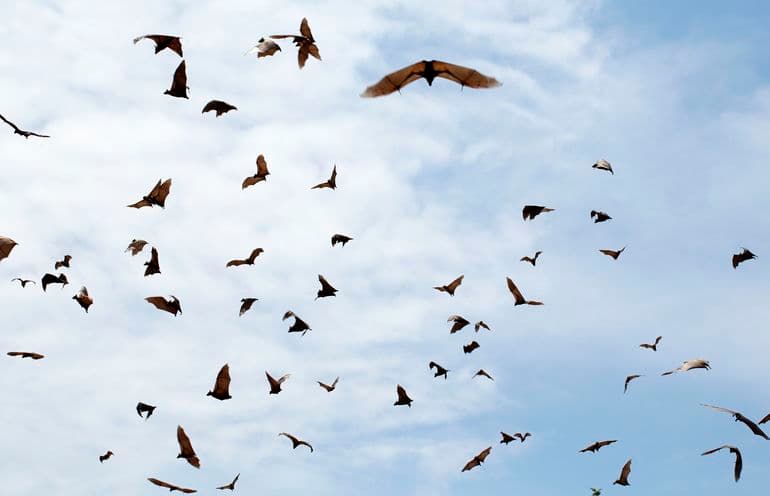
Bats fly long distances over the open sea, which often comes as a surprise to many who think they stick to their colonies on land.
While there is a lot of knowledge about bats on land and their collisions with turbine blades, there is considerable uncertainty about their behavior at sea. In 2022, Vattenfall initiated the Kattegat West Baltic Bats Project to investigate bats in the area from Skagen to Christiansø and the German Baltic coast. This is what the energy group Vattenfall writes.
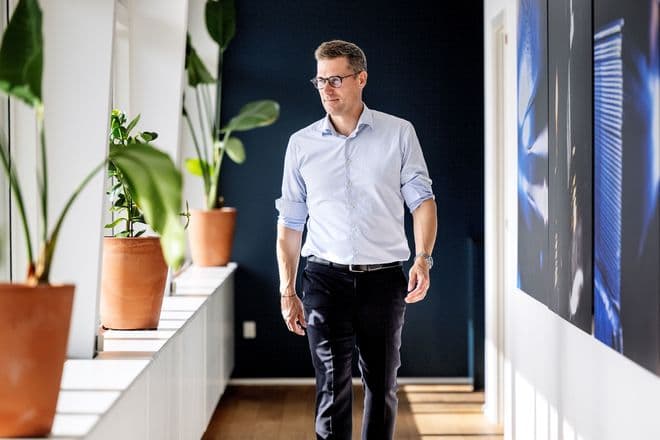
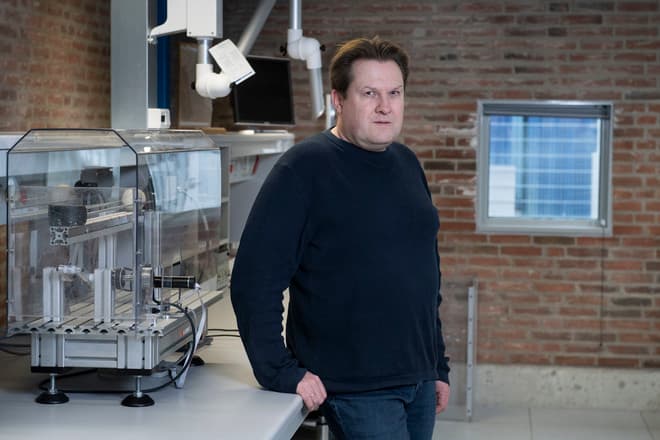
- We were contacted by consultants who were conducting studies of bats for the Danish Energy Agency and Energinet in connection with offshore tender areas, while we ourselves were working on studies in Sweden, says Bjarke Laubek, Environmental Specialist at Vattenfall.
- We offered to take on the role of coordinator for the project, standardize the methods and run the studies simultaneously.
Bats at sea
Bats are sensitive to mortality and require special protection according to the EU. But it is still unclear how this protection should be designed to ensure a good interaction between electricity production at sea and effective protection of bats.
- Bats do not fly when it is too windy, too cold, or when it is raining, explains Bjarke Laubek and adds:
- You can reduce the number of collisions by 60-90 percent on land by stopping the turbines during certain periods.
Data from Kriegers Flak
Vattenfall uses periodic shutdowns of wind turbines based on land data, but more knowledge is needed about bats at sea. That is why equipment has been installed to measure bat calls on Kriegers Flak.
- In the project, we have collected data from the entire bat season in 2023 using ultrasonic detectors on buoys, masts and wind turbines, says Bjarke Laubek.
There is no doubt about the goal either.
- We hope to gain a better understanding of bat activities at the offshore wind turbines, he says.
Results crucial for offshore wind turbines
Vattenfall has a goal of having a positive effect on biodiversity, and the study of bats in Danish waters is central to ensuring this.
- At Vattenfall, we have allocated strategic funds for this kind of study in our biodiversity program, concludes Bjarke Laubek.
The first results from the project will be crucial for future initiatives in offshore wind farms that are to ensure a balance between the production of renewable energy and protection of bats in the marine environment.
jel
Text, graphics, images, sound, and other content on this website are protected under copyright law. DK Medier reserves all rights to the content, including the right to exploit the content for the purpose of text and data mining, cf. Section 11b of the Copyright Act and Article 4 of the DSM Directive.
Customers with IP agreements/major customer agreements may only share Danish Offshore Industry articles internally for the purpose of handling specific cases. Sharing in connection with specific cases refers to journaling, archiving, or similar uses.
Customers with a personal subscription/login may not share Danish Offshore Industry articles with individuals who do not themselves have a personal subscription to Danish Offshore Industry.
Any deviation from the above requires written consent from DK Medier.