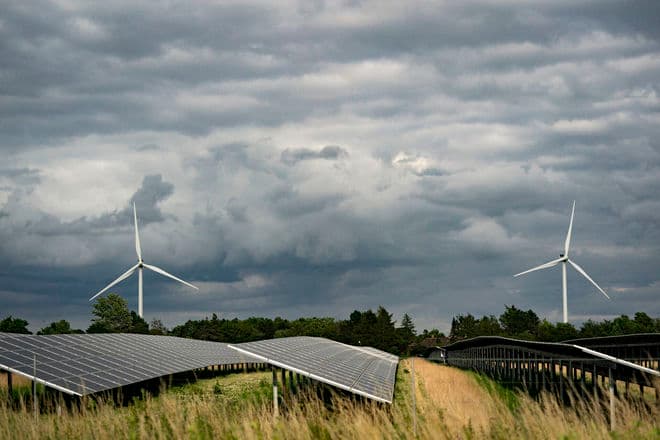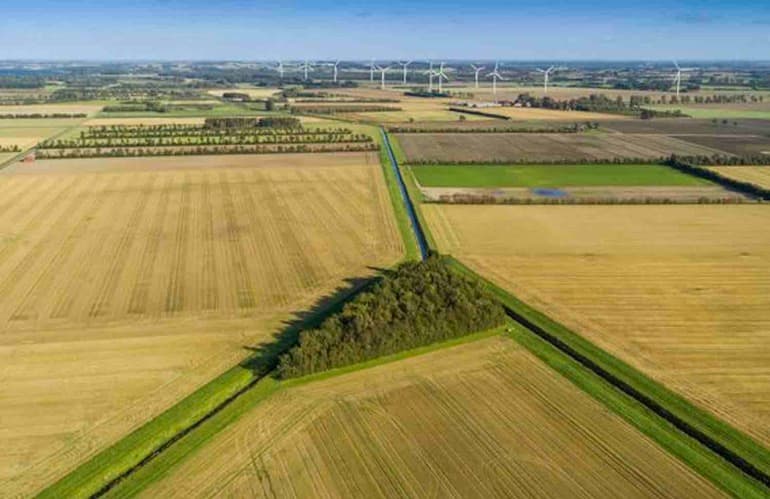
Denmark is facing a historic transformation of our limited land area, and it doesn't matter how we do it. If we do it wisely, we can end up with a much richer society than we have today. This is stated in CONCITO's new report: Three visions for Denmark's land areas - and how a national land strategy can help us achieve our goals. The think tank writes in a press release.
The report analyses the socio-economic value of a land-restructured Denmark depending on whether we pursue a vision focusing on traditional food production, putting the human experience of nature at the centre or reorganising primarily on nature's terms. The calculation shows that sustainable land use will increase the overall value for society if the benefits of protecting biodiversity, increased mental health and reduced damage costs from CO2 emissions are also included. In fact, all three visions have a positive, but different, value for society, corresponding to 12-56 billion DKK per year. This is an increase of 13-58 percent compared to today's land use.
- It has already been decided to take every seventh field out of agriculture, and some fear that the green transition will become a burden. But our analysis shows, on the contrary, that more and better nature gives us significantly greater welfare and more than compensates for the loss of production area, says Torsten Hasforth, chief economist at CONCITO.
A national land strategy can guide the way to a climate-positive society
CONCITO's report hits a highly topical political debate. A comprehensive transformation of Danish land was announced in June, when the so-called green tripartite agreed on the Agreement on a Green Denmark. With the Agreement on a Green Denmark, 40 billion DKK was announced. DKK for land conversion, but the work is far from over.
- We are faced with a task of enormous complexity and a scope that goes beyond the framework of the tripartite agreement. Space is limited, the landscape is already in use and the climate and biodiversity crisis requires us to think differently. Therefore, we need a coherent, national land strategy that sets the direction for where we are going and that includes all needs that require land, says Peter Andreas Norn, program manager at CONCITO.
The new report provides a proposal for how a national land strategy can be built. CONCITO proposes, among other things, that new business models be developed that make it more attractive for landowners to protect nature and groundwater and to contribute to climate protection.
Visions should inspire conversation about the future of Denmark
The implementation of the tripartite agreement will start next year, and it will be crucial here that we find a direction for what kind of landscape we want to have. In order to make the right choices, it is necessary to consider all land priorities from the start, and here visions can play a role in initiating discussions.
The report's three visions point to the many dilemmas that need to be addressed - for example: How will plant-based foods become a more widespread norm? Should our forests produce wood or biodiversity? Do we also emphasize promoting recreation and well-being, or should natural areas be located where the physical conditions for nature are best?
- If we think carefully, we can achieve more goals for the same investment or effort. Therefore, we must have both a vision that shows where we are going, and a national land strategy that can guide the effort and include all priorities. The strategy must ensure that land use is efficient and democratically founded – and it must also ensure that it pays to do the right thing, says Tage Duer, project manager, CONCITO.
The report rounds off a two and a half year process, during which CONCITO has analyzed a number of aspects of the use of Danish land. Previous analyses have focused on biodiversity, climate adaptation, agriculture and energy. The project was carried out by CONCITO and supported by the VILLUM Foundation. Read more here about the Future Land Use project.
jel
Text, graphics, images, sound, and other content on this website are protected under copyright law. DK Medier reserves all rights to the content, including the right to exploit the content for the purpose of text and data mining, cf. Section 11b of the Copyright Act and Article 4 of the DSM Directive.
Customers with IP agreements/major customer agreements may only share Danish Offshore Industry articles internally for the purpose of handling specific cases. Sharing in connection with specific cases refers to journaling, archiving, or similar uses.
Customers with a personal subscription/login may not share Danish Offshore Industry articles with individuals who do not themselves have a personal subscription to Danish Offshore Industry.
Any deviation from the above requires written consent from DK Medier.