Billions of kroner are at stake when the Maritime and Commercial Court in Amaliegade in Copenhagen on Monday, after more than 18 years of waiting, begins a dispute about electricity prices in western Denmark.
A consortium consisting of 1004 plaintiffs, ranging from large companies such as Arla and Bang & Olufsen to smaller companies and associations such as Dagli'Brugsen in Bøvling and Kaløvig Bådelaug, has something at stake in the case, which will be heard over more than 30 court days.
The lawsuit itself is being led by the energy trading company Mind Energy, formerly Energi Danmark, and a handful of other companies, and the outcome of the case will have an impact on the other plaintiffs. Mind Energy itself believes it is entitled to 382 million kroner in compensation, while the total claim in the case amounts to 4.4 billion kroner. All amounts must also be added to interest, the plaintiffs believe.
The plaintiffs believe that the price of electricity in Western Denmark was raised unnaturally high in the years 2003-2006. The Competition Council held the same opinion in 2007, and it was in continuation of that decision that in November of that year a lawsuit was filed by the consortium of 1004 companies.
Ørsted involved
It was the then Elsam - the company is now called Ørsted Bioenergy & Thermal Power - that sold the electricity via the Nord Pool electricity exchange and therefore, in the plaintiffs' opinion, raised the price too high. The company is owned by the listed company Ørsted A/S, of which the Danish state owns just over half.
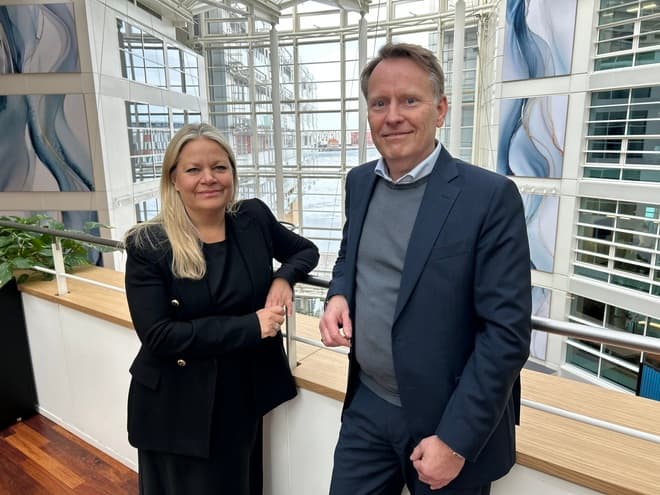
At the helm as CEO is 58-year-old Ole Thomsen, while Henriette Fenger Ellekrog, who is a year older, sits at the end of the table in the boardroom. Fenger sits on the board of the parent company, Ørsted.
According to the rules, the price must be set based on actual costs plus a reasonable profit. But in reality, the electricity was sold at a significantly higher price, according to the plaintiffs. The Ørsted subsidiary will not meet the plaintiffs' demands and demands an acquittal.
Has been through many instances
The case is part of a complex called the Elsam cases and has been pending in several tracks both with the competition authorities and in the courts, where various issues have been tested.
After suffering defeat both with the competition authorities and in the Maritime and Commercial Court, Ørsted, however, won a victory in May 2018, when the Western High Court overturned the Competition Council's decision from 2007.
And in 2020, the Maritime and Commercial Court acquitted Ørsted in the damages case precisely with reference to the decision in the authority case. But the Western High Court overturned that judgment the following year and decided that an independent damages case should be filed.
The complexity of the case is revealed in the extensive summary pleadings that the parties' lawyers have filed. The plaintiffs' pleadings are 537 pages long, while Ørsted's are 327 pages long.
The verdict is expected in April.
/ritzau/
Text, graphics, images, sound, and other content on this website are protected under copyright law. DK Medier reserves all rights to the content, including the right to exploit the content for the purpose of text and data mining, cf. Section 11b of the Copyright Act and Article 4 of the DSM Directive.
Customers with IP agreements/major customer agreements may only share Danish Offshore Industry articles internally for the purpose of handling specific cases. Sharing in connection with specific cases refers to journaling, archiving, or similar uses.
Customers with a personal subscription/login may not share Danish Offshore Industry articles with individuals who do not themselves have a personal subscription to Danish Offshore Industry.
Any deviation from the above requires written consent from DK Medier.