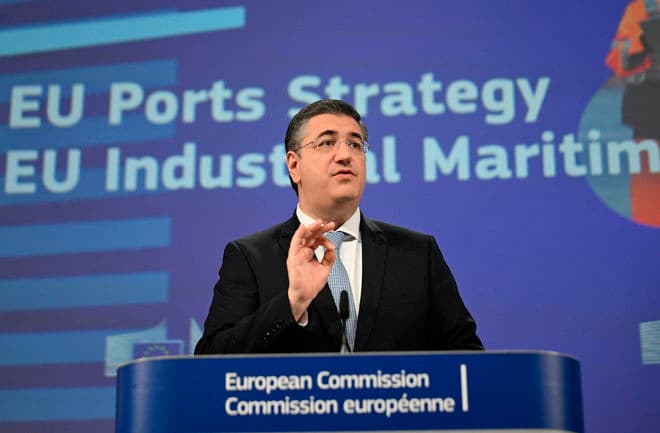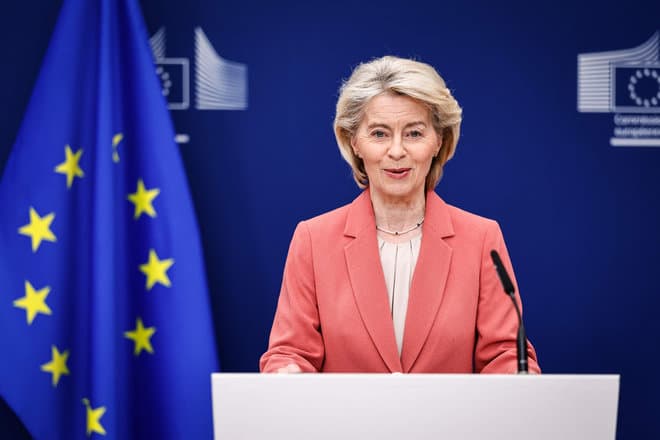
On Thursday, the European Commission presented its new industrial policy proposal, the Industrial Accelerator Act, which is intended to strengthen the EU's industrial capacity, economic security and strategic autonomy in a more uncertain geopolitical situation. This was reported by the Confederation of Danish Industries in a press release.
The proposal includes proposals for new industrial policy tools such as a requirement to buy European in public tenders and support schemes in selected strategic sectors. According to the Confederation of Danish Industries, it is crucial that Europe continues to build its economy on free trade and open markets, but at the same time reduces its dependence on critical raw materials and technologies from countries outside the EU. This is stated by the business organization in a press release issued in response to the proposal.
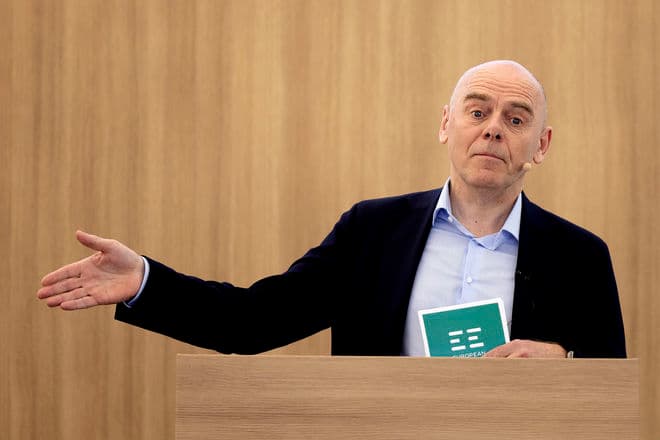
- Europe's prosperity is built on free trade and open markets, and it must continue to do so. But we must also ensure that Europe does not become vulnerable to dependence on critical raw materials and technologies from outside. It is a really difficult balance that the Commission actually strikes fairly well in today's proposal, says Rikke Wetendorff Nørgaard, head of European policy at the Confederation of Danish Industries.
At the same time, the organisation points out that new requirements for European procurement must not lead to more administrative burdens for companies. DI also warns against the EU moving in a more protectionist direction, as the European economy is closely linked to global value chains.
- Europe must be open, but not naive. The new geopolitical reality places new demands on Europe to be able to do more itself and to use new industrial policy tools to help and develop sectors that are important to society and at the same time contribute to the green transition and the achievement of our climate policy goals. However, it is absolutely crucial that Buy European requirements do not become new burdens and costs that companies are already struggling with, says Rikke Wetendorff Nørgaard.
According to DI, strengthening Europe's competitiveness should largely be done by reducing regulation, shortening case processing times and removing barriers in the internal market. The organization also proposes a so-called buy-friendly approach, where purchases can also include countries with which the EU has free trade agreements, such as Japan, South Korea and Canada.
amp
Text, graphics, images, sound, and other content on this website are protected under copyright law. DK Medier reserves all rights to the content, including the right to exploit the content for the purpose of text and data mining, cf. Section 11b of the Copyright Act and Article 4 of the DSM Directive.
Customers with IP agreements/major customer agreements may only share Danish Offshore Industry articles internally for the purpose of handling specific cases. Sharing in connection with specific cases refers to journaling, archiving, or similar uses.
Customers with a personal subscription/login may not share Danish Offshore Industry articles with individuals who do not themselves have a personal subscription to Danish Offshore Industry.
Any deviation from the above requires written consent from DK Medier.