Millions of tax dollars and pension funds can now be linked to Putin's shadow fleet, which is suspected of being the crown jewel in Russia's circumvention of Western sanctions. This is reported by the investigative media Danwatch.
The country's municipalities and pension funds have invested 13 and 413 million respectively. DKK in the Italian insurance company Generali, which owns 38.5 percent of the Russian insurance company Ingosstrakh, which Danwatch has previously uncovered keeps the shadow fleet afloat. The company is so controversial that it has been sanctioned by the UK.
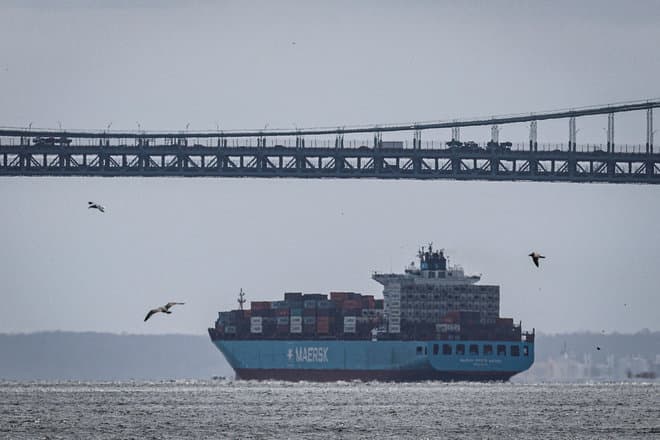
Danwatch has previously documented that the shadow fleet consists of old oil tankers, which experts consider to be a serious environmental risk - especially in Danish waters - and that they operate on the edge of sanctions.
The money thus plays a role in the economic cycle that keeps Russia's income from black gold afloat. And it is by far the most important export area for the Russian economy, says Flemming Splidsboel, senior researcher in Russia at the Danish Institute for International Studies.
- The decisive factor for the Russian economy is oil exports. That is what keeps them running at the level they are at now. That's where you have to step in, if it's going to happen, he says.
Vital piece for Russian oil distribution
A circuit where the shadow fleet is a vital piece in terms of getting Russian oil distributed - and Ingosstrakh a vital piece for the shadow fleet's ships to be able to travel at sea at all. After Russia's full-scale invasion of Ukraine, Western insurance companies largely withdrew from the Russian maritime market, which is why Ingosstrakh is today a vital player in the field of all-important insurance.
- Ingosstrakh keeps the shadow fleet running. And thus Generali also contributes to it, even though they are not the decisive party in the problem. But it is problematic in many ways. If you really wanted to put pressure on the Russian economy, it would have to be hit on the oil side - and that is also an opportunity for various institutions and companies to look at whether they play a role in that, says Flemming Splidsboel.
Maintaining investments
Three Danish pension funds have a combined DKK 413 million invested in Generali, with Sampension being the undisputed largest investor with approximately DKK 300 million invested in the company - and they have no intention of changing that at this time.
- We do not believe that our investment in Generali supports sanctions avoidance or contributes to a serious environmental risk in Danish waters. But it is a matter that we are following, and it is clear that if new information emerges that shows that Generali is actively participating in sanctions evasion or contributing to a serious environmental risk in Danish waters or elsewhere, we will reassess our investment in Generali, says ESG head Jacob Ehlerth Jørgensen.
Ringkøbing-Skjern Municipality has approximately DKK 800,000 invested in Generali - and that investment is also valid, says Mayor Hans Østergaard (V).
- Following Russia's invasion of Ukraine in February 2022, Generali has chosen to close their office in Moscow and has at the same time chosen to resign from their position on the board of the Russian insurance company and thus freeze their investment, he says.
Ingosstrakh has indicated to Newsweek that Generali holds the undisputed largest shareholding in the company with its 38.5 percent, while the rest is owned by Russian companies and citizens.
Since March 2022, however, they have chosen to freeze the investment, just as they have stepped down from Ingosstrakh's board of directors. In doing so, they claim that they have no influence in the company, even though they maintain the investment.
"In accordance with all applicable sanctions, Generali stepped down from the board of directors of Ingosstrakh in March 2022. Since then, the 38.5 percent investment in Ingosstrakh has been frozen, which is why Generali does not carry out any activities related to it," Generali writes in a written response.
In addition, they have not wanted to answer why they maintain their ownership stake in Ingosstrakh.
Text, graphics, images, sound, and other content on this website are protected under copyright law. DK Medier reserves all rights to the content, including the right to exploit the content for the purpose of text and data mining, cf. Section 11b of the Copyright Act and Article 4 of the DSM Directive.
Customers with IP agreements/major customer agreements may only share Danish Offshore Industry articles internally for the purpose of handling specific cases. Sharing in connection with specific cases refers to journaling, archiving, or similar uses.
Customers with a personal subscription/login may not share Danish Offshore Industry articles with individuals who do not themselves have a personal subscription to Danish Offshore Industry.
Any deviation from the above requires written consent from DK Medier.