In a new memorandum, the Climate Council calls on the government to strengthen efforts to reduce Denmark's global climate footprint – especially emissions originating from Danish consumption and public procurement. This is stated in a press release from the Climate Council, which was issued in connection with the council's comment on the Danish Energy Agency's reporting. The comment is part of the Climate Council's statutory obligation under the Climate Act.
The council assesses that the Danish Energy Agency's global reporting provides a solid overview of Denmark's climate impacts outside the country's borders – both positive and negative. Against this background, the Climate Council criticizes that the government's global strategy does not sufficiently use the report's data, especially with regard to the consumption-based climate footprint.
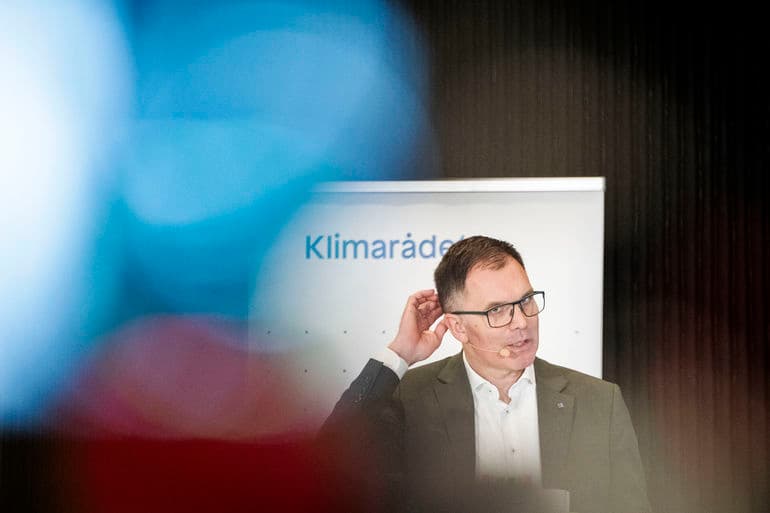
- The global reporting contains important knowledge, but it is difficult to see how it is used in political decisions, says the Climate Council's representative, Peter Møllgaard.
Denmark's consumption-based climate footprint, which includes emissions from goods and services that Danes buy – both produced in Denmark and abroad – remains among the highest in the EU. The climate footprint from imports in particular has increased since 1990, and the Climate Council therefore reiterates its recommendation to set a benchmark for reduction in tonnes of greenhouse gas.
- If we continue to consume in the same way as today, Denmark's consumption-based climate footprint will probably be too high to be in line with the temperature target of the Paris Agreement. Seen in isolation, this is difficult to reconcile with the Climate Act's ambition that Denmark should be a pioneer country. Therefore, changes in consumption may be necessary, says Bente Halkier, deputy chairperson of the Climate Council.
She points to greener public procurement as one of the options for reducing the Danes' climate impact and also emphasizes that the benchmark should be a supplement to the 70 percent target and other national climate targets, not a replacement.
Wants to end the favoritism of biomass
The Climate Council also highlights the need for a strategy for reducing biomass consumption, which is expected to decrease in the coming years. The Council emphasizes that targeted political efforts are necessary to ensure that the decrease actually becomes a reality. Finally, the Climate Council recommends that the incentives in climate policy be adjusted so that biomass is not favored over other renewable energy sources.
- We would like to see targeted political work to ensure that the expectation of a significant decrease in the consumption of biomass becomes a reality, says Bo Jellesmark Thorsen, who is also deputy chairperson.
amp
Text, graphics, images, sound, and other content on this website are protected under copyright law. DK Medier reserves all rights to the content, including the right to exploit the content for the purpose of text and data mining, cf. Section 11b of the Copyright Act and Article 4 of the DSM Directive.
Customers with IP agreements/major customer agreements may only share Danish Offshore Industry articles internally for the purpose of handling specific cases. Sharing in connection with specific cases refers to journaling, archiving, or similar uses.
Customers with a personal subscription/login may not share Danish Offshore Industry articles with individuals who do not themselves have a personal subscription to Danish Offshore Industry.
Any deviation from the above requires written consent from DK Medier.