The environmental organization Greenpeace has been ordered to pay almost 667 million dollars in damages to the American energy company Energy Transfers. This corresponds to approximately 4.5 billion kroner.
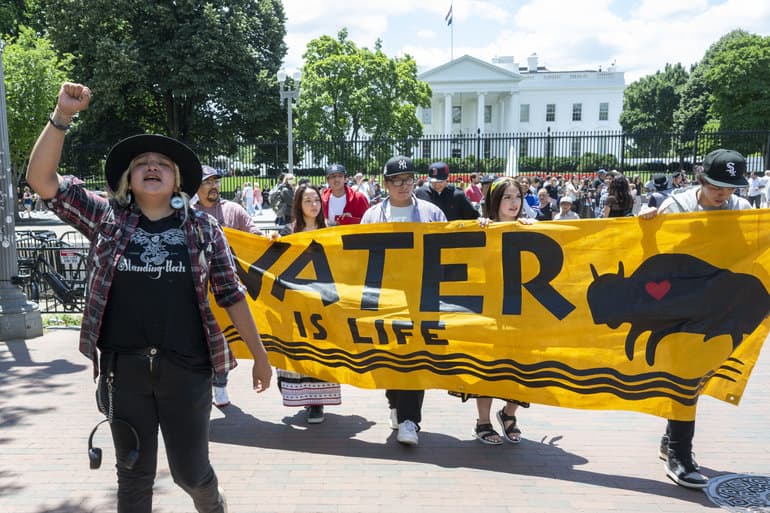
The case concerns a series of demonstrations and actions in 2016 and 2017 in the state of North Dakota against the Dakota Access Pipeline. The pipeline was completed in 2017.
Energy Transfers has accused Greenpeace of paying protesters to try to delay the construction project. The energy company, which is involved in transporting oil and other fossil fuels, has also accused Greenpeace of spreading lies about the project.
On Wednesday, a court in North Dakota ruled in the case. Greenpeace has been guilty of both defamation and illegal entry, the verdict says.
Greenpeace considers the case an attack on freedom of expression and denies having acted wrongly. The organization's lawyers say they will appeal the verdict.
Attorney Trey Cox, who represents Energy Transfer, says the demonstrations were "violent and destructive."
Greenpeace US branch at risk of closure
The billion-dollar settlement could have major consequences for Greenpeace, which risks having to close its US branch. Even if that were to happen, Greenpeace will live on. This is what the acting head of the US branch, Sushma Raman, told AFP.
- The truth is that you can't ruin a movement. We get our power from people. We don't accept government funding, we are funded exclusively by individuals who give small amounts. You can't ruin the people who support organizations like Greenpeace, she says.
Greenpeace is just one of several organizations that have demonstrated against the Dakota Access Pipeline. The oil pipeline was put into operation in 2017, but the demonstrations have continued in the years since. Protesters have criticized the pipeline's route through natural areas, saying it poses a risk to local water supplies.
At the same time, there has also been criticism that the pipeline runs through the Standing Rock Reservation, where Native Americans live. They have said that the pipeline violates their reservation and culture and that it could poison the water.
Before the Dakota Access Pipeline was completed, the project was slowed down due to environmental concerns. But then-US President Donald Trump revived it with a presidential decree.
/ritzau/Reuters
Text, graphics, images, sound, and other content on this website are protected under copyright law. DK Medier reserves all rights to the content, including the right to exploit the content for the purpose of text and data mining, cf. Section 11b of the Copyright Act and Article 4 of the DSM Directive.
Customers with IP agreements/major customer agreements may only share Danish Offshore Industry articles internally for the purpose of handling specific cases. Sharing in connection with specific cases refers to journaling, archiving, or similar uses.
Customers with a personal subscription/login may not share Danish Offshore Industry articles with individuals who do not themselves have a personal subscription to Danish Offshore Industry.
Any deviation from the above requires written consent from DK Medier.