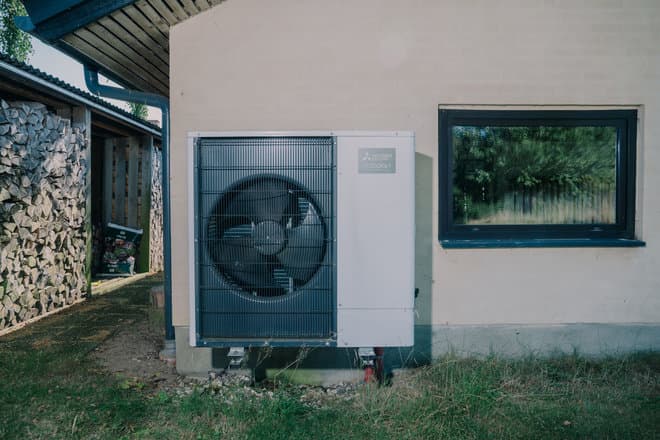
More and more district heating companies are investing in heat pumps and electric boilers, and thus a larger part of the district heating is being electrified. For example, the district heating company in Gram has invested in a 1 MW heat pump, as a supplement to existing heat pumps and an electric boiler of 10 MW. In Haderslev, the company has invested in a 15 MW electric boiler, a 10.6 MW heat pump.
These are just some examples of the electricity-based solution in the district heating supply. Thus, a calculation from Dansk Fjernvarme, based on figures from the Danish Energy Agency, shows that there has been a tripling of the number of MW electric boilers and heat pumps in district heating in the past five years. In total, the Danish district heating companies have invested in 2,218 MW in electricity-based heat production, corresponding to the annual consumption of 190,000 households. This is stated by Dansk Fjernvarme in a press release.
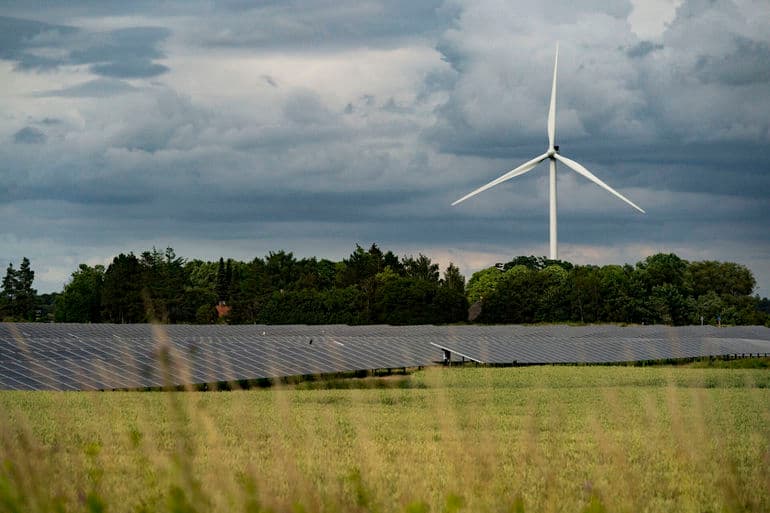
- Across the country, investments are being made in electricity-based solutions at Danish district heating companies. And it makes perfect sense, as we can consume the electricity when it is cheap and there is a lot of wind or solar production. And the heat that is produced is then stored in tanks or in the kilometer-long district heating pipes that are hidden underground, and in this way the fluctuations in renewable energy production are smoothed out to the benefit of both the electricity system and the district heating customers, says Chief Consultant Michael Schrøder from Dansk Fjernvarme.
Dansk Fjernvarme's calculation shows that in 2023 alone, 615 MW of electricity-based solutions such as large heat pumps and electric boilers were installed. This makes 2023 the year in which the most MW electricity solutions have been built, followed by 2020, which is the year in which the energy saving scheme that provided subsidies for large electric heat pumps expired.
The power supply must be secured
According to Dansk Fjernvarme, investments in several different supply methods among the country's approximately 350 district heating companies make sense, as several green solutions can complement each other, so that excessive dependence on one form of energy is avoided, as was seen, for example, during the energy crisis, where large increases in gas prices resulted in large price increases for district heating companies that were dependent on gas.
- By investing so massively in electricity-based solutions, the companies primarily reduce the consumption of both natural gas and biomass, and that in itself is positive. But they also have a task in ensuring that they do not go from dependence on one energy source to another. Therefore, companies should ensure that they also have energy sources that can complement each other in the future, says Michael Schrøder.
However, the industry association is calling for a focus on ensuring a sufficient amount of cheap electricity so that investments in electrification of district heating can continue to gain momentum.
- We come from a place where companies only had the opportunity to replace the most dirty fossil energy sources with natural gas or sustainable biomass. Today we are in a different place, and therefore it is really gratifying that investments have been made in electricity-based solutions, as there are. Now we must also ensure that enough green electricity is produced to cover district heating and society's increasing needs, says Michael Schrøder.
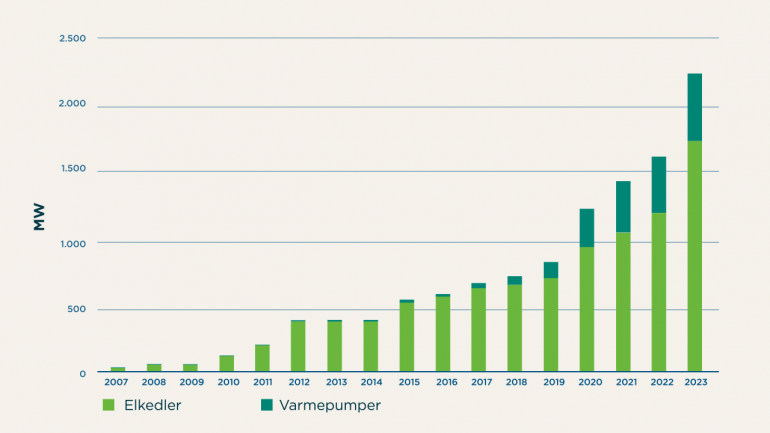
The electrification of district heating has gained momentum
in recent years.
amp
Text, graphics, images, sound, and other content on this website are protected under copyright law. DK Medier reserves all rights to the content, including the right to exploit the content for the purpose of text and data mining, cf. Section 11b of the Copyright Act and Article 4 of the DSM Directive.
Customers with IP agreements/major customer agreements may only share Danish Offshore Industry articles internally for the purpose of handling specific cases. Sharing in connection with specific cases refers to journaling, archiving, or similar uses.
Customers with a personal subscription/login may not share Danish Offshore Industry articles with individuals who do not themselves have a personal subscription to Danish Offshore Industry.
Any deviation from the above requires written consent from DK Medier.